Elizabethan London

Elizabethan London
Tyburn was an infamous execution spot west of London, used since medieval times. The Tyburn "tree" - a unique, multi-person gallows - erected in 1571 became a popular public spectacle, drawing crowds of thousands.Tyburn Tree blog is less blood-thirsty but hopefully topical, interesting and informative, if slightly bent to my personal topics of interest - books, writing, history, technology, with a smattering of politics and dash of pop culture, science and the downright strange. So "take a ride to Tyburn" and see what happens...

Thursday, July 28, 2005

Flashman On the March


Flashman On the March by George McDonald Fraser

"When all other trusts fail, turn to Flashman"- Abraham Lincoln

"For an instant, even I was appalled. But only for an instant." - H.P. Flashman

When Sir Harry Flashman (VC, KCB) finds himself in desperate need of a quiet and quick exit out of Trieste ("ain't much of town unless your in trade or banking or some other shady pursuit...") to duck the enraged uncle of yet another amorous conquest, he ends up escorting a load of silver intended to support the British Expedition to Abyssinia in 1868. And with that, the twelfth packet of the Flashman Papers begins...

Flashman On the March is the latest Flashman novel penned by George MacDonald Fraser. Fraser lifted Flashman wholesale out the famous Victorian book Tom Brown's Schooldays by Thomas Hughes. In Hughes book, Flashman was the bullying, cowardly tormentor of Brown and his friends at the Rugby School, before being expelled for drunkeness. 
Fraser has asked the timeless question: what happens next? And so began the Flashman Papers, Harry Flashman's unvarnished memoirs, set down in Flashman's old age. The long-running series of historical fiction (the first of which appeared in 1968) traces Flashman's illustrious career in the British Army, dropping him into most of the major historical events and almost all of the unmitgated military disasters of the era. 
Flashman, though bluff and bold-faced in appearance, is a caddish, bullying, womanizing coward who manages, through luck, knavish skill and consummate acting, to find himself hailed as a Victorian hero in the first book. The remaining books follow a similar formula with Flashy trying desperately to get out from under while maintaining his dauntless facade and reputation, lecherously pursuing every available female in reach and pocketing any "blunt" and credit he finds along the way. His adventures include escaping the destruction of the British Army in Afghanistan in 1842 (where he accidentally develops his heroic reputation), skulking through the Sikh War and Soboran, bedding Lola Montez during the Schleswig-Holstein crisis, battling Skrang River pirates in Borneo, keeping the mad Queen of Madagascar happy, and instigating the Charge of the Light Brigade during the Crimean War. Other honors include the Indian Mutiny, the Taiping Rebellion, the March on Beijing, Little Big Horn and the American Civil War (serving on both sides, no less). And that really just covers the major engagements....
In Flashman On the March, Flashman finds himself reluctantly hooked into the British Expedition to Abysinnia. The Abysinnia Expedition was one of those stranger-than-fiction events that lurk in the back annals of history. Launched expressly for the purpose of rescuing a handful of British hostages being held by Emperor Theodore, the Abysinnia Expedition saw 12,000 British troops travel deep into the interior of Abysinnia to face down Theodore's army. 
Flashy finds himself cajoled by Robert Napier ("Bob the Bughunter" as Flashman terms him) into journeying into the interior to cement a secret alliance with the Gallas, preventing Theodore and the hostages from escaping the British by cutting off their retreat. Needless to say, Flashy finds himself on the sharp end yet again, ducking out on his enemies, cavorting with his female guide (also a jealous contender for the Galla throne), hobnobbing with the insane Emperor Theodore, and generally behaving with a reckless disregard for honor, duty or anything but the preservation of his own skin and reputation.
Flashman is very refreshing...and utterly politically incorrect. Fraser has gifted him with an unmitigated honesty that tars all the players involved with equal amounts of scorn, blame and praise (where necessary). Flashman provides Fraser with a worthy pawn for history's canvas and allows him to weave Flashman's disreputable adventures seamlessly with real historical figures (thus we've seen Flashman annoying Lord Cardigan, trying (and failing) to befuddle Lincoln, hoaxing Bismark into a boxing match...and many, many more escapades) helping to bring both the historic characters and their times into new light.

Here's a brief excerpt:
"You gather from this that I was in a tranquil, optimistic mood as I set off on my Abyssinian odyssey, ass that I was. You'd ha' thought, after all I'd seen and suffered in my time, that I'd have remembered all the occasions when I'd set off carefree and unsuspecting along some seemingly primrose path only to go head first into the pit of damnation at t'other end. But you never can tell.

I couldn't foresee as I stood content in the bow, watching green fire foaming up from the forefoot, feeling the soft Adriatic breeze on my face, hearing the oaths and laughter of the Jollies and the strangled wailing of some frenzied tenor in the crew - I couldn't foresee the screaming charge of long-haired warriors swinging their hideous sickle-blades against the Sikh bayonets, or the huge mound of rotting corpses under the precipice at Islamgee, or the ghastly forest of crucifixes at Gondar, or feel the agonizing bite of steel bars against my body as I swung caged in the freezing gale above a yawning void...

Aye, it's an interesting country Abyssinia"


The Flashman novels are more then just an adventurous farce however. Fraser's descriptions of Flashman's many battles quite literally take the reader into the heart of the fight, presenting, alongside the humor and comic aspects of Flashman's adventures, a deep and abiding feel for the horror, chaos and confusion that permeates the martial engagements. Given that Fraser fought in Burma in WWII (see "Quartered Safe Out Here", his war memoirs for details) in an environment that had far more in common with 19th century warfare then with the 20th, it is not surprising that he can bring both a historian's acumen and personal experience to bear on events.

Fraser's latest Flashman book (and frankly all the books in the series) is a throughly enjoyable romp and highly recommended.

For some information on Abyssinia, check out the Abyssinia Cyber Gateway. Intersted ina quick primer on Abyssinnia? Check out the ever dependable Wikipedia.

One of the many figures who pops up in Flashman's latest is George A, Henty, a British author who basically started the "boy's own" series of adventure novels in the 19th century. Henty also wrote about the Abyssinia Expedition (and accompanied it)in The March to Magdala. You can peruse some of his works online here, but alas, not his book on Abyssinia.

There's a fair number of Flashman sites online including The Royal Flashman Society of Upper Canada, The Flashman Society, and the Royal Flashman Society of Southwest Virginia, which includes the Flashman Macropedia site which is bursting with Flashman background and trivia.

Lastly, here's a peek at Tisisat Falls, which plays a key role in Flashy's latest tome and provides yet another opportunity for Flashman to give readers keen insight into the deplorable depths of his character...no I'm not going to explain it, but it is, bluntly, classic Flashman.
Comments and links are always welcome.

Tuesday, June 28, 2005

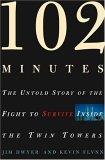
102 Minutes : The Untold Story of the Fight to Survive Inside the Twin Towers


102 Minutes : The Untold Story of the Fight to Survive Inside the Twin Towers by Jim Dwyer & Kevin Flynn

It is shocking to look back and absorb that it only took 102 minutes. Almost 4 years later, we are still dealing with the fallout.

102 Minutes serves up a well-written, absorbing and highly detailed, moment-by-moment account of the 102 minutes from the impact of Flight 11 until the collapse of the second tower. Dwyer and Flynn, two reporters for the New York Times, have drawn on interviews, first-hand accounts, radio and 9-11 phone transcripts, cell phone and email messages, and official reports, to put together a staggeringly detailed and vividly realized account that weaves together lives, observations, stories and testimony into an absorbing and comprehensive whole.
102 Minutes is a very difficult book to pick up and even harder to put down. The book traces the events of the day, the paths of the survivors, the observations, structural forensic engineering studies, and the many heart-breaking communiques of the trapped. 102 Minutes is THE account to read.
Of particular note is the authors work at examining the base causes that often determined who lived and who died - both from the engineering side, examining the construction of the towers - and the short-sighted, preventable mistakes that ultimately contributed to high losses of rescue personnel in the disaster (of particular note - the lack of coordination between the various police and fire units, the inability of the older radio sets being used to enable communication with firefighters in the towers, the lack of communication between structural engineers who were observing the disaster and predicting a potential collapse - the list goes on...).

The book is strictly limited to the events at the WTC - not covering the attack on the Pentagon or the events on Flight 93 but in covering the WTC the way they have, the authors have put together an account that is hard, but brilliant.

102 Minutes is hard to top, both for the strength of its well-written prose, or for the careful detailed investigation that it reflects.
For more reading on 9/11 I also recommend Dennis Smith's superlative Report from Ground Zero: The Story of the Rescue Efforts at the World Trade Center.

Dennis Smith is a retired New York City firefighter turned author (Report from Engine Co. 92 is probably his most notable work). Smith has written a deeply personal and intensely moving account of the events of the day and the grim aftermath of three months working on The Pile, sifting the wreckage for the fallen and the lost. Smith's story is a chronicle of that loss, pulling out the first-hand accounts of firefighters, police and emergency workers and looking at the emotional aftermath and impact on the NYFD
Also of note is, naturally enough, The 9/11 Commission Report...

For a good account of the engineering background on the collapse, check out this civil engineering site and for some background on the WTC, check out Great Buildings Online
Visit the somewhat controversial plans for the WTC Memorial here, or view the site itself through EarthCams.
For still more info, drop by the September 11th Digital Archive. You might also want to have a look at Time Magazine's online photo essay, Shattered.

Thanks for reading!

Wednesday, June 22, 2005

Himalaya


Himalaya by Michael Palin

"Buddhism is a very steep religion."

This type of trenchent observation is what makes Michael Palin's travels a genuine joy to behold.
Having gone "Around the World in 80 Days", travelled "Full Circle" and traipsed across the Sahara. Michael Palin and his indefatigable BBC crew elected to visit the high peaks of the Himalaya. Covering 1800 miles, from Afghanistan to the China, the Himalaya is the highest mountain range in the world encompassing the top 14 tallest mountains in the world and some 30 peaks higher than 25,000 feet.
Palin and his crew delve into the peaks of K2 and Everest, the mysteries of Lhasa, Nagaland, Nepal, Kashmir, Tibet as well as the fringes of the range in Afghanistan and the Khyber Pass, wandering pell-mell in a 3,000 mile journey that took them the better part of 6 months. Among other areas they trace the major river systems down into India (Ganges), Bangladesh (Brahmaputra) and China (Yangtze), exploring the peoples and the politics that permeate the region. Palin brings his extraordinary good humor, patience and off-beat charm to their travels, whether it is chatting with the Dalai Lama in exile, or watching a cricket match in the high peaks of Nagaland.

One of the most enjoyable elements of Palin's travels is the sheer joy of the act of travel that is clearly evident in his work. The other key element is his focus less on history, geography and poltiics and more on the people that live in the region and their day-to-day lives. He makes deliberate efforts to avoid the usual meetings with authority figures, concentrating instead on the everyday encounters of life and the travails of survival in the high ranges.
In short, Himalaya is fun, effortless read that really does make a reader want to walk a mile in Palin's shoes, or perhaps just alongside him on one of his wayward treks.
You can watch Himayala on DVD, but I also recommend checking out Basil Pao's amazing photography of the journey in Inside Himalaya. He does an excellent job capturing the sheer immensity and scale of the landscape in question.
Find out about trekking the Himalaya here (also with some very nice photography) and here, visit Everest or learn about the culture and anthropology of the region at Digital Himalaya.
Here's a nice satellite image, courtesy of NASA's Visible Earth site, of Everest from orbit...damn big, isn't it?

Find out about how the Himalaya were created at Nova Online's Everest site and check out this famous fellow...no, he's not another member of Monty Python.

Thank you for reading BookLinker! Comments and links are always welcome. Please click on some of our sponsors and please remember to support the site by making your Amazon purchases here.


Monday, May 23, 2005

The Amulet of Samarkand


The Amulet of Samarkand (The Bartimaeus Trilogy, Book 1)- Jonathan Stroud

Whenever an author finds exceptional success in their field, it tends to spawn wave after wave of second-rate imitations, generally poorly written and badly executed.
J.K. Rowlings' Harrry Potter series has been no exception. The bookshelves are sagging under the sheer weight of witches, wizards, and magicians - the vast majority of which range from the forgettable and mundane to the abysmal.

There are some notable exceptions.

Jonathan Stroud's Bartimaeus Triology is one of those notable exceptions.

The Amulet of Samarkand introduces us to a different type of magic - gone are the magical school of wizardry, muggles and quidditch and instead Stroud's world draws on a darker source of magic - demonic efrits, djinni and spirits, summoned and controlled through elaborate, cryptic rituals and protections that force the djinni's and many lesser demons into unwilling servitude to those with enough magical knowledge to harness their deadly power.
Enter the two main characters: Nathaniel, a magician-in-training, sold to the government at five and apprenticed to a master magician; and Bartimaeus, a 5,000 year old djinni, summoned by Nathaniel to steal the magical Amulet of Samarkand and effect Nathaniel's revenge on the famous London magician Simon Lovelace. Stroud has created a fascinating Dickensian alternate London, where the government is dominated and ruled by magicians and their magical servants. Rich, intricate, yet with a bleak understory that belies the magical trappings, The Amulet of Samarkand is a terrifically enjoyable read, albeit one with a dark undercurrent, at times too dark for younger readers.

The standout aspect of the book is however the cynical, wisecracking, shape-shifting Bartimaeus, whose character leaps off the page and springs utterly to life. Whether it is musing over what manifestation would be most off-putting for its summoner or cracking wise on the history of magic (much of which is found in the many, many footnotes that permeate the Bartimaeus sections of the book - word to the wise - do not skip reading the footnotes), Bartimaeus is hilarious (and witheringly sarcastic) and nigh on unforgettable. Unwillingly, Bartimaeus finds himself thrown together with Nathaniel and the unlikely pair find themselves taxed to uncover a sinister conspiracy designed to overthrow the government.

Stroud does an excellent job of pulling together a comprehensive tale, alternating the viewpoint from Nathanial to Bartimaeus and building in a nice, well-rounded world, with just enough of the familiar to give the magical world they inhabit some solidity and depth. One notable (and somewhat unsettling) aspect of the book is that the magicians for the most part are an unpleasant, ambitious and power-hungry crew. The question of whether Nathanial will drift into this mindset is one that makes the tale much more ambiguous then is typical.

An excellent book and well-worth a look.

You can visit the real Samarkand online at Tashkent.org or here. You can also drop in on the real London here.
Drop by The Bartimaeus Triology online and read an excerpt from The Amulet of Samarkand and from the second book The Golem's Eye
Here's a quick magic spell for you (hope it is helpful), courtesy of William Shakespeare:

"Eye of newt, and toe of frog,
Wool of bat, and tongue of dog,
Adder's fork, and blind-worm's sting,
Lizard's leg, and howlet's wing,--
For a charm of powerful trouble,
Like a hell-broth boil and bubble."


Thursday, May 5, 2005

The Devil's Highway


The Devil's Highway - Luis Alberto Urrea

The Devil's Highway, El Camino del Diablo, lies sere, bleak , arid and forbidding, a calescent trail across the Mexican-US border for illegals seeking salvation and opportunity in the north.

The Devil's Highway is the true story of a group of 26 Mexican illegals who crossed the US-Mexican border heading through the desert for Ajo, Arizona on May 19th, 2001. By May 25th, only 12 came out.

Luis Alberto Urrea's book is a powerful piece of work. Urrea can sling a phrase with the best of them, weaving politics, desert myth, history and culture in an evocative, poetic style that captures both the facts and the heavy weight of the heart.

The author paints a horrifying and vivid portrayal of the events on the border, putting names, and faces in place behind the walkers, outlining the hidden necessities and motivations behind the illegal trek north. Urrea puts a human face on both the 400 dead illegals that the border claims annually and on the Border Patrol officers who stem the illegal flood of "tonks" (a name derived from the distinctive sound a flashlight makes when busted over an illegal's head) - sometimes hunting them down, sometimes rescuing them and sometimes burying them.

The Devil's Highway looks at the practices of the smugglers, who for an usurious fee take the illegals over the border to their low-wage jobs in the north and in the case of the Yuma 14 (the dead out of the 26), abandoned their charges to their fate - (first taking all of their customer's cash with them). Urrea also examines the politics and practices of the border (what he terms "the politics of stupidity"), the Border Patrol's approaches and attitudes towards their role (a blend of weary cynicism, professionalism and humanity) and, among other things, what it is like to die of hyperthermia.

Urrea excels in detailing the presence of the Devil's Highway, a bleak and searing hot stretch of forbidding desert that stretches across 250 miles, painting a lasting picture of the character of the land the walkers tried to cross - a desert littered with the bleached bones of countless travelers lured into a quicker route to California. Here's a brief excerpt:

"As long as there have been people, there have been deaths in the western desert. When the Devil's Highway was a faint scratch of desert bighorn hoof marks, and the first hunters ran along it, someone died. But the brown and red men who ran the paths left no record outside of faded songs and rock paintings we still don't understand.

Desert spirits of a dark and mysterious nature have always traveled these trails. From the beginning, the highway has always lacked grace - those who worship desert gods know them to favor retribution over the tender dove of forgiveness. In Desolation, doves are at the bottom of the food chain."


Powerful, terrifying and illuminating, The Devil's Highway is by far one of the best books I've read in several years. Don't just rely on my judgement, it was also up for a Pulitzer.

For more on the Desolation and the Devil's Highway, check out the National Park Services site on the Organ Pipe Cactus National Monument - reputed to be the most dangerous national park in the US due to the ongoing smuggling routes that wind across it.

Visit the Cabeza Prieta Wilderness at Wilderness.net or here, and take a close look at the Devil's Highway at Desert USA and the US Fish & Wildlife Service site.

Interested in learning more about the US-Mexican border relations? Check out Borderlands at the International Relations Center for some interesting articles or read Time Magazine's excellent look at the border and the Coyotes . You can also drop by the Border Patrol homepage for a look at how they are fulfilling their role in the post-9/11 era. Be sure to check out BORSTAR which handles the search and rescue across the Devil's Highway.

You can also check out Humane Borders, for a look at yet another player in the borderlands.

For more reading on the borderlands, check out Coyotes: A Journey Through the Secret World of America's Illegal Aliens by Ted Conover, Twilight on the Line: Underworlds and Politics at the U.S.-Mexico Border by Sebastian Rotella and Hard Line : Life and Death on the U.S.-Mexico Border by Ken Ellingwood.

Finally, you can visit Urrea's website here.

Thanks for dropping by! Tell your friends, link to the site, throw up some comments and feedback...oh and buying a book might be nice too!

Thanks for reading.

Sunday, May 1, 2005

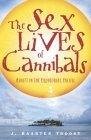
The Sex Lives of Cannibals


The Sex Lives of Cannibals : Adrift in the Equatorial Pacific by J. Maarten Troost

It is a flyspeck on the map, the merest hint of a place, a lonely tropical coral atoll in the middle of a cerulean Pacific. The place is the Republic of Kiribati, in the Gilbert Islands, an island that, while not quite at the back end of nowhere, certainly lives in that general neighborhood.

J. Maarten Troost's book The Sex Lives of Cannibals chronicles his two-year stay on the island of Tarawa. Accompanying his wife (who works for a non-governmental aid organization), Troost meanders into Tarawa with unrealistic expectations of a tropical south seas paradise. What he found was an over-populated, stiflingly hot, polluted (and occassionally toxic) island, infested with stray dogs, lackadasical and corrupt bureaucracy, and an overabundance of La Macarena playing at every turn.

Troost looks at life among the Kiribati (whom he seems to regard with a fairly odd mix of wonderment, fondness, respect and bemusement), moving from varied discussions on the general attitudes towards work, the desperate quest for some island foodstuffs not based on fish, encounters with sharks (and some flotsum that is too disagreeable to outline here), the Kiribati fondness for stray dogs (think back to what I said about foodstuffs...'nuff said), and the daily trials of infrequent and intermittant electrical power, poor water supplies and government bureaucracy. Of particular note is when the beer ran out...on the entire island....for four weeks.

He also, on occasion, seems to have captured part of that particular magic that the south seas seems to possess...

Here's a brief excerpt From The Sex Lives of Cannibals:

"Landing on a rock-strewn strip cleared of coconut trees was exactly as I expected it would be. Terrifying. The passenger door jammed, and we scrambled out through the rear cargo door and soon we began to feel like Martian invaders. I-Matang I-Matang, said a chorus of tiny voices. But they quieted when I bared my teeth, and the youngest even scattered into the bush. Parents in Kiribati tell their children to behave or otherwise an I-Matang will devour them, which has led to the wonderful result that the younger segement of the population believes I-Matang to be cannibals.

I, of course, did nothing to dissuade them."


As an added bonus, the lurid title of the book seems to excite some interest, particularly when reading it on crowded subway trains...again, 'nuff said. All in all a throughly enjoyable, highly funny read.

For more on Tarawa and Kiribati, visit Lonely Planet. Also recommended is Janes Kiribati page and this Kiribati site.

Tarawa was the site of a particular nasty battle in World War II. Find out more at Eyewitness to History and Tarawa on the Web. Visit Tarawa's namesake here.

Want a look at Kiribati? Here is Kiribati and Christmas Island from space....

Comments are always welcome. Thanks for reading.

Saturday, April 9, 2005

Collapse:


Collapse: How Societies Choose to Fail or Succeed - Jared Diamond

"I met a traveler from an antique land
Who said: "Two vast and trunkless legs of stone
Stand in the desert. Near them, on the sand,
Half sunk, a shattered visage lies, whose frown,
And wrinkled lip and sneer of cold command,
Tell that its sculpter well those passions read,
Which yet survive, stampt on these lifeless things,
The hand that mockt them and the heart that fed:
And on the pedestal these words appear:
"My name is Ozymandias, king of kings:
Look on my works, ye Mighty, and despair!"
Nothing beside remains. Round the decay
Of that colossal wreck, boundless and bare
The lone and level sands stretch far away."
- Percy Bysshe Shelley (1817)

About ten years ago, sweating profusely in the Yucatan humidity and liberally gulping down bottled water, I hauled myself up a vine-strewn pyramid in the Mayan city of Coba, and stared out at the view. Coba was a comparatively new site (only located in the early 70's) and remains somewhat isolated and still, with a few exceptions, pristinely covered in jungle. From our vantage point you could see the remains of another four massive structures that poked out of the green foliage canopy. We watched red kites circling languidly in the humid air and snapped our photos before scrambling back down to mull over the ruins that lay before us. Nothing focuses your attention like a disaster. Ruin is a source of wonder.

Collapse looks at ruin.

Jared Diamond has followed up on his superlative Pulitzer Prize-winning work Guns, Germs and Steel with Collapse: How Societies Choose to Fail or Succeed.

He is very specific in his choice of titles - Collapse is about the choices that societies make, sometimes consciously, sometimes unconsciously, that in the end determine failure or success.

In Guns, Germs and Steel, Diamond examined what made certain civilizations succeed, what were the catalysts of their success and growth. In Collapse, he flips the coin and looks closely at what makes them fail, drawing on a number of comparative examples to illustrate his key points.

Diamond looks variously at such locales as modern-day Montana ranch country, the remote Easter Island, Pitcairn & Henderson islands, the American south-west's Anasazi culture and Chaco Canyon, the Mayan Empire of Central American (my old friends from Coba), and the Norse Vikings of Greenland, Vinland and Iceland. Diamond also takes a look at modern day disasters and societal collapses such as the Malthusian events of Rwanda (which he tellingly ties to population overpressure, demographics and the cultural inheritance traditions), the horrific conditions of Haiti (and the telling opposite across the border, the Dominican Republic). He also looks at conditions in Australia, China and his own native southern California.

Diamond postulates five primary sets of factors consisting of: 1)damage people inadvertently inflict on their environment, 2) climate change, 3) hostile neighbor's, 4) decreased support from friendly neighbors, 5) the society's response to the problems. Diamond is careful not to cite a single reason for any collapse, but rather does a solid job of drawing together the varying elements and their collective impact on the society.

Collapse is long and, bluntly, at times a bleak and repetitive read, however Diamond exhibits a solid grasp of his subject, drawing out the particular threads and weaving them together into a coherent and compelling, if depressing, whole. The key role of how societies interact with the environment in their various states of social disintegration is chillingly convincing, particularly the well-documented collapse of Easter Island and the connections that Diamond draws between the factors such as deforestation, environmental stress, and ecological breakdown.

The implications for the near future for modern society is clear and stark - it is choice. Interestingly enough, Diamond refuses to rest as a Cassandra-like prophet of doom and gloom, and spends the remainder of the book carefully examining the tremendous success stories that are also in evidence.

After all the last thing that flew out of Pandora's Box was hope.

Interested in learning more about Easter Island? Check out Rapa Nui, the Navel of the World here, here and here.

Investigate the lost Vikings of Greenland here or read Archaology's online article.

Live in the American South-west? Learn more about the Anasazi and the Chaco Canyon civilization (including their sophisticated astronomical observatories).

Check out the Maya at this site, or learn about Mayan culture at Rabbit in the Moon.

Found this review useful? Please support BookLinker by clicking on our ads or ordering your publications through the site.

Comments, links and feedback are always welcome. Working on the six degrees of separation theory, someone who knows someone who knows someone please impose on Instapundit for a link, I'd love to see the traffic levels rise!

Thanks for reading!