Elizabethan London

Elizabethan London
Tyburn was an infamous execution spot west of London, used since medieval times. The Tyburn "tree" - a unique, multi-person gallows - erected in 1571 became a popular public spectacle, drawing crowds of thousands.Tyburn Tree blog is less blood-thirsty but hopefully topical, interesting and informative, if slightly bent to my personal topics of interest - books, writing, history, technology, with a smattering of politics and dash of pop culture, science and the downright strange. So "take a ride to Tyburn" and see what happens...
Showing posts with label Book Review. Show all posts

Monday, June 6, 2016

IndieB.R.A.G. Medallion Honoree!

It's official!

THE JESUIT LETTER is now an @IndieBrag Medallion Honoree!

For those that haven't run into this before, “indie” refers to self-published books and B.R.A.G. is an acronym for Book Readers Appreciation Group.

The IndieB.R.A.G. Medallion is a quality mark that is applied to independently published books that achieve a high standard of quality - covering  writing, plot, characterization, dialogue, style, editing, formatting, cover design and more. Only about 10% of the books submitted for review walk away with a Medallion, so hitting this achievement is a significant mark for any book.

So. YAY!!!

Go see: http://bit.ly/1tcXWI4

And I get some fancy foil logo stickers for my printed books!

Friday, January 1, 2016

A Great Way to Start a New year!

What a great way to start 2016!

Woke up this morning to the news that THE JESUIT LETTER has been selected for the Historical Novel Society's 2016 HNS Indie Award Shortlist, alongside eight other terrific books!

About 38 books were long-listed by HNS reviewers throughout 2015, then the list was narrowed to a short-list of nine, to be followed by a selection of four finalists, and then, in September, the Indie Award winner!

It is a huge honour to have made the short-list, as there are some excellent books in competition. Best of luck to everyone! Have a look at the shortlist below, you are sure to find some great historical fiction to get you through the winter!

HNS Indie Award 2016 shortlisted titles :

WHEN SORROWS COME Maria Dziedzan https://historicalnovelsociety.org/revie…/when-sorrows-come/

BLOODIE BONES Lucienne Boyce https://historicalnovelsociety.org/reviews/bloodie-bones/

AURELIA Alison Morton https://historicalnovelsociety.org/reviews/aurelia/

A PRIDE OF POPPIES Julia Bozza & others https://historicalnovelsociety.org/revi…/a-pride-of-poppies/

FOSSIL ISLAND Barbara Sjoholm https://historicalnovelsociety.org/reviews/fossil-island/

FAR AWAY Victoria Blake https://historicalnovelsociety.org/reviews/far-away/

THE JESUIT LETTER Dean Hamilton https://historicalnovelsociety.org/revie…/the-jesuit-letter/

ONE SUMMER IN ARCADIA Bill Page https://historicalnovelsociety.org/r…/one-summer-in-arcadia/

OUT OF TIME Loretta Livingstone https://historicalnovelsociety.org/reviews/out-of-time/

From these nine books, four will be selected as finalists and the winner and runner up announced at HNS Oxford 2016 Conference in September.

Tuesday, December 8, 2015

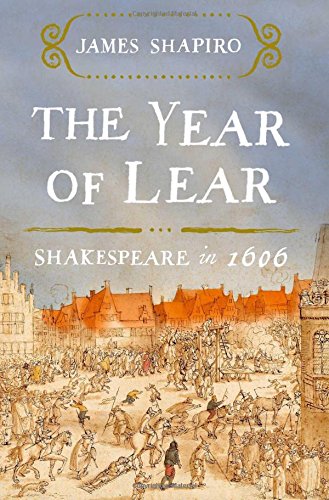
Review: The Year of Lear: Shakespeare in 1606 by James Shapiro

"The year 1606 would turn out to be a good one for Shakespeare and an awful one for England. That was no coincidence."

1606 was a particularly tumultuous year. Queen Elizabeth had died childless and unmarried in 1603, succeeded on the throne by the young King of Scotland James I, son of her executed rival Mary, Queen of Scots.  The shift in tone, approach and power after the long reign of Elizabeth was dramatic, and the subsequent failed attempt by a small group of Catholic conspirators in November of 1605 to destroy the Parliament and the King in one explosive discharge of gunpowder, shook the foundations of the nation to its core.

These twin seismic shocks - a new King and a new political reckoning, coupled with the inevitable fallout and bloody aftermath of the Gunpowder Plot, directly impacted on the direction, focus and content of English theatre, helping drive one of William Shakespeare's most prolific and brilliant years into history.

The Year of Lear looks in detail at 1606, a year that saw Shakespeare pen Lear, Macbeth and Antony & Cleopatra, three of his most timely, searing and political dramas.

James Shapiro follows a similar pattern and approach to his previous work A Year in the Life of William Shakespeare: 1599, weaving together political, social, economic, literary and philosophical threads into a deft and focused whole.

Shapiro alternates from delving into the events that dominated 1606, into how they impact and influence English theatre and literature in general, and more specifically how these were absorbed by William Shakespeare, player, shareholder and playwright of The King's Men.

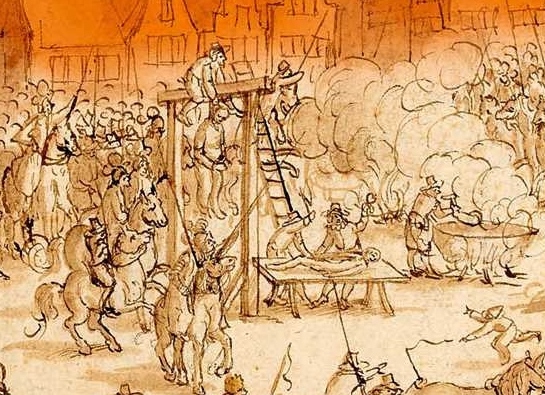
Cover illustration details - depicting the execution,
drawing & quartering of the Gunpowder Plotters. Note the
man tossing body parts into boiling pitch.
The author traces the bloody aftermath of the Gunpowder plotter's confessions, their trials and executions, the impact of the concept of equivocation, James I's obsession with witchcraft and demonic possession, the rise of court masques as entertainment, the devastating return of the plague to London, and the problems of a political Union between England and Scotland.  The author tugs each narrative thread into place and ties it back to its impact and influence on Shakespeare's works as they emerged throughout the year.

The trials and interrogations of the Gunpowder plotters and in particular the interrogation and trial of the Jesuit Robert Southwell and the subsequent dissection of the Jesuitical concept of equivocation (use of unclear language especially to deceive or mislead someone) is deeply intriguing, particularly in light of Shakespeare's subsequent use of the concept in both Lear and Macbeth. The opening scene of the witches greeting Macbeth is an equivocation that sets everything in tragic motion:

First Witch:     All hail, Macbeth! hail to thee, thane of Glamis!
Second Witch:     All hail, Macbeth, hail to thee, thane of Cawdor!
Third Witch:    All hail, Macbeth, thou shalt be king hereafter!

The nature of power, succession and how a kingdom can teeter into chaos dominates the themes of Lear, bringing the differences and potential dangers faced by the new regime into sharp focus.  The themes of murder, intrigue, tragedy and bloody raw political power highlight both Macbeth and Lear, with the added vagaries of witchcraft. The focus on the devastating impact that the Gunpowder plot and subsequent trial had on all aspects of Jacobite society permeates the year, and resonates throughout all the subsequent works. Antony & Cleopatra in turn - a play with it's shades of Elizabeth and Essex, was unlikely if not impossible to see the light of day during the Elizabethan era  - highlighting the fraught cultural shift with the new regime.

It was no accident that Shakespeare wrote these seminal, highly political tragic dramas in 1606.

Shapiro's writing is inspired, rich and evocative. The book is highly readable, written with flair, intelligence and a huge perceptible fascination for his subject matter.  It is one of the very best books of 2015 and is highly recommended for anyone wishing some insight into the Bard, his works or the era.

Wednesday, November 4, 2015

Shiny!

Alongside the HNS Editor`s Choice logo, I get to add another shiny logo to THE JESUIT LETTER, courtesy the Historical Novel Society reviewing & liking my book!

Here they both are!


Monday, November 2, 2015

Editor's Choice

Great news to make even a dreary Monday shine!

The Historic Novel Society has reviewed The Jesuit Letter
and selected it as an Editor's Choice!

Read the review!

In addition to the snazzy logo, this makes The Jesuit Letter eligible on the long-list for the 2016 HNS Indie Award!

I know, way too many exclamation points for a Monday morning...but how often does this happen with a debut novel!

Thank you HNS!

Saturday, July 18, 2015

Inkitt Editor's Pick: Black Dog

This is exciting! Alexandra MacDonald, Editor at Inkitt.com has selected "Black Dog" as an Inkitt Editor's Pick!

Here's her feedback (via email, and I hope she doesn't mind me publicly quoting her):

"Black Dog is a gripping, gritty period piece. Historical literature often falls flat but you have managed to write an engaging story with a wonderfully executed plot. The world your narrative creates feels natural, the character interactions feel genuine, and your approach toward drama within that period translates very well to modern readers."

Great news, great feedback and great way to start my day!

If you haven't read "Black Dog" yet, harken on over to http://www.inkitt.com/stories/15411  and enjoy.

Thursday, June 4, 2015

Waterloo: The History of Four Days, Three Armies, and Three Battles


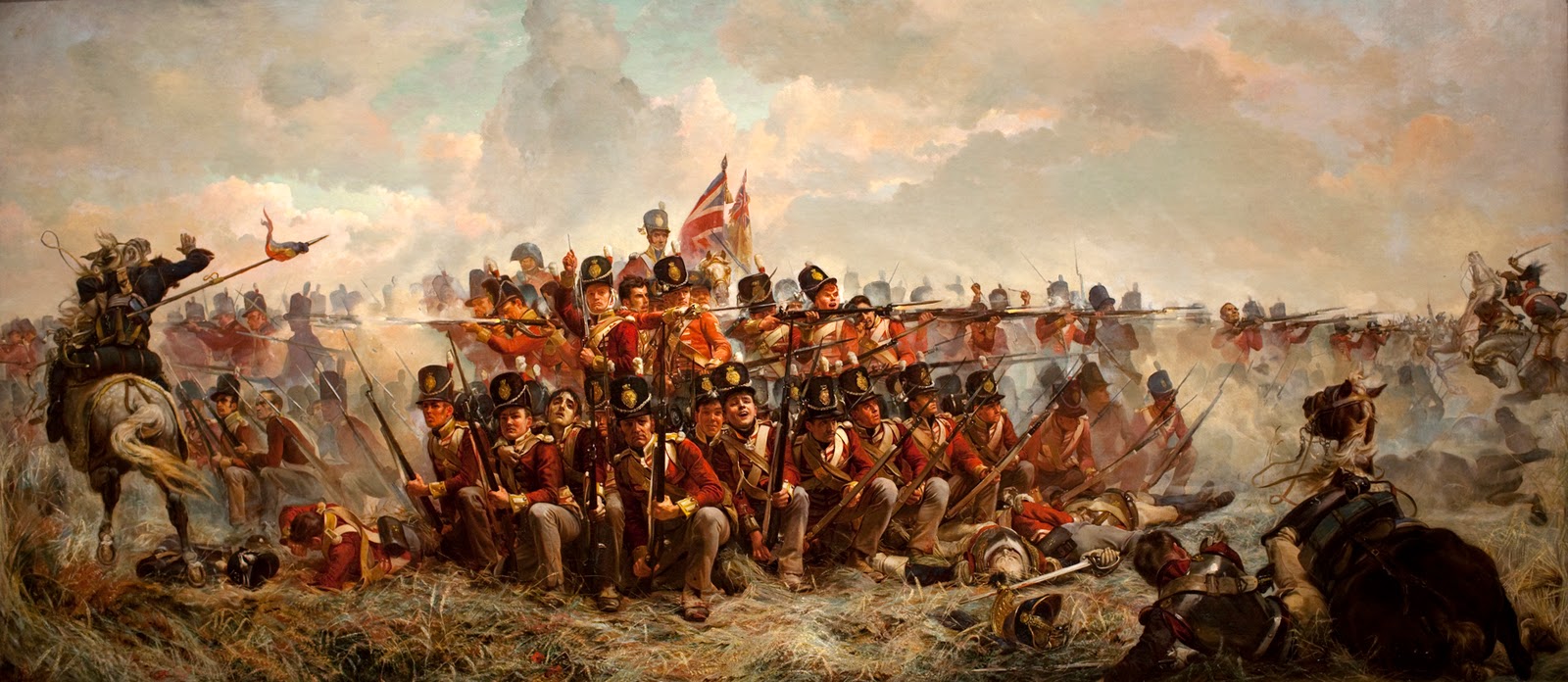
Waterloo: The History of Four Days, Three Armies, and Three Battles by Bernard Cornwell
is Cornwell's first venture into non-fiction.

The author, best-known for his historical fiction (including the Sharpe series as well as the ongoing Saxon Chronicles, and numerous other excellent pieces of work), manages to combine the clarity of prose of the novelist with the myriad details of the historian, serving up a rousing, reader-friendly account of the famous battle that brought the Duke of Wellington head-to-head with the Emperor Napoleon in a quiet Belgium valley.

Cornwell wastes little time on background players, pulling together a quick overview of the circumstances that led to the battle, outlining Napoleon's flight from his exile in Elba, the rallying of the French forces, the seizure of Paris and the subsequent shock the Hundred Days sent through his enemies, to galvanize both the British and the Prussians. He wastes little time on the politics and focuses mainly on the circumstances and events that propelled Napoleon and his armies into Belgium, to hammer at the seam between the two allied opposing forces, the British under Wellington, and the Prussians under Blucher.

This then was the first battle of the title - Quatre Bras - which saw a piecemeal British and Dutch-German force hold (temporarily) a vital crossroads linking the two allied armies.  Cornwell demonstrates his considerable acumen in providing readers with an accurate, clear picture of why the crossroads mattered to the Prussian-British forces, and what were the vagaries of war that prevented Napoleon from seizing  a critical juncture in a timely fashion.

The second battle is the oft-overlooked Battle of Ligny, which saw the Prussian forces pushed back in a bloody vicious see-sawing fight. Cornwell pulls together the various tactical and strategic threads into a cohesive and understandable picture of the situation - the retreat of the Prussians, the opportunity it opened for Napoleon, and his failure to properly capitalize on it.

The final battle (and the meat of the book) was Waterloo.  Aficionados of military history will find
little new or substantially different in anything Cornwell has written. The Battle of Waterloo has been re-treaded so frequently that most of the controversies that tend to tie historians in knots are often of little consequence to the typical reader. Cornwell is uninterested in shedding any additional light on history, and is more focused on providing a concise, clear and well-documented account of all the major set-pieces made famous in the battle. He lays out a very good descriptive account of the battle, the players, circumstances and tactics utilized by both British and French troops, delves into the personalities of both Napoleon and Wellington and the many subsequent supporting players who played critical roles in what Wellington referred to as "a near run thing. The nearest run thing you ever saw in your life."


Where Cornwell excels is his focus on the experience of the battle through the eyes and position of the common soldier. He discusses the limited view most men had of the battlefield, and the subsequent distortions in accounts that are then magnified over time, politics and memory.

Overall Waterloo: The History of Four Days, Three Armies, and Three Battles is a rousing and gripping, if unsophisticated, look a the battle of Waterloo.  A critical, detailed, in-depth study of the battle and the history, it is not, but as a generalized account, it is excellent.  It is a solid, well-told look at a critical battle that re-shaped the history of Europe.

It is well worth a read, however if you are already reasonably versed on the battle, Cornwell's fictional account in Sharpe's Waterloo is, frankly, more fun to peruse. Sharpe's Waterloo covers the exact same ground, provides less historical overview but expansively more verve, excitement, sense and colour. Cornwell as a fiction writer is excellent at pulling you into the smoke, confusion and din of battle and Sharpe's Waterloo is one of his very best works and will leave you with a memorable page-turning account that hits all the same high-points as the dryer, more stoic non-fiction account.


Wednesday, May 14, 2014

The Tudors by Peter Ackroyd

The Tudors by acclaimed British author Peter Ackroyd is the second volume in his new History of England series, although reading the first book (Foundation) is by no means necessary  Ackroyd's highly readable, engaging review of the reigns of the corpulent and much-wedded Henry VIII, Bloody Mary and Elizabeth I (interrupted albeit briefly by Henry VII's son Edward VI's six year reign).

Ackroyd brings the same sharp acumen and evocative social insight evident in his previous works Foundation and in London: A Biography.  Ackroyd hangs the overarching story-line on the key events and players but lavishes particular attention on the belief systems and intricacies of the burgeoning English Reformation which drove Tudor rule.  He has a particular talent for interweaving the tiniest of details and tying them back to the epic sweep of history.

Dry it is not, however it is by necessity somewhat cursory on some of the more infamous events of the period.  Ackroyd is a brilliant writer and, given his background and focus on cultural roots and sociology, he brings a different and often highly discerning eye to the historical events of the period.  He keeps a fairly razor eye on the roots of the English Reformation and the events therein, rather than, as many histories of the period do, highlighting the soap opera of Henry VIII's long procession of wives.  He provides a strong thematic thread for the ebb and flow of England's slide away from Catholicism, tying the many elements traditionally linked back to Tudor power, into a broader context.

Ackroyd provides a solid, eminently readable book that any student of the era would be wise to crack open.


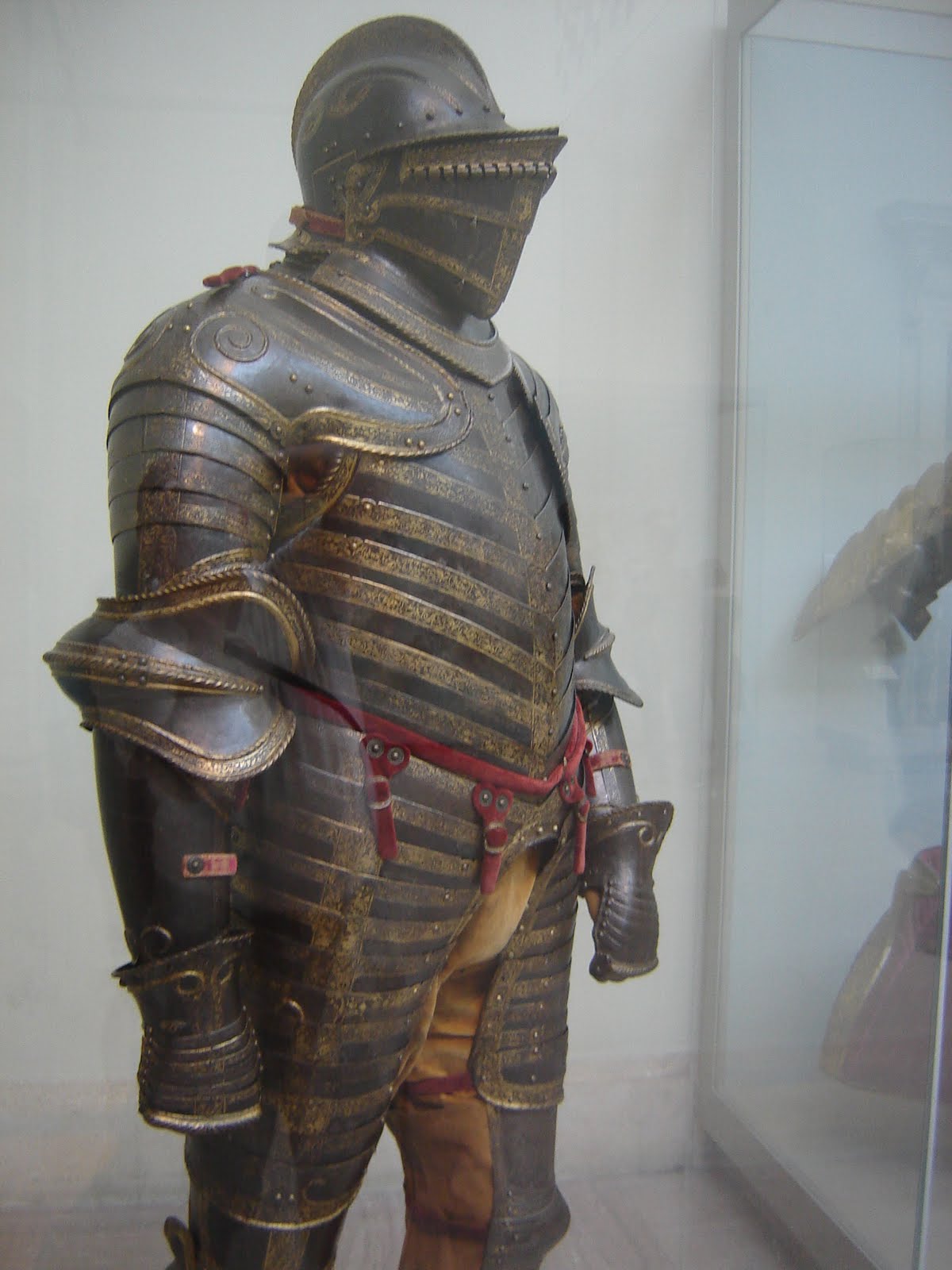
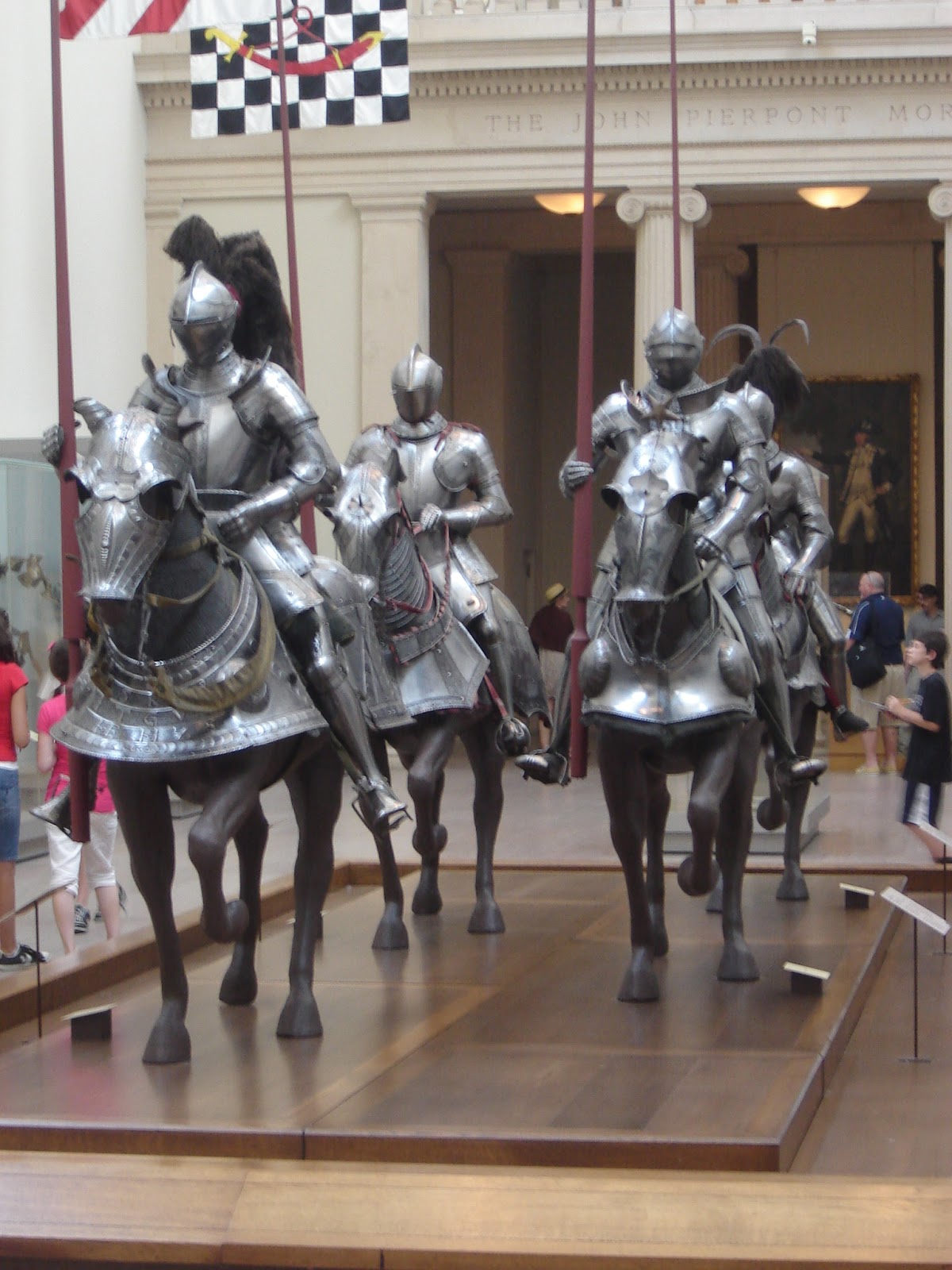
The Armory gallery at the Met, in all it's splendor, with Henry VIII's armor on display.

Tuesday, December 18, 2012

We are Anonymous

If you want to gain an understanding of Internet and hacker culture, however cursory, the excellent book We Are Anonymous:  Inside the Hacker World of LulzSec, Anonymous, and the Global Cyber Insurgency  by Parmy Olsen is a good entry point.

The book traces and outlines the evolution and growth of the loose "hive mind/hacker collective" that eventually morphs into the online hacking group Anonymous (typified by the stylized, blank faced Guy Fawkes masks from the film V for Vendetta now commonly seen at protests).

Anonymous is the amphorous, changable and often desultory collection of online hackers, script-kiddies, black-hat virus makers and anarchists that have aggregated into one of the more unique and potentially dangerous expressions of online culture. Olson traces the key elements that drove the development and growth of Anonymous, keying in on its more spectacular denial of service attacks and other hacking activities (including Anonymous's role in the Arab Spring) that have brought down web targets as diverse as CBS and the CIA.  The author takes a detailed look at a core group of hackers, paralleling their lives and the evolution of Anonymous from a loose affiliation of 4Chan message board lurkers and hackers into a more political, radical and anarchic agency.  The movement started from the subversive (and at times vicious) "trolling for the lulz" approach that morphed into Anonymous more by accident then design when it slammed into an online war with Scientology.


We are Anonymous. We are Legion. We do not forgive. We do not forget. Expect us.

Olsen outlines the rise of Anonymous from minor Internet irritant to the bane of Internet security experts everywhere and how the FBI and the authorities in the US and the UK eventually traced back, turned and broke at least a key part of the most significant organized hacking organization (if you can call it that) in the world.

The book is timely, fascinating, somewhat disturbing look at hacker subculture, the darker corners of the Internet and the rise of a new type of collective activist capability that has the capacity to impact commerce, politics and social networks around the world.

It warrants a careful look.

Tuesday, December 11, 2012

In The Plex

"In the Plex" is Steven Levy's a highly engrossing and well-written account of the the rise of Google from a garage start-up to a $30-billion colossus.

The book outlines Google from its initial conceptualization by Larry Page and Sergey Brin, examining the rise of its search capability, the advent of the advertising monster that became AdWords and AdSense (still accounting for the vast majority of Google's revenues), and the sometimes painful growth of the company from nimble start-up to Internet dominatrix.

Of particular interest is the gradual development of Google's market direction and management approaches, specifically in fostering innovation and new business opportunities. The author cites both hits and misses, delving into how Google works, thinks and acts.  Levy examines the many challenges the company has faced with issues such as privacy concerns, copyright issues, the seeesaw efforts in the China market, and the failure to catch the rising tide of the social media market.  The book looks at the evolution of both management and corporate culture including Google's reticence for revealing much information about itself and its the famous 'Don't be evil' mantra.

Google's well-known 20% rule - whereby employees can spend up to 20% of their time working on other projects - is mentioned but is one area of the book that seems sadly under-examined in the book as is very much insight into Google's innovation approaches, beyond the interests of the founders.

Of note to anyone in management is Google's application of OKRs - Objectives and Key Results approach (something devised by Andy Grove from Intel) in planning and setting business objectives and direction across the organization.  The OKR approach provided Google with a fundamental and rigorous objective planning system that was scalable across the rapidly growing organization, helping the new company in ensuring strong objective planning and a cohesive direction.

Well-written and in-depth, In the Plex is well worth your time.

Monday, November 5, 2012

City of Fortune

City of Fortune by Roger Crowley is a vivid, engrossing historical account of the rise (and eventual fall) of the the city of Venice.  Crowley traces the establishment of Venice as a small trade port and pulls together the fine threads of profit, technology, commercialism, power and hubris that allowed Venice to build an empire, without any natural resources to draw upon but themselves.


"The sea was at once their protection, their opportunity, and their fate; secure in their shallow lagoon with its deceptive channels and treacherous mudflats that no invader could penetrate, shielded if not insulated from the surge of the Adriatic, they wrapped the sea around them like a cloak."

At the height of its power, the Venetians sat at the epicentre, controlling the crossroads of the spice trade between the Christian west, and the markets of Islam, the Mongol, China and India.  From Asia and the Middle East,  to the European markets of France, Italy and Germany - Venice was the linchpin.  This then was Venice's famous "stato da mar", the dominion of the sea, an empire born of trade, inculcated on profit and ruled by commerce over all.

Well-written, concise and filled with deftly drawn historical figures  and incidents, Crowley examines the Venetian arc of history from their "hijacking" of the Fourth Crusade, the fracturing (at their hands more than anyone) of the Byzantine Empire, into their long commercial feud/war with Pisa and Genoa, and their abrupt decline in the face of Ottoman expansion and Portuguese technology.

City of Fortune is a brisk, epic and superlative account and well worth a look.

Wednesday, June 20, 2012

Basilica: The Splendor and the Scandal: Building St. Peter's


Basilica: The Splendor and the Scandal: Building St. Peter's by R. A. Scotti


Despite a great deal of background on the history of the period, I think I failed to appreciate how much of the Reformation was driven by the cost overruns of a construction project...

The design, development and building of the Basilica of St. Peter must stand as one of the superlative achievements in the history of mankind. Begun in 1506 and completed in 1626, the Basilica reads like a "who's who" of Renaissance artistry and architecture including Bramante, Michelangelo, Bernini, and Raphael, among countless others.

Scotti's book is an engaging, deftly written page-turner that delves into both the technological and architectural challenges and into the characters and personalities of the architects, builders, artists and their Papal patrons that, over 120 years, created a sublime masterpiece.

I recommend the book and, if you have (as I have) never had the opportunity to visit in person, check out the terrific virtual tour online for a first-hand look. It is spectacular. 

All images used in this post are courtesy of the Vatican website (http://www.vatican.va).

Friday, July 14, 2006

Captain Alatriste


Captain Alatriste by Arturo Perez-Reverte

"He was not the most honest or pious of men, but he was courageous. His name was Diego Alatriste y Tenorio, and he fought in the ranks during the Flemish wars. When I met him he was barely making ends meet in Madrid, hiring himself out for four maravedis in employ of little glory, often as a swordsman for those who had neither the skill nor the daring to settle their own quarrels. You know the sort I mean: a cuckolded husband here, outstanding gambling debts there, a petty lawsuit or questionable inheritance, and more troubles of that kind. It is easy to criticize now, but in those days the capital of all the Spains was a place where a man had to fight for life on a street corner lighted by the gleam of two blades."

So begins Arturo Perez-Reverte's stellar tale of a former soldier turned street-sword for hire in Spain's Golden Age. Originally published in Spain where it sold more than a million copies, Perez-Reverte's work has now crossed the Pond and has made its debut in a superlative and evocative English translation.

Ex-soldier and blade-for-hire Diego Alatriste y Tenorio is hired through intermediaries to waylay and murder two English travellers to Madrid. Privately instructed by one of his paymasters to merely wound the travellers, when Alatriste, touched by their honorable conduct, allows the travellers to live, he finds himself the target of a vicious conspiracy out to destablize the tenuous peace between Spain and England...with the Inquisition furiously pursuing Alatriste for reneging on his deadly bargain.

Captain Alatriste paints a marvelous swashbuckling historic picture of Madrid in Spain's Golden era, evoking the splendid colorful swagger of the streets with the politics and factions orbiting the Spanish courts. The book brings poetry, excitement, romance and a smooth textual verve that must be read to be truly understood and appreciated.

The second book in the series The Purity of Blood is already on the shelves and a film version of Captain Alatriste is apparently now in the works with Viggo Mortenson in the title role. My recommendation for some good summer holiday readings is to crack open Captain Alastriste and let the smooth heady prose of Arturo Perez-Reverte work its magic. You will not be disappointed.

For an excerpt from Captain Alatriste, check out Arturo Perez-Reverte's own site.

You can also pick up some Spanish rapiers online....

Take a virtual walk through the Golden Age of Spain or read up about the era at the ever dependable Wikipedia. Check out Cerventes here or dive into his work at the Cervantes Project.

Interested in visiting Madrid? Check out Mad About Madrid for a fascinating look at the city (including an Alatriste tour of the city...).

Thank you for reading!

My apologies for the present dearth of posts but between getting reading for a house move and my own book project, I am far behind in my reviews. More will be coming, and with better regularity.

Comments and feedback are always welcome!


Friday, March 10, 2006

Illicit : How Smugglers, Traffickers and Copycats are Hijacking the Global Economy


Illicit : How Smugglers, Traffickers and Copycats are Hijacking the Global Economy by Moises Naim

You probably didn't think, that time you downloaded an MP3 online or bought a bootleg DVD of the latest Hollywood release, that you were tied into one of the most dangerous and potentially destablizing political and economic forces on the planet...

Illicit by Moises Naim, takes a long, hard look at a new phenonoma in the international arena - the role of traffickers and trafficking networks in transforming politics, economics and borders. Naim, the Editor of Foreign Policy Magazine, has penned a darkly intriguing look at the underground economy of trafficking. Illicit looks a the intricate, intertwined worlds of smuggling, illegal migrants, narcotics, organ-legging, the international sex trade, slavery, the arms trade, money laundering, weapons of mass destruction and counterfeit goods.

Naim makes a strong case that the same value-chain enabling technologies that permit the Wal-Marts of the world to exist, have also given birth to illicit and illegal networks and enterprises - from Al Quada to pirated software. He traces the connections between points of international instability, legitimate trade, weak governments and porous borders and the rise of highly flexible, de-centralized networks that transcend state boundaries.

These networks are not Pablo Escobarean-style structures, run by a single boss, but rather a loose and ever-changing adaptable network of illegal and legal enterprises that can recombine, shift and take advantage of the restrictions inherent in states and state bureaucracy. They are, in essence, entrepenuerial power set free. They are networks - connections - the goods being trafficked are secondary to the linkages and capabilities the traffickers demonstrate.

One example Naim cites is the underground nuclear trade network of Abdul Quadeer Khan, Pakistan's father of the Islamic bomb. Khan's commercial network shipped centrifuges to Libya (uncovered in 2003) using, among others, a Malaysian enginnering firm, a Swiss engineer, a Sri Lanken intermediary, and a partially-owned British-owned Dubai corporation. The centrifuge was shipped on a German-registered ship.

The ability of these networks to heighten political instability, particularly in regions with marginal governmental / state controls or in regions where those particular states are weak, corrupt or permeable, is very high. Columbia, Peru and Bolivia for cocaine; Afghanistan for heroin; South Africa and Israel for illegal organs; China for counterfeit goods, software, DVD's, clothing; migrants from Africa and Asia; prostitutes from Hungary; optical disks from Ukraine...the list is endless and it is not just consumer goods but commercial industrial goods and medications.

Here's a quick excerpt description of Transdniester, a breakaway region of Moldova:

"Weapons are to Transdniester what chocolate is to Switzerland or oil to Saudi Arabia. Some countries export oil and gas, others, cotton or computers. Transdniester exports weapons - illegally. What kinds of weapons? Vast quantities of Soviet shells and rockets. Newly manufactured machine guns, rocket launchers, RPGs, and more, produced in what are described as 'at least six sprawling factories'".


Moldova has little to no authority over Transdniester. The region, which holds much of Moldova's industrial capacity, is essentially run by a family-owned company - the Sopranos writ large. They supply endless streams of weapons clandestinely around the world, a function previously controlled by and occupied by state players, now gone entreprenurial in the post-Cold War world of the 21st century.

Naim links the rise in trafficking networks of all types with other transnational networks such as Al Quada and offers the strong suggestion that where one is found, the other is not far behind. He also outlines the difficulties in fighting these criminal networks with the highly centralized, nation-based bureaucracies that now exist (i.e. Homeland Security) and the frictions and problems they face manifest in the fact that they are merely states. For the illicit networks of the world, borders and regulations spell opportunity. They are not going away. They are driven by high profits and markets not by morals. Like it or not, the Sprawl is now here.

In short, Illicit is probably one of the most important books for anyone looking to understand this "brave new world" which we inhabit, and the new influences and players operating within it. I seriously recommend you crack it open...it will make you think carefully about connections the next time your download your tunes.

I also recommend cracking open The World Is Flat: A Brief History of the Twenty-first Century by Thomas L. Friedman. Reading both books gives you a fairly complete picture of the impact, both legal and illegal, that freed-up, easily-moving capital and supply can have on the world's economies and on political stability.

Wondering where Moldova is? Wonder no further....

Thanks for reading BookLinker! Comments & feedback are always welcome.

Wednesday, January 11, 2006

The Devil's Teeth


The Devil's Teeth : A True Story of Obsession and Survival Among America's Great White Sharks by Susan Casey

"When a two-ton animal takes a taste of you, it doesn't do much good to apologize." - Peter Benchley

25 miles from where customers order tall lattes and casually sip cappachino's in Ghirardelli Square amid the noisy commerce of Fisherman's Wharf, a 400-million year old predator hunts.

The Devil's Teeth is a gripping and voraciously readable piece of work that looks at the Great White Sharks of the Farallon Islands, nicknamed The Devil's Teeth. A ragged, storm-tossed and desolate set of islands located 27 miles due west of San Francisco, the Farallon's are home to innumerable seabirds, a large colony of sea lions and one of the few known migratory gathering places for Great White Sharks.

Written by Susan Casey, The Devil's Teeth is one of the very best books of 2005. Captivated or obsessed, depending on your perspective, Casey ventures to the Farallon Islands to report on the Great White Shark study of biologists Peter Pyle and Scot Anderson. Venturing daily into the choppy environs that is the Farallons, the author joins the biologists in their dangerous work, tagging along after predators "so old they predate trees". Here's a brief excerpt:

"The killing took place at dawn and as usual it was a decapitation, accomplished by a single vicious swipe. Blood geysered into the air, creating a vivid slick that stood out on the water like the work of a violent abstract painter. Five hundred yards away, outside of the lighthouse on the island's highest peak, a man watched through a telescope. First he noticed the frenzy of gulls, bird gestalt that signaled trouble. And then he saw the blood. Grabbing his radio, he turned and began to run.

His transmission jolted awake the four other people on the island. 'We've got an attack off Sugarloaf, big one looks like'."


Casey's strings prose together in an intelligent, brisk and highly readable style, dropping elegant nuggets of shark lore, background on the Farallon's history (an "egg-station" where seabirds eggs were profitably gathered for years), and details on the Farallon shark study into a well-researched, well-written tome that draws a reader in and refuses to let them go until they too, start to wonder obsessively about these sepulchral denizens of the deep.

Reading the book, it occurred to me that I still didn't have a really good grasp on the sheer size of the Great White, so my seven-year old son and I took our measuring tape and his colored chalk and sketched out a life-size shark (based on Casey's measurements of "The Sisters", a group of older Farallon female Great Whites) on the sidewalk in front of our house. The scale was daunting to say the least and generated a new appreciation within me for both the biologists who daily ventured onto the sea to study the beasts, and a new respect for the author's obsession.

Just for fun, we added a life-size diver at the mouth end...passerbys were duely impressed.

I highly recommend The Devil's Teeth, it is a great read.

For more on sharks, check out the Pelagic Shark Research Foundation and visit this site for info on the Great Whites. Scared to hit the beach? Be sure to visit the Florida Museum of Natural History's Shark Attack List.

Drop by the Monterey Bay Aquarium's Shark exhibit for a look at the myths and realities around sharks and shark behavior and be sure to watch these guys for some clues to Shark behavior..

Thanks for reading! As always, comments and feedback are always welcome.

Friday, December 16, 2005

The Golem's Eye


The Golem's Eye (Bartimaeus Trilogy, Book 2) by Jonathan Stroud

Something strange is afoot in London.

Nathaniel, once a mere magician-in-training, now a rising star in the government, is faced with two vexing problems - first, track down a small and persistant group of underground rebels threatening the stability of the magician's government and, more importantly, find out who or what is behind a mysterious and destructive series of magical attacks now rocking London.

The Golem's Eye is the superlative sequel to Jonathan Strauss's terrific The Amulet of Samarkand. Nathaniel must once again call on the services of the wily, shape-shifting djinni Bartimaeus, in all his devious and humorous forms, to unravel the mystery. The unlikely team of the ambitious student magician and the cynical, wise-cracking 5,000 year old djinni makes for a solid and involving page-turner. In this outing a new character is thrown into the mix - Kitty, a young leader of the resistance - whom Nathaniel must find. Toss in a dangerous, secretive mission to the enemy City of Prague, a deadly hidden menance that the resistence accidently unleashes, and the cold, devious ambitions of an unseen enemy within London itself, and even a djinni with the myrid skills of Bartimaeus ccould find themselves taxed.

Struss has written a fabulously original series of books with the Bartimaeus trilogy, the best magical series since Harry Potter. The new book, Ptolemy's Gate is due out in January 2006 and I for one, will be picking it up as soon as it hits the shelves. They are excellent. Here's a quick excerpt:

"The magician went a bit gog-eyed with forboding; rightly so as it turned out. The smoke coalesced into a muscular black form, some seven feet high, complete with four waving arms. It shuffled slowly around the perimeter of the pentacle, testing for weaknesses.

And to its evident surprise, found one.

The four arms froze for a moment, as if in doubt. Then a dribble of smoke emerged from the base of the figure and prodded the edge of the pentacle with experimental care. Two such prods were all it took. The weak spot was pinpointed: a little hole in the incantatory barrier. Instantly the pseudopodium extended forward and began to stream through the breach...

An instant later, both pentacles were empty, except for a tell-tale scorch where the magician had once stood and a charred book lying beside it.

Throughout the summoning chamber, there was stunned silence. The magicians stood dumbfounded, their clerks limp and sagging in their seats....

We higher beings began a cheery and approving chatter. I exchanged a few remarks with the green maisma and the stilt-legged bird.

'Nice one.'
'Stylishly done.'
'That lucky beggar. You could tell she could hardly believe it.'"


Be sure to visit The Bartimaeus Trilogy online for some additional excerpts.

Wondering what a 'golem' is? Wonder no longer...

Want to find out how to summon one of Bartimaeuses' kindred? It's not recommended but hey, do what you want. Check out this site or this one...but no guarantees.

Thanks for reading BookLinker!

Monday, November 28, 2005

The (Incomplete) Iraq / Afghan War Reading Review

The (Incomplete) Iraq / Afghan War Reading Review

It might be a bit of hubris to offer up a review for this many books in one fell swoop. Indeed given the sheer volume of publications on the Iraq and Afghan conflicts, particularly in the last year, any type of comprehensive review becomes... well, fairly subjective by sheer necessity.

My list is no exception.

The books below were selected for a number of different reasons (in one case because the cover just looked so damn interesting). I don't pretend that they cover the complete gamut of available books on the subject, or that they cover the complete range of political viewpoints on the war. My selections were driven by a long-standing interest in history, politics, and current events; a belief in humanity, previous good experiences with several authors, recommendations from various sources and by following my nose and my instincts on what looked worth cracking open and spending my time. I've dumped out of this review almost as many books as are included within it, mainly because they didn't impress in content or in writing quality, or because the books selected did a better job of telling that particular story. You have to draw the line somewhere, or we'll be here all day.

I don't expect people to agree with me on either my selections or my opinion - hey, it's a book review. You buy your ticket, you take your ride.

The books selected for the review were deliberately selected to cover a range of topical areas - from the battlefields to the backrooms of the White House, to the slums of Baghdad. I've always been a believer that proponents of a black and white worldview were trying to sell me something...and I generally like to make up my own mind on most things (except when my wife makes up my mind for me...). Garnering a range of information sources is the best way to develop some level of understanding but I don't pretend that I can ever know the real story, just a reflection of it.
Generally the best place to start is at the beginning, so for a good background source I recommend reading Rick Atkinson's excellent account of the first Gulf War, Crusade (reviewed previously here). It's useful in providing some context for the events today and, despite the many people wanting to paint the current conflict as one uniquely and entirely driven by George W. Bush, there are a number of forces at work and none of them are either simplistic or operate in a vacuum.

For a unique and deeply fascinating look at the backdrop behind the decision to go to war in Iraq, Bob Woodward's book Plan of Attack provides a terrific "fly-on-the-wall" look at the decision-making process within the Bush White House. Hindsight is always twenty-twenty but even with this in consideration a disturbing pattern seems evident within the decision-making process of the administration that lends credence to the questioning of some of the elements behind the decision to go to war, particularly in the swift manifestation of that decision in the wake of 9/11 and the deliberate effort to interpret sometimes flimsy evidence as a smoking gun.
Woodward makes the most of his access and bases his account on exhaustive research and more than 75 interviews with high ranking officials including George W. Bush, Colin Powell and others. Despite the occasional misstep and a fairly dry and turgid writing style, the account is comprehensive and compelling.

Also of note is Richard A. Clarke's involving narrative Against All Enemies: Inside America's War on Terror which touches briefly on similar issues (namely the swift determination of the administration to war on Iraq following 9/11 and the efforts to link Saddam to the 9/11 hijackers. Clarke's book offers an insiders look at the shadowy War on Terror and paints a disturbing picture of the early Bush White House as blithly unappreciative of the potential dangers of Al Quada and coldly manipulative of it as an opportunity in the aftermath of 9/11.

Less helpful is Clarke's failure in the book to cast a real light on the failings of the Clinton administration in recognizing the danger and the evolving threat of terrorism within the global community. You can cite the domestic political issues faced by Clinton as much as you want as an excuse for distraction, but the harsh reality is that his administration (though it did more than anyone previously) failed miserably in assessing and managing the threat. But, as was noted previously, hindsight is always twenty-twenty...

Lastly Imperial Hubris, originally published anonymously but later revealed to be written by Michael Scheuer, a CIA Middle-East expert, pulls no punches in lambasting the current public perception of the issues, heaping significant scorn on Bush's reasoning behind the war on terror and on the invasion of Iraq, calling for instead a much geographically wider, much more targeted effort (yes, using substantial military force where necessary) to defeat the Islamists and to reduce the political and strategic environment that lends them support. Imperial Hubris is a polemic, and not an altogether comfortable one, but one that seems intent on skewering all sides of the debate and forcing as many sacred cows as possible to be tossed out.
With the advent of the war against Al Quada and the Taliban in Afghanistan, a good background primer on the region is an absolute necessity. I heartily recommend Peter Hopkirk's The Great Game: The Struggle for Empire in Central Asia, and Tournament of Shadows: The Great Game and the Race for Empire in Central Asia by Karl Ernest Meyer. These two works will give you the historical background. Then go and read some Kipling for the flavor...

For a more contemporary look at Afghanistan, the rise of Al Quada and Bin Ladin, crack open Steve Coll's superlative Pulitzer-Prize winning Ghost Wars: The Secret History of the CIA, Afghanistan, and Bin Laden, from the Soviet Invasion to September 10, 2001 (detailed review can be found here). I also recommend Charlie Wilson's War by George Crile (also reviewed here). Both books are characterized by strong research, excellent writing and a highly involving look at the last thirty-years of Afghan history and its bitter aftermath.

The war against the Taliban in Afghanistan was an extraordinary one, by any definition, made moreso by the relative dearth of U.S. forces on the ground for much of the conflict. U.S. Special Forces played a key role in the Northern Alliance's overthrow of the Taliban regime and the relatively swift victory that ensued, bringing their battlefield expertise, communications, language, organizational skills, and their innovative, evolving warfare techniques to bear.

Linda Robinson's Masters of Chaos: The Secret History of the Special Forces takes a
careful look at the activities of the U.S. Special Forces in both Afghanistan and Iraq, although the book is in actuality an overview of their activities across other operational theaters such as Panama, Kosovo, Somolia, and more.
Robinson pulls together a solid account of the Special Forces, weaving together interviews with more than 30 special forces operators and delving into and contrasting the attitudes and approaches found in the Special Forces with the mainstream military forces.

By contrast Not a Good Day to Die: The Untold Story of Operation Anaconda by Sean Naylor may have your gnashing your teeth in frustration as you read this taut, well-written account of a U.S. operation in the Shahikot mountains of south-east Afghanistan. Mark Bowden's Black Hawk Down has helped drive a literary resurgence in intricate, well-researched and deeply involving accounts of battles and Not a Good Day to Die is written in a similar vein.

It is a highly engrossing, moving and involving account of Operation Anaconda, a large strike against a Taliban/Al Quada stronghold that goes dramatically wrong. Naylor's book gives a comprehensive account of how, despite all the technology and the firepower, planning can go seriously awry and how, although new technology can create more and better battlefield intelligence, the same technologies can result in information overload, coommunications friction and serious command-and-control issues.

The War in Iraq has been, by contrast, very different from Afghanistan.

John Keegan's book The Iraq War provides readers with a sound strategic and diplomatic overview of the events leading up to war, particularly in helping readers understand the context of the war, the process of the diplomatic dance and the directions of the major players.

Keegan doesn't treat the "march to war" as a process that occurs in isolation, but does a good job of drawing in the many and varied elements that contributed, not the least of which was Saddam's horrific record of human rights abuses, his wars with Iran, Kuwait and the Kurds and his overall history of belligerence. Keegan, one of the world's foremost military historians and the author of such works as Intelligence in War and the superlative The Face of Battle, has penned a dry, somewhat pedestrian work but one that provides a good and exhaustive viewpoint that is free of much of the overt political bile that mars some of the U.S. publications.

Beyond Keegan's contextual work, there are a wide range of publications that cover the actual events of the war itself. The use of "embedded" journalists provided a number of writers with the opportunity to experience the war in a way quite frankly unprecedented since World War II and at a level that lends itself to often highly personal accounts, albeit ones that are sometimes skewed through the narrow and oft-times constrained perspective of the particular journalist.

One of the first books released after the conclusion of the war (the overt formal hostilities at any rate) was The March Up: Taking Baghdad with the 1st Marine Division by Ray Smith and Bing West. Smith and West are both former Marines who traveled with the 1st Marine Division, at the "point of the spear", from Kuwait to Baghdad. Smith and West do an solid job chronicling the dangers and uncertainties the Marine's faced on the march however the book suffers from a decidely uneven editing job at points that detracts from the overall narrative. West and Smith offer little commentary on the political or diplomatic particulars of the war but offer an honest and revealing look at the men placed in harm's way.

Strangely enough, while reading The March Up, I was struck at one point with a startling and eerie sense of recognition as the authors described a skirmish that I had listened to live, courtesy of CNN and my local radio station, while driving to work one day. The contrast was jarring, disturbing and unnerving, listening to a war unfold within the banality of the everyday.

There have been a wide variety of publications being penned by the various embedded journalists but one of the better works was Generation Kill: Devil Dogs, Iceman, Captain America, and the New Face of American War by Evan Wright. Wright, a writer for, of all publications, Rolling Stone Magazine, was also embedded with the Marines, specifically with the First Reconnaissance Battalion, the leading unit of the invasion (nicknamed the "First Suicide Battalion" for their position ahead of other U.S. Forces and for their role in racing ahead to trigger suspected ambushes).
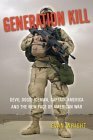
Generation Kill has energy, verve and above all a taut sense of reality caught up within its pages. Wright pulls few punches, portraying the Marines, warts and all, delving into their attitudes and opinions on the war, their fears and hopes and personalities. As for the war itself, Wright builds a vivid picture of the mixed bag that was Iraq - the strange melange of little and futile organized resistance interspersed with vicious and intense Fedayeen attacks, and the horrific ongoing accidents of small groups of Iraqi civilians wandering into the crossfire. Brutally honest, involving and at times wrenching, Generation Kill is an well-written, highly charged piece of work.

In the Company of Soldiers : A Chronicle of Combat by Rick Atkinson is another example of embedded coverage. In this case Atkinson, the author of arguably the best account of the First Gulf War, Crusade, and of An Army at Dawn, was placed with the 101st Airborne Division commanded by the larger-than-life Major General David Petraeus. In the Company of Soldiers spends far less time looking at the war as a whole, as with his previous work, and little time on the individual soldiers on the battlefield.

Atkinson focuses the work on the senior commanders, looking at the logistics, planning, decision-making, communciation and adaptability of the 101st's command structure. Petraeus comes off as a caring, charismatic and intensely competitive leader and the overall image of the U.S. field commanders is one of high professionalism although there is a sense that Atkinson might have been better served in spending an equivalent amount of time with the men in the field. As a sketch of the decision-making and leadership qualities, it is a solid, but unexciting piece of work albeit not as encompassing as Crusade nor as far-reaching as An Army at Dawn.

Thunder Run by contrast is a pure battlefield account, and possibly one of the best written since Black Hawk Down. Thunder Run is a rousing and detailed account of the armored strike on Baghdad, following the 2nd Brigade of the 3rd Infantry Division, the Spartan Brigade. A "thunder run" is an rapid, fast-moving armored attack, designed to punch through enemy defenses in a highly aggressive manner. Written by David Zucchino, Thunder Run offers an intense front-seat view of modern armor at war. The traditional strategic doctrines governing the use of armor and the "thunder runs" were, ironically enough, effectively turned on their heads when carried out in Iraq.

Zucchino pulls out subtle details on the men, the machines and the realities of war, capturing both the turmoil and the tragedy in equal measures. He also serves to shed light on one of the more erroneously reported and infamous incidents of the war - the shelling of the Palestine Hotel - offering a through after-action report with a number of witnesses to the incident, laying to rest the reports of a deliberate assault on the media. Here's a quick excerpt:

"The division had just completed the fastest sustained combat ground march in American military history - 704 kilometers in just over two weeks and 300 kilometers in one twenty-four hour sprint. It was April 4, 2003 and Jason Diaz from the Bronx - budding army lifer, husband of Monique, father of little Alondra and the twins, Alexandra and Anthony - was weary and filthy and longing to go home. But now, on this cold starry night, he was obliged to demand even more from his exhausted crew and his overextended tank. He had just been ordered to take them straight into Baghdad."

Thunder Run is, quite bluntly, a terrific read.

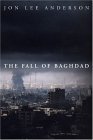
Beyond the battlefield accounts and the "embeds" are another set of stories penned by a handful of reporters who remained behind in Baghdad after the war began. The Fall of Baghdad by John Lee Anderson is a highly personal, very evocative, gritty and well-written account of Baghdad before, during and immediately after the war. Anderson draws a careful and nuanced account of his days in Baghdad, sketching out the often narrow path that individual Iraqi's have had to tread between a dangerous and rampant advancing superpower and the ruthless internal security apparatus of the Saddam and the Baathists. Through experience, interviews and trenchent observation, Anderson has built an effective and gripping picture of life in the final days of Baghdad, putting an all-too-human face on the people at the other end of the rifle sight.

By the time you finish The Fall of Baghdad, you are left with a decidely mixed taste in your mouth regarding the invasion - it rid Iraq and the world of Saddam and the apparatus that supported him - but the question of what impact the occupation will have for the peoples of Iraq is decidely uncertain. Anderson's book is not an overtly political work, it is not an anti-war or pro-war polemic, but rather concerns itself with opening a window on the conditions, thoughts, hopes and fears of the people of Iraq. Some of the messages are unpleasant and unsettling, but they do need to be heard and Anderson's work is a well-written and rich first step towards a better understanding of the situation.

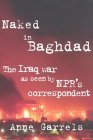
Naked in Baghdad by Anne Garrels is another solid first-person account of Baghdad at war. Anne Garrels was the NPR correspondent in Baghdad, gamely sticking to her reportage throughout the war, one of only 16 non-embedded reporters who stayed in the capital during the war. Based out of the Palestine Hotel, she dodged her Iraqi minders, cajoled the bureaucracy, scrounged supplies, and roamed the city trying to pull together stories in the face of U.S. bombing and missle strikes and a relentless Iraqi propaganda machine.
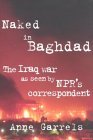
Garrels work lacks the depth of content and insight that laces through Anderson's account but her book remains a vivid and highly readable account. Interestingly enough, it too touches on the U.S. shelling of the Palestine Hotel - from the receiving end of the shells. Overall Naked in Baghdad is a fascinating personal account but at the end of the day is more of a war diary.

Overall the books covered in this brief and incomplete reader review are all well worth your time and will help you gain a better comprehension of the events that have occurred and are daily unfolding. The one element I would recommend is that you make an effort to read outside of your comfort zone, whatever side of the political fence you may find yourself on.

For more on Iraq I recommend checking out some of the many first-hand accounts of the warzone. Here are a few notable ones:

Back to Iraq by Christopher Allbritten is a weblog started by a freelance journalist who went "stumbling around Iraqi Kurdistan" in 2002 and again in 2003 during the war. He is now based in Baghdad covering the post-war events for Time Magazine. He offers a solid and involving look at the tensions of living and working in Baghdad, and some fascinating insights into the evolving Iraqi political situation.

Michael Yon's Online Magazine site is another freelance independent reporter embedded with the U.S. Forces in Iraq. Yon's work is tense, tight and highly readable, providing a window into the lives of the men on the ground and the war they face that goes far beynd the regular media.

Also notable is Kevin Sites blog of his activities in the warzone.

For other miitary bloggers of note - check out The Mudville Gazette, which provides an exhaustive and comprehensive mil-blogger list, Blackfive, CounterColumn , and The Indepundit (formerly Lt. Smash when he was in Iraq...).

Beyond the mil-bloggers, check out Riverbend, Healing Iraq, and lastly Dear Raed (the famous Iraqi blogger who blogged from Baghdad throughout the war,. His site is now in hiatus).

If you are interested in more news from Iraq, check out Iraq Daily .

All of the above sites come with fairly extensive links to additional sites, so please feel free to browse (hey, its the world wide web ain't it?) and surf. There are some fascinating sites out there and some terrific writing hidden away online in obscure little corners.

Lao Tzu once wrote that the Tao which we can perceive is never the true Tao. I fully expect that people reading this review list from all sides of the political spectrum will say "yes but he didn't read this..." or, more bluntly "this guys is full of sh*t..." and you know what...I am. You may read all of the books reviewed here and totally disagree, you may think the selections from this list leave off some spectacular works and include some ridiculous ones...Great! Go crack open a book and read one! Send me a recommendation! Write your own take on things! A little knowledge is a dangerous thing, before you know it a damn civil discussion might have broken out and who knows, dare I say it - some ideas might be exchanged, despite the differences in opinions.

One reason I decided to post this review was the sheer level of acrimony and posturing I've seen demonstrated on the web from all sides of the political spectrum. They are less interested in building up their understanding of the situation, the issues and the moral choices, and more interested in tearing down and using the events for gain in their arguments. I'll be blunt - I have no idea who's right and who's wrong and on the issues regarding the war, I'm particularly torn, galloping madly off in all directions at once, idealism, pragmatism, hope and cynicism, all pushing and pulling.... Reading these works is my effort to get a handle on the ideas being tossed about, an anchor of sorts amid the rhetoric and idiocy.

I hope in the end you check out some of the books.

Thanks for visiting. I hope you've enjoyed the post. Please feel free to link and add comments...Bye.

Monday, October 31, 2005

Make Love*


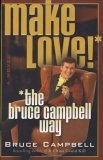
Make Love* The Bruce Campbell Way by Bruce Campbell

"Hail to the King, baby" - Bruce Campbell as Ash, Army of Darkness

Bruce Campbell, author of If Chins Could Kill, the most original autobiography out of Tinseltown, has struck again with an "autobiographical" fiction, an implausible "what-if" with a premise to shake the very pillers of heaven...Make Love* The Bruce Campbell Way asks that most singular of questions -- What happens when a schlock-heavy, lantern-jawed, quip-laden B-Movie star like Bruce Campbell lands an "A" film?

Unexpectedly landing the lead role in a new Mike Nichol's romantic comedy (called Let's Make Love), Campbell is cast as a wise-cracking Southern doorman, dispensing sage relationship advice to a star-crossed Richard Gere and Renee Zellweger. He immediately starts making his presence known, researching his role as a doorman; running afoul of Colin Powell; teaching Richard Gere how to stage a real knock-down, drag-out punch-up; sourcing stunt cars for Nichols; dispensing unrequested advice to Renee Zellweger on sexing up her wardrobe and generally and liberally spreading his B-movie wisdom about like lawn fertilizer.

Broadly written but servicable, Make Love* The Bruce Campbell Way doesn't pretend to be literature. Campbell is, however, very, very funny, in his own peculiar twisted style, and Make Love* The Bruce Campbell Way, while it is never going to win an literary prizes, is something that most prize winners aren't - a fun and enjoyable read. Just don't expect Tolstoy.

For more info on Bruce Campbell and his multitudinous filmography, check out the always excellent Internet movie Database (IMDB) (Did you know that Richard Gere's middle name was Tiffeny?), or drop by Campbell's own website for an excerpt from the book and some words of wisdom on life in B-moviedom. You can also check out his work as Coach Boomer in Sky High or as the irritating theater usher who refuses entry to Peter Parker in Spider-Man 2.

Comments. links and feedback are always welcome.

Wednesday, October 5, 2005

Old Man's War


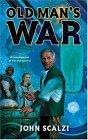
Old Man's War by John Scalzi

Heinleinesque.

There. Now that "that" is out of the way, John Scalzi's Old Man's War is a gripping, enjoyable military science-fiction novel who's sole major fault is that it feels too damnably short.

The title is unfailingly accurate - it is the story of an old man's war. Join the Army, see the Galaxy, meet exotic aliens...and, well, kill them. Seventy-five year old widower John Perry takes a second shot at life and abandons Earth to enlist in the Colonial Defense Forces. Conveniently dropped into a new enhanced body, Perry is soon hip-deep in a decidely Darwinian conflict between various sentient species for habitable planets. The story arc follows the predictable set-up - boot camp (of a sort), first combat, the progressive hardening of the character through more varied combat experience.

Though the story arc is a familiar one, Scalzi has peppered his work with an abundance of nifty concepts, social commentary, technology and some interesting twists on the usual aliens, as well as tight writing and good characterization (and a slightly sick and off-beat sense of humor).

Aside from the story length, the only quibble I had plotwise with Old Man's War was the black-and-white, everybody versus everybody vision of the OMW's universe. This reads as a bit shallow and unbelievable - not because I couldn't believe in a Darwinian universe - but because I would have expected that the conflict would not be quite as simplistic as it seems portrayed here. I would have expected more alien species using different evolutionary tracks to succeed (i.e. some parasitical etc.) rather then just straight-forward violent competition...but hey, that's me.

If you are looking for more military science fiction to read, check out the Baen Free Library, courtesy of Baen Books (Note: not the publisher of OMW - that would be Tor Books) . The Baen Free Library includes works from such authors as David Drake, John Ringo, and David Weber (for the excellent Honor Harrington Series). I also recommend the old classic Starship Troopers by Robert A. Heinlein if you haven't read it yet (note: I've linked to the version with the classic cover, not the trashy movie cover version) and as a bonus, I recommend my personal favorite Heinlein - The Moon is a Harsh Mistress.

I also recommend avoiding Paul Verhovan's film version of Starship Troopers which, although I know some view it as a great exercise in satire, utterly and steadfastly manages to avoid any of the elements that make Heinlein's book a good read.

If you are interested, check out Scalzi's own website at www.scalzi.com and read the "Whatever" for some occasional scathing commentary, interesting tips on writing (and selling your writing) and info on other upcoming works. As I understand it, the sequel to Old Man's War entitled The Ghost Brigades is complete and heading for release in 2006. I for one will be waiting.

Thanks for reading BookLinker! Comments, links and feedback are appreciated. Please support the site by clicking on our ads and making your Amazon purchases here.

*UPDATE* - As I am now starting to gather irritating amounts of spam in the Comments (i.e. see comment 1), I have activated Blogger's comment verification system. This should stop future spam but annoyingly Blogger offers no editorial control over existing individual spam postings so I can't delete those existing suckers....Please feel free to now post your pithy, erudite and thoughtful comments in a spamless environment.

You may now resume your regular programming.

Monday, September 12, 2005

Assassination Vacation


Assassination Vacation by Sarah Vowell

This is the oddest good book I've read in many a day. Reading it, I have the impression that Sarah Vowell and Mary Roach would get along like a house on fire...

Assassination Vacation is Vowell's exploration into the twisted annals of, well, Presidential assassinations, specifically Lincoln, Garfield and McKinley. Vowell's odd fetish drives her on pilgramage, visiting innumerable assassination-linked locales, including the obvious ones like Ford's Theater and the more obscure such as Fort Jefferson prison on Dry Tortugas Island (where Dr. Samuel Mudd was held for his role in the Lincoln assassination), the National Museum of Health and Medicine, the Oneida Community of New York, the back roads of Maryland (and the assassination linkages found in a roadside diner's placemat and the Maryland state anthem) and even venturing up to the wilds of Buffalo (where McKinley met his demise).

Vowell's writing is tight, droll and astute, catching both the gravitas and the absurdity of both politics and history, one moment musing on the magnificence of the Lincoln Memorial and the next noting that the addition of the reflecting pool screwed up the lighting in the memorial - making Lincoln look as those someone was shining a flashlight up his nose. Of particular note is Lincoln's son Robert Todd Lincoln who, like some dreadful jinxed Presidential Nemesis, found himself present at all three of the assassinations. Also new to me was the odd fact that Charles Guiteau (Garfield's mentally disturbed killer) blamed the doctor's at the trial for Garfield's death, claiming that he had merely shot the man, the doctor's were the ones that killed him (which, strangely enough, they did, through probing Garfield's wound with non-sterile fingers and instruments).

This odd literary pilgrimage delves into almost every conceivable "relic" of the assassinations, tracing torn bits of clothes, Presidential skull fragments, Booth's escape route and many, many side-trips into trivia, politics and culture, making a superlative, highly readable and fascinating blend.

Assassination Vacation is a page-turner, simply because you want to find out where Vowell will be dragging her readers next.

For more information on Abraham Lincoln, check out Lincoln Online, visit Ford's Theater, or check out John Wilkes Booth here. There are a number of Lincoln assassination sites on the web such as The Abraham Lincoln assassination Page (which includes (for CSI fans out there) info on Booth's autopsy), and a site with a collection of the legal trial documents.

For more on Garfield (shamelessly ignored online compared to Lincoln), visit Wikipedia, check out Georgetown University's Special Collections for Guiteau's letters and learn about Alexander Graham Bell's link to the assassination here.

For McKinley check out History.Net, this site, and the National Park Service site.

By way of interest, here's a list of the 18 attempts that failed....

Interestingly in addition to being an excellent (if obsessive) writer, Sarah Vowell is also the voice of this young lady...

Strange girl.

Thanks for reading! Support the site and make your Amazon purchases here! Yes this means YOU!.

Links and comments are always welcome.