Elizabethan London

Elizabethan London
Tyburn was an infamous execution spot west of London, used since medieval times. The Tyburn "tree" - a unique, multi-person gallows - erected in 1571 became a popular public spectacle, drawing crowds of thousands.Tyburn Tree blog is less blood-thirsty but hopefully topical, interesting and informative, if slightly bent to my personal topics of interest - books, writing, history, technology, with a smattering of politics and dash of pop culture, science and the downright strange. So "take a ride to Tyburn" and see what happens...

Tuesday, May 29, 2012

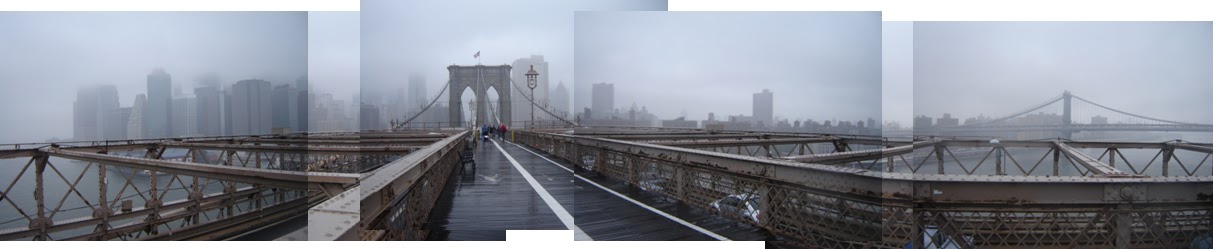
New York, NY

Over the great bridge, with sunlight through the girders making a
constant flicker upon the moving cars, with the city rising up
across the river in white heaps and sugar lumps all built with a
wish out of non-olfactory money. The city seen for the first time,
in its first wild promise of all the mystery and the beauty in the world.
-
F. Scott Fitzgerald

I had my first opportunity to visit New York last year. 

It seems strange, given its relative proximity, that I had never had the opportunity to go.

I've visited any number of major cities - San Francisco with the framing magnificance of the Golden Gate, the bustle of Fisherman's Wharf and the intricate warren of steep and twisted hill streets; Houston, ultra modern with steely glass petro towers, arctic air conditioning, and a startling mix of affluence lying next to trailerparks festooned with rusted, wheelless cars on cinderblocks; Tokyo, the city of villages with the needle-sharp Ginza, the chaotic buzz of Roppongi and the Blade Runner ambience of Shinjuku slick with neon in the rain.

All of them are great cities in their own way. 
New York has the feel of one of those "world" cities - a city that seems to capture all the granduer, variety, complexity, density and accretion that several centuries of occupation and life leaves in its path. 

The city is a strange mix of the familiar and the unknown.  Familiar, due in part its role as the setting for countless Law & Order episodes.  New York is that staple of television and movie copland - and so the place names roll off the tongue with maddening recognition, though their true geographic veracity lies only in the imagination and often vague generalities - Battery Park, Soho, the Brooklyn Bridge, mid-town, Times Square, Central Park, Harlem... Their true location is less than the perceived map of the imagination.

The reality is one that television and media  fails to capture a sense that can only be understood through visiting - an appreciation for the sheer hubris and scale of the place.  You need to experience it, you need to see it stretch out at your feet into the humid, thick June air from the deck of the Empire State Building.  Manhatten fades into the distance in two directions, relentless in a long and langourous stretch of pavement, steel, ambition and concrete piled high upon itself, a canyonland of skyscrapers, windows, fire-escapes, water towers and rooftops, the fine details visible only through a .50 cent telescope, relentless and geometric, tidy only at a distance.

So this was New York.


Wednesday, May 23, 2012

Welcome to Tyburn Tree

Welcome to Tyburn Tree!  Formerly this was Booklinker, my book review site now converted over into my online home, so if by chance you've wandered over from Booklinker, welcome to the new digs.

You may have noted that for the last five years there has been, well, a paucity of posts.  This is primarily due to switching my writing efforts from online over to working on my book.  As noted in the earlier posts, the book is now done and the long journey towards publication has begun.

Thursday, November 17, 2011

A Prologue...

Well, I've added the Prologue to the excerpt of The Jesuit Letter...Enjoy!

Saturday, September 10, 2011

An Update!

Well it has been a somewhat lengthy time since I last updated the site.

The delay was not without reason.
Late in 2006, I moved book reviews off of my priority list, for purely selfish motives.  At that time I started working on my own writing project.  With only a limited amount of spare time each week to spend on my writing, I elected to focus on my personal project and see where it took me.
Now five long years later, I have a completed manuscript piled in front of me.  The book is The Jesuit Letter.  It is historical fiction, approximately 112,000+ words and set in 1575 in Elizabethan England. 
The story tells the tale of ex-soldier-turned-player Christopher Tyburn, who finds himself entangled in a murderous conspiracy when he intercepts a coded letter from a hidden Jesuit priest in Warwickshire. 
I have posted the first two chapters as excerpts on the sidebar, so feel free to click through and have a read.  As per the message on the sidebar, I am currently seeking agent representation with an aim for eventual publication.
Making this excerpt available online is a bit of an experiment, a “message in a bottle” cast into the ocean to see what happens.
If you do happen to be a reputable literary agent, or know of one that you can recommend or introduce to my work, please feel free to do so via email.
Thank you for visiting and please let me know if you enjoy the excerpt!

Friday, July 14, 2006

Captain Alatriste


Captain Alatriste by Arturo Perez-Reverte

"He was not the most honest or pious of men, but he was courageous. His name was Diego Alatriste y Tenorio, and he fought in the ranks during the Flemish wars. When I met him he was barely making ends meet in Madrid, hiring himself out for four maravedis in employ of little glory, often as a swordsman for those who had neither the skill nor the daring to settle their own quarrels. You know the sort I mean: a cuckolded husband here, outstanding gambling debts there, a petty lawsuit or questionable inheritance, and more troubles of that kind. It is easy to criticize now, but in those days the capital of all the Spains was a place where a man had to fight for life on a street corner lighted by the gleam of two blades."

So begins Arturo Perez-Reverte's stellar tale of a former soldier turned street-sword for hire in Spain's Golden Age. Originally published in Spain where it sold more than a million copies, Perez-Reverte's work has now crossed the Pond and has made its debut in a superlative and evocative English translation.

Ex-soldier and blade-for-hire Diego Alatriste y Tenorio is hired through intermediaries to waylay and murder two English travellers to Madrid. Privately instructed by one of his paymasters to merely wound the travellers, when Alatriste, touched by their honorable conduct, allows the travellers to live, he finds himself the target of a vicious conspiracy out to destablize the tenuous peace between Spain and England...with the Inquisition furiously pursuing Alatriste for reneging on his deadly bargain.

Captain Alatriste paints a marvelous swashbuckling historic picture of Madrid in Spain's Golden era, evoking the splendid colorful swagger of the streets with the politics and factions orbiting the Spanish courts. The book brings poetry, excitement, romance and a smooth textual verve that must be read to be truly understood and appreciated.

The second book in the series The Purity of Blood is already on the shelves and a film version of Captain Alatriste is apparently now in the works with Viggo Mortenson in the title role. My recommendation for some good summer holiday readings is to crack open Captain Alastriste and let the smooth heady prose of Arturo Perez-Reverte work its magic. You will not be disappointed.

For an excerpt from Captain Alatriste, check out Arturo Perez-Reverte's own site.

You can also pick up some Spanish rapiers online....

Take a virtual walk through the Golden Age of Spain or read up about the era at the ever dependable Wikipedia. Check out Cerventes here or dive into his work at the Cervantes Project.

Interested in visiting Madrid? Check out Mad About Madrid for a fascinating look at the city (including an Alatriste tour of the city...).

Thank you for reading!

My apologies for the present dearth of posts but between getting reading for a house move and my own book project, I am far behind in my reviews. More will be coming, and with better regularity.

Comments and feedback are always welcome!


Friday, March 10, 2006

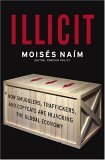
Illicit : How Smugglers, Traffickers and Copycats are Hijacking the Global Economy


Illicit : How Smugglers, Traffickers and Copycats are Hijacking the Global Economy by Moises Naim

You probably didn't think, that time you downloaded an MP3 online or bought a bootleg DVD of the latest Hollywood release, that you were tied into one of the most dangerous and potentially destablizing political and economic forces on the planet...

Illicit by Moises Naim, takes a long, hard look at a new phenonoma in the international arena - the role of traffickers and trafficking networks in transforming politics, economics and borders. Naim, the Editor of Foreign Policy Magazine, has penned a darkly intriguing look at the underground economy of trafficking. Illicit looks a the intricate, intertwined worlds of smuggling, illegal migrants, narcotics, organ-legging, the international sex trade, slavery, the arms trade, money laundering, weapons of mass destruction and counterfeit goods.

Naim makes a strong case that the same value-chain enabling technologies that permit the Wal-Marts of the world to exist, have also given birth to illicit and illegal networks and enterprises - from Al Quada to pirated software. He traces the connections between points of international instability, legitimate trade, weak governments and porous borders and the rise of highly flexible, de-centralized networks that transcend state boundaries.

These networks are not Pablo Escobarean-style structures, run by a single boss, but rather a loose and ever-changing adaptable network of illegal and legal enterprises that can recombine, shift and take advantage of the restrictions inherent in states and state bureaucracy. They are, in essence, entrepenuerial power set free. They are networks - connections - the goods being trafficked are secondary to the linkages and capabilities the traffickers demonstrate.

One example Naim cites is the underground nuclear trade network of Abdul Quadeer Khan, Pakistan's father of the Islamic bomb. Khan's commercial network shipped centrifuges to Libya (uncovered in 2003) using, among others, a Malaysian enginnering firm, a Swiss engineer, a Sri Lanken intermediary, and a partially-owned British-owned Dubai corporation. The centrifuge was shipped on a German-registered ship.

The ability of these networks to heighten political instability, particularly in regions with marginal governmental / state controls or in regions where those particular states are weak, corrupt or permeable, is very high. Columbia, Peru and Bolivia for cocaine; Afghanistan for heroin; South Africa and Israel for illegal organs; China for counterfeit goods, software, DVD's, clothing; migrants from Africa and Asia; prostitutes from Hungary; optical disks from Ukraine...the list is endless and it is not just consumer goods but commercial industrial goods and medications.

Here's a quick excerpt description of Transdniester, a breakaway region of Moldova:

"Weapons are to Transdniester what chocolate is to Switzerland or oil to Saudi Arabia. Some countries export oil and gas, others, cotton or computers. Transdniester exports weapons - illegally. What kinds of weapons? Vast quantities of Soviet shells and rockets. Newly manufactured machine guns, rocket launchers, RPGs, and more, produced in what are described as 'at least six sprawling factories'".


Moldova has little to no authority over Transdniester. The region, which holds much of Moldova's industrial capacity, is essentially run by a family-owned company - the Sopranos writ large. They supply endless streams of weapons clandestinely around the world, a function previously controlled by and occupied by state players, now gone entreprenurial in the post-Cold War world of the 21st century.

Naim links the rise in trafficking networks of all types with other transnational networks such as Al Quada and offers the strong suggestion that where one is found, the other is not far behind. He also outlines the difficulties in fighting these criminal networks with the highly centralized, nation-based bureaucracies that now exist (i.e. Homeland Security) and the frictions and problems they face manifest in the fact that they are merely states. For the illicit networks of the world, borders and regulations spell opportunity. They are not going away. They are driven by high profits and markets not by morals. Like it or not, the Sprawl is now here.

In short, Illicit is probably one of the most important books for anyone looking to understand this "brave new world" which we inhabit, and the new influences and players operating within it. I seriously recommend you crack it open...it will make you think carefully about connections the next time your download your tunes.

I also recommend cracking open The World Is Flat: A Brief History of the Twenty-first Century by Thomas L. Friedman. Reading both books gives you a fairly complete picture of the impact, both legal and illegal, that freed-up, easily-moving capital and supply can have on the world's economies and on political stability.

Wondering where Moldova is? Wonder no further....

Thanks for reading BookLinker! Comments & feedback are always welcome.

Wednesday, January 11, 2006

The Devil's Teeth


The Devil's Teeth : A True Story of Obsession and Survival Among America's Great White Sharks by Susan Casey

"When a two-ton animal takes a taste of you, it doesn't do much good to apologize." - Peter Benchley

25 miles from where customers order tall lattes and casually sip cappachino's in Ghirardelli Square amid the noisy commerce of Fisherman's Wharf, a 400-million year old predator hunts.

The Devil's Teeth is a gripping and voraciously readable piece of work that looks at the Great White Sharks of the Farallon Islands, nicknamed The Devil's Teeth. A ragged, storm-tossed and desolate set of islands located 27 miles due west of San Francisco, the Farallon's are home to innumerable seabirds, a large colony of sea lions and one of the few known migratory gathering places for Great White Sharks.

Written by Susan Casey, The Devil's Teeth is one of the very best books of 2005. Captivated or obsessed, depending on your perspective, Casey ventures to the Farallon Islands to report on the Great White Shark study of biologists Peter Pyle and Scot Anderson. Venturing daily into the choppy environs that is the Farallons, the author joins the biologists in their dangerous work, tagging along after predators "so old they predate trees". Here's a brief excerpt:

"The killing took place at dawn and as usual it was a decapitation, accomplished by a single vicious swipe. Blood geysered into the air, creating a vivid slick that stood out on the water like the work of a violent abstract painter. Five hundred yards away, outside of the lighthouse on the island's highest peak, a man watched through a telescope. First he noticed the frenzy of gulls, bird gestalt that signaled trouble. And then he saw the blood. Grabbing his radio, he turned and began to run.

His transmission jolted awake the four other people on the island. 'We've got an attack off Sugarloaf, big one looks like'."


Casey's strings prose together in an intelligent, brisk and highly readable style, dropping elegant nuggets of shark lore, background on the Farallon's history (an "egg-station" where seabirds eggs were profitably gathered for years), and details on the Farallon shark study into a well-researched, well-written tome that draws a reader in and refuses to let them go until they too, start to wonder obsessively about these sepulchral denizens of the deep.

Reading the book, it occurred to me that I still didn't have a really good grasp on the sheer size of the Great White, so my seven-year old son and I took our measuring tape and his colored chalk and sketched out a life-size shark (based on Casey's measurements of "The Sisters", a group of older Farallon female Great Whites) on the sidewalk in front of our house. The scale was daunting to say the least and generated a new appreciation within me for both the biologists who daily ventured onto the sea to study the beasts, and a new respect for the author's obsession.

Just for fun, we added a life-size diver at the mouth end...passerbys were duely impressed.

I highly recommend The Devil's Teeth, it is a great read.

For more on sharks, check out the Pelagic Shark Research Foundation and visit this site for info on the Great Whites. Scared to hit the beach? Be sure to visit the Florida Museum of Natural History's Shark Attack List.

Drop by the Monterey Bay Aquarium's Shark exhibit for a look at the myths and realities around sharks and shark behavior and be sure to watch these guys for some clues to Shark behavior..

Thanks for reading! As always, comments and feedback are always welcome.