Elizabethan London

Elizabethan London
Tyburn was an infamous execution spot west of London, used since medieval times. The Tyburn "tree" - a unique, multi-person gallows - erected in 1571 became a popular public spectacle, drawing crowds of thousands.Tyburn Tree blog is less blood-thirsty but hopefully topical, interesting and informative, if slightly bent to my personal topics of interest - books, writing, history, technology, with a smattering of politics and dash of pop culture, science and the downright strange. So "take a ride to Tyburn" and see what happens...

Tuesday, June 15, 2004

Island of the Blessed


Island of the Blessed: The Secrets of Egypt's Everlasting Oasis - Harry Thurston

"Ex Africa semper aliquid novi - There is always something new out of Africa." - Pliny the Elder

Egypt has ever been about the Nile. It's seasonal floods have carried rich silt along a narrow strip of arable land ribboning 4,000 miles through the desert, it's rhythm sustaining the life, culture and development of one of the world's most monumental civilizations.

But life did not begin with the Nile.

Deep in the Egyptian Sahara, 400 miles from the familiar epic sites of Cairo, Giza and the Pyramids lies the Dakhleh Oasis, a green island in a sea of sand, rock and parched wilderness - a place that has been revealed as an archaeological treasure trove, with an almost complete record of continuous human habitation dating back more than 400,000 years.

Island of the Blessed (entitled Secrets of the Sands in the U.S. - not nearly as evocative a title...) offers an intensely fascinating look at a unique archaeological site. The Dakhleh Oasis is not the proverbial pond with a smattering of palm trees, but rather a region that covers more than 600 square miles, providing life-giving water to a variety of plants, animals and people - stretching back more than 400,000 years in history. It is, quite literally, an island of life in the bleak wasteland of the Sahara.

Thurston draws on more than 30-years of archaeological studies and carefully takes the reader through the slowly uncovering history and significance of Dakhleh. Among the evidence uncovered by the archaeological teams working in Dakhleh is neolitihic stone tools and prehistoric encampments, new evidence of some of mankind's earliest agricultural activities, an exquisitely preserved Old Kingdom town, Roman aqueducts, countless mummies, a vast collection of papyrus records and the world's oldest bound books. One crucial theory now being examined is that Dakhleh was the crucible for Egyptian civilization, predating the Nile River habitations and provided a critical role in the ongoing development of Egyptian civilization and trade.

Thurston has created a solid, highly readable work that captures the unique setting and environment of Dakhleh, and offers up colorful and vivid glimpses of the sometimes obsessive characters of the archaeologists who are slowly bringing the past to light. In addition to the archaeological record, the long sequence of continuous human habitation within the isolated oasis environment permits archaeologists and climatologists to develop a one-of-a kind environment assessment, measuring the environmental impact and growth of human habitation within the isolation of the Dakhleh Oasis over an extended period of time. The research brings to light some of the detrimental impact that unchecked human growth and overly extensive agricultural practices can have on the water supply, a practice that may, in time, bring the Everlasting Oasis to an ignominious end.

For more on Dakhleh, check out The Dakhleh Oasis Project. For information on the world's oldest bound books, visit this site on ancient Kellis.

For more information on the Sahara Desert, visit PBS's Sahara website or read Michael Palin's account of his sojourn in the world's largest desert.

For some fabulous websites on Egyptian archaeology, check out Eternal Egypt , a huge and extensive multimedia site, and the Theban Mapping Project which offers an interactive atlas of the Valley of the Kings.

Want a birds-eye view? Check out this image from NASA's Earth Observatory website. If you look carefully in the western desert, you can spot Dakhleh.

Thanks for reading! Please post a link to the site and tell all your friends to drop by.

Saturday, May 8, 2004

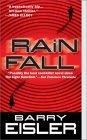
Rain Fall


Rain Fall - Barry Eisler

"Down these mean streets a man must go who is not himself mean, who is neither tarnished nor afraid... He is the hero, he is everything. He must be a complete man and a common man and yet an unusual man. He must be, to use a rather weathered phrase, a man of honor, by instinct, by inevitability, without thought of it, and certainly without saying it. He must be the best man in his world and a good enough man for any world. " - Raymond Chandler

Set in Tokyo, Barry Eisler's book Rain Fall (and it's sequel Hard Rain) is an excellent, hard-boiled Chandleresque action-thriller about an assassin-for-hire that specializes in "natural deaths". Half-Japanese, half-American, Eisler's John Rain is a character in the classic Chandler mold - a man with his own particular rigorous code of honor. When a client violates that code by lying to Rain, he is forced into investigating the circumstances of the murder he has just committed. Following a labyrinthine trail Rain finds himself caught between the competing interests of both his countries, the Yakuza, and the deeply held corruption of the Japanese political scene.

Eisler's character, setting and circumstances move Rain Fall and its sequal Hard Rain a cut above the common action-thriller. Rain's cultural background and profession make for an interestingly agreeable anti-hero with all the requisite nicities. Eisler's depiction of the neon reef that is modern Tokyo is, however, superlative.

Eisler successfully captures the unique feel and setting of the city of villages, the legions of salari-men packing the trains, the glare and needle-sharp opulence of the Ginza, the noise and bustle of Shinjuku and hectic ambience of Roppongi clubs. Eisler seems to be one of the few fiction writers who capture the essence of how a city feels, not just how it looks and his familiarity and love of Tokyo permeates the book. It brought back to me the feel of walking through Shinjuku in the cold night rain, the sky lit only by the towers, the streets wet and slick with water and light, the scattered groups of drunk salari-men meandering past with the loose rhythm of the elevated train runbling overhead and the blaring, relentless accompaniment of the pachinko parlors and the arcades spilling out of their bright doorways...

Tokyo's one hell of a city, and deserves to be featured in more fiction...

Rain Fall and Hard Rain are both solid thrillers and well worth a read. It's a series I plan to follow in the future.

For more background on Eisler's Japan, check out The Enigma of Japanese Power by Karel Van Wolferen, Ruth Benedict's classic The Chrysanthemum and the Sword, and, for a look at the youth of Japan, read Speed Tribes by Karl T. Greenfield.

For some Tokyo bloggers, check out Tokyo Shoes, and Hunkabutta.

For some background on the Yakuza, check out this site, and Court TV's Library site. Personally I recommend Robert Mitchum in The Yakuza for a more enjoyable learning experience!

For another film that truly captures the essence of Tokyo, watch Lost in Translation...it has that jet-lagged feel.

Comments and links are always welcome!

Thursday, April 22, 2004

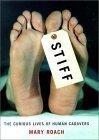
Stiff: The Curious Lives of Human Cadavers


Stiff: The Curious Lives of Human Cadavers - Mary Roach

Deeply unsettling, morbidly funny, weird and disturbingly fascinating, Stiff: The Curious Lives of Human Cadavers by Mary Roach is an unvarnished, questions-that-most-dare-not-ask, slightly off the wall examination of ...well, the practice and usage of human remains through history.

If it sounds like a bit of a reach, delving into a subject that most writers (and readers for that matter) would not care to visit, Stiff is a surprisingly good read. Skillfully written, tactful, sympathetic, respectful without being dull and heavy, strange without quite being off-putting, author Mary Roach weaves the ins and outs of such subjects as mortuary science, the history of surgery, autopsies, where plastic surgeons go for practice, medical experimentation, jello and gunshot wounds, crucification, human crash-test dummies, mummification and more into a riveting stew...just don't read it over your lunch hour. Seriously.

Stiff, despite its title, is anything but. Roach has a disconcerting habit of asking the people in charge questions that we all would have liked to ask, but were either too polite, too self-conscious or squeamish to ask. These queries, although they seriously make the reader question whether Roach would be someone to invite to a cocktail party, serve to beatifully illustrate the quandaries that we ourselves face, when confronted by the implacable certainty of The Father of Time.

My particular favorite moment was when the author was observing the "harvesting" of a doner heart from a brain-dead patient. Seeing the slippery, still-beating muscle being extracted, Roach promptly asked the doctor if they had ever dropped one on the floor...

Overall a well-written, excellent (if somewhat nausous) read. Remember to read outside of mealtimes...

For a look at the Internet's resident cadaver, check out The Virtual Man Project at the National Library of Medicine. Researchers froze a cadaver, then sliced it in ultra-thin slices creating an anatomically detailed virtual representation of the human body....For an added bonus, visit The Virtual Autopsy here or HBO's Autopsy website.

Just so you don't think it's just people under the surgeon's knife - someone autopsied a furby...

Here's some real Crash Test Dummies....and some more (especially 50th Percentile Hybrid III).

Lastly, here's the most famous cadaver of them all....It's Alive! ALIVE!

Thanks for dropping by! Please tell all your friends, link to the site, toss off some comments and buy some books!

Wednesday, March 24, 2004

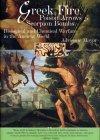
Greek Fire, Poison Arrows & Scorpion Bombs


Greek Fire, Poison Arrows & Scorpion Bombs: Biological and Chemical Warfare in the Ancient World by Adrienne Mayor

Hercules was probably one of the most famous early practioners of biological weapons, and one of its most prominent victims...

Slayer of the Lemean Hydra, Hercule's dipped his deadly arrows in the Hydra's blood, creating a fatal weapon - one that echoed down through Greek history claiming myrid lives. Eventually the Fates drew him full-circle and Hercules is destroyed by the gift of a cloak from his wife. The garment, secretly poisoned with the blood of Nessus, a centaur that Hercules has shot with his envenomed arrows, "burns like fire" until Hercules, in agony, begs his own son to burn him in a bonfire.

The legendary story of the 12 Labors of Hercules serves as both metaphor and warning in Adrienne Mayor's fascinating and highly readable examination of the usage and prevelance of biological and chemical warfare in the Ancient World. Greek Fire, Poison Arrows and Scorpion Bombs is a timely and relevant eye-opener, touching on the practical usages of such tried and true weapons such as poisoned food, tainted water, bug bombs (scorpions and bees were apparently popular tools to loft onto besiging armies), snake bombs, burning oil, pestilence-ridden corpses, maddened cattle, pitch-covered pigs (ignited of course) and, of course, the precusor of modern napalm, greek fire. Of special note is the "mad honey" that Xenophon and the Ten Thousand encounter on their trek to the sea. Mixed from the rhododendron plant, the honey of Pontus is a famous and lethal toxin causing hallucinations and often death.

Mayor carefully outlines the often ambigious nature of chemical and biological weapons, particularly the fact that the ancients recognized the double-edged sword that they wielded had terrifying implications for their own populations if used unchecked. Mixing the mythological roots of bio-war with historical examples, Mayor has written a highly readable, utterly absorbing piece of work that, at the end, leaves you grimly fascinated and nervously appalled.

For some terrific information on the ancient world and such stalwarts as Hercules, check out the Perseus Project from Tufts University.

Worried about that fever? Check out the National Library of Medicine's Biological Warfare page...brrrrr. Hey, where'd that rash come from?

Damn, those guys are busy - here's their page on Chemical Warfare...damn, now there's spots with the rash...

Lastly, here's a copy of Sophocle's "Philoctetes", the tale of the man who inherited the dubious prize of Hercule's poisonous arrows...

Thanks for reading. Please post comments below. Links would be appreciated.

Monday, March 1, 2004

Positively Fifth Street: Murderers, Cheetahs, and Binion's World Series of Poker

Positively Fifth Street: Murderers, Cheetahs, and Binion's World Series of Poker

- James McManus


"Never play cards with a man called Doc." - Nelson Algren

I've never played a serious game of poker in my life.

The few times I've sat down and played a few hands, it has been in almost total ignorance of the odds, poker strategy and anything but the most basic dos and don'ts...but...the first thing I wanted to do having finished Positively Fifth Street was jet down to Vegas and set myself down at a table.

James McManus's book Positively Fifth Street: Murderers, Cheetahs and Binion's World Series of Poker is, for lack of a better word, infectious.

McManus was assigned by Harper's Magazine to cover the simultaneous twin stories of the Ted Binion murder trial and the annual Binion's World Series of Poker held at the Horseshoe Casino in Las Vegas, the arguably most famous poker tournament in the world. McManus, a journalist, author and poet, also happened to be an itinerate amateur poker player who elected to use his $4,000 advance from Harpers to fund his own entry into the tournament (Read the book to find out how he did. Unlike the NY Times book review (SPOILER WARNING) , I refuse to spoil it for you by divulging the results...What were they thinking?).

The book offers a rather piecemeal look at Ted Binion's murder, using the crime more as an illustrative and cautionary tale of the author's own personality - the risk-taking, obsessive, "cliff-diver" face that McManus tries to generally keep in check ("Bad Jim" as McManus aptly terms himself). If you are looking for the details of a sordid crime drama, Positively Fifth Street covers the basics (Binion's tawdry drug use, the aspiring, leggy stripper girlfriend, the low-life pal who hooks up with her and plots Binion's ultimate demise, the fundamentals of "burking" and so on...), but is far more focused on the legacy of Binion in the poker tournament then on Binion himself. The murder trial does loom ominiously in the background but it seems to serve more as a grim reminder of the dangerous price of an unchecked lifestyle than as a raison-e'etre for the book, akin to the images of Death that can be seen perpetually lurking in the corners in a Renaissance painting. The murder is a reminder of mortality, chance and fate, and the luck of the cards.

Once the pasteboards start to hit the table, the book truly takes off, mixing each stage of the tournament action with a look at the intricacies of poker, the rise of "book-learned" system poker players, the rules of Texas Hold 'Em, the history of playing cards, and vivid portraits of the top professional poker players such as the cantakerous TJ Cloutier, top female player Kathy Liebert and others. McManus has woven a startling page turner that bluntly fascinates from beginning to end.

Interested in learning how to play Texas Hold 'Em? Check out Ultimatebet.com for the rules.

Author, blogger and actor Wil Wheaton drew my attention to Positively Fifth Street a while back through a mention of the book on his site and, as a poker player himself, recently posted a vivid and terrific piece on his own adventures in an illegal poker tournament at the Odessa in Hollywood. It's well worth a read.

Here's where you can find Binion's Horseshoe Casino in Las Vegas, everything you need to know about the World Series of Poker, and Court TV's take on the Ted Binion murder trial.

If you are really, really taken with Positively Fifth Street, then this site might be for you....

Comments are always welcome, book suggestions, feedback and links to the site.

Thanks for reading!


Wednesday, February 18, 2004

Watership Down

Watership Down - Richard Adams

"El-ahrairah, your people cannot rule the world, for I will not have it so. All the world will be your enemy, Prince with a Thousand Enemies, and whenever they catch you, they will kill you. But first they must catch you, digger, listener, runner, prince with the swift warning. Be cunning and full of tricks and your people shall never be destroyed." - Lord Frith to El-ahrairah

If you proposed to someone that they read a 478-page book about rabbits, they would probably either look at you sideways like you were utterly insane or shout out in joyous recognition "Watership Down!". Richard Adams first published his utterly compelling tale of adventurous rabbitry in 1972 and the tale remains to this day one of the most creative and enjoyable pieces of children's literature ever set to paper.

Adams tells the story of a small band of rabbits that, aided by a prescient seer named Fiver, sets forth on a harrowing journey across the English countryside, escaping from their doomed warren (destroyed by land developers) to seek a safe home high on the Downs. The rabbits' odyssey take them through numerous fateful encounters, both treacherous and inspiring until, tempered by their adversity, they find themselves forced to face their most difficult challenge of all, using all their guile, skills and bravery against the repressive and dictatorial warren of Efrafa and its leader, the malevolent and powerful General Woundwort.

Adams prose vividly describes and awakens the English countryside in the mind of the reader, from a rabbit's point of view. You can almost feel the grass under your toes. Indeed, one of the few things I readily wished for while reading Watership Down, was a version abridged with sketches or pictures of all the damn plants (fleabane, purple loosestrife, pink butterbur, figwort, yellow mullein...the list goes on. I suspect one needs a certain grounding in botany to truly appreciate Adams understanding of the English countryside.). The other side of the coin is the strength of the various characters - Hazel, the decisive, intelligent leader; Fiver the precognitive runt whose intelligence and visions see the rabbits through diverse sets of danger; Bigwig, the rough-and-tumble fighter who refuses to give in - ever, and Woundwort himself as the battle-scarred and vicious, intelligent and obsessive rabbit that rules Efrafa with an iron paw.

Rich with political allegory and echoing with the touchstones of epic journeys, Watership Down is a book that, if you have not yet read it, will surprise you with its ability to pull you into the Lapin world. It remains a terrific piece of literature.

Of particular note within the book are the various tales of El-ahrairah, the Prince of Rabbits, interspersed within the story. El-ahrairah is a trickster, filled with cunning strategems who foils his enemies, infiltrates every lettuce patch and, in general, fulfills a legendary role within rabbit folklore. Of particular note is the recently published Tales from Watership Down, which collects a number of El-ahrairah's adventures (including several new ones) into a single volume. It is well worth a read.

For a look at the real Watership Down, Nuthanger Farm and the Crixa (they are all real places), check out this site.

Interested in a plot review and notes on Watership Down - you can find them here.

Finally, at least one blogger seems to know and appreciate the lore of Watership Down - check out the excellent Silflay Hraka. Read the book to find out what Silflay Hraka means....

If you can't bring yourself to read the book, there is a very good animated feature (done in 1978) which, barring an unfortunately syrupy theme song by Art Garfunkel (Bright Eyes), is true to the book in almost every way. It is now available on DVD and I highly recommend it (although it might be a little bit bloody for the wee tots...).

Comments are always welcome.

Thanks for reading!


Wednesday, February 4, 2004

Monster of God

Monster of God - David Quammen


Walking downtown one day, a number of years ago, I was startled by a massive tawny head that peered around a concrete pillar and regarded me with a baleful, quizzical yellow glare. You don't generally expect to run into a full-grown African lion in the heart of a teeming metropolis. I stopped dead, an act that attracted its immediate attention, despite the more jaded urbanites that crowded the sidewalk and barely glanced at this apparition of the savannah as they passed. There is something about being the focus of a predator's gaze that puts a particular tingle in your day. Somewhere, buried very deep is that primodial recognition that there, but for the grace of God, go you....


Monster of God is a look at the role of the predator, in nature and in the mind of humanity, and the tenuous borders where the two uneasily mix. Author David Quammen looks at four "alpha" predators, creatures that live at the very apex of the food chain: The Gir lions of India, the crocodiles of Asia, Africa and Australia, the brown bear in Romania, and the Amur Siberian tigers of Asia. Monster of God looks at the relationship that the predator has with man, the social and cultural role of the predator, its key position within the natural world, and the deleterious impact the the burgeoning human population is having on the predator's environment.


Monster of God is a thoughtful, intelligent and highly readable examination of how humanity lives with predators. Quammen looks at what is the acceptable role in today's world for violent, essentially dangerous animals that can and quite readily do, kill people for food, their position as "keystone" species on the food chain, their position as totemic symbols within human history, language and culture (think about it, even today people are "lionized") and how economic realities of hunting and farming may shape their future. He examines the disparities that exist across the world in attitudes towards alpha predators, particularly noting the fact that where predators and people most often, most tellingly meet, is among the poorer marginal fringes of human society, left to deal with the beasts that haunt the dark nights and quiet waterways. It's easy to say "save the tigers" when you don't have to cut wood in the forest to earn a living, or walk a cold trapline to support your family, hoping not to run into something hungry and toothy.


Here's a brief excerpt: "Great and terrible flesh-eating beasts have always shared landscape with humans. They were part of the ecological matrix within which Homo sapiens evolved. They were part of the psychological context in which our sense of identity as a species arose. They were part of the spiritual systems we invented for coping. The teeth of big predators, their claws, their ferocity and their hunger, were grim realities that could be eluded but not forgotten. Every once in a while, a monsterous carnivore emerged like doom from a forest or a river to kill someone and feed on the body. It was a familiar sort of disaster - like auto fatalities today - that must have seemed freshly, shockingly gruesome each time, despite the familiarity. And it conveyed a certain message. Among the earliest forms of human self-awareness was the awareness of being meat."


For more on the Gir lions, check out The Indian Wildlife Portal and the Gujarat Forest site.


For some further background on crocs, check out this site, or just hang out with the Crocodile Hunter.


One of the interesting facts that Quammen touches upon in his book is the hunting excesses of Romanian Communist strongman Ceausescu, who was notorious for, among other things, turning Romania's wildlife managment system into his own personal game shooting park, slaughtering every large beast that came within reach, including 24 brown bears in a single day.


Check out the Chauvet Cave site for a marvelous look at some of the earliest known prehistoric art, featuring, among others, some superlative depictions of lions...


Finally, if you have a literary turn, you can always peruse the quintessential story of man versus monster - the tale of Beowulf, King of the Geats, in his rending, bloody battle with the fearsome Grendal...


My downtown lion? He was being used to advertise some new boutique that was opening. I don't recall the name of the store, but I will long remember the grace, dignity, strength and banked, predatory gaze of that lion...even though he was sprawled across a mailbox of all things...


Comments are always welcome. Bloggers, please drop me a link if you like what you read. Thanks!