Elizabethan London

Elizabethan London
Tyburn was an infamous execution spot west of London, used since medieval times. The Tyburn "tree" - a unique, multi-person gallows - erected in 1571 became a popular public spectacle, drawing crowds of thousands.Tyburn Tree blog is less blood-thirsty but hopefully topical, interesting and informative, if slightly bent to my personal topics of interest - books, writing, history, technology, with a smattering of politics and dash of pop culture, science and the downright strange. So "take a ride to Tyburn" and see what happens...

Monday, March 28, 2005

The Battle of Salamis


The Battle of Salamis: The Naval Encounter That Saved Greece -- and Western Civilization - Barry Strauss

"Stifling in the August heat, even at night, Artermisium is a hub of activity. Seen by the light of bonfires, fifty thousand men are at work: here racing to patch damaged equipment, there hauling the bodies of the dead onto pyres, at one point filling water jugs and wineskins at the sprint, at another point leaving messages as disinformation for the enemy, who is close behind them. Some men are buckling on bronze helmets, others are tightening the leather straps of the arrow cases they carry on their backs, while most are holding nothing more than a seat pad made of sheepskin. As the men work, the area's familiar scents of brine, thyme, and pine needles mix with the odor of sweat and the stink of corpses.

The cove is lined, at the shore's edge, with about 250 triremes, moored stern first. From each ship, a pair of ladders comes down and a horde of blistered hands grabs onto the rungs, as rowers pull themselves up toward their seats. The rowers grunts mix with the crackle of firewood, while the cries of the rowing masters drown out other sounds.

The Greek navy is pulling out."
- Excerpt, The Battle of Salamis, Barry Strauss

Building a strong and compelling picture of an event in the distant past, of the forces that drove its occurence and of the people that lived through it is not an easy task. Historians as a breed seem often narrow, didactic and detail-obsessed, taking the most fascinating moments and devolving them down to dry and dusty factual points, sending another generation of students drifting into the land of Nod in the back rows of the lecture hall.

The Battle of Salamis is not that type of history book. Barry Strauss has penned a superlative and riveting account of the epic naval battle of Salamis in 480 BC between the Greeks, led by the fledgling democracy of Athens and the canny, manipulative and vain Themistocles, and the overwhelming Persian forces of Xerxes.

Strauss vividly portrays the key individuals, events and circumstances, drawing on chronicles of both participants such as Aeschylus, and the later accounts of "the first historian" Herodotus, among others. The result is an amazingly readable account of the battle, the ships (triremes), the tactics (drawing the enemy into enclosed waters where speed and manuverability mattered more than size...and ramming, lots of ramming), and the long-term impact of the battle through the history of the western world (Greek victory at Salamis = success for democracy).

Strauss's efforts to portray the turning of the battle as one of democracy versus authoritarianism feels slightly overstated given the limitations on democracy at the time in both Athens (and the lack thereof in the other Greek city states) but the long-term historical impact certainly reverberates to this day.

Strauss has mastered the ability to give the reader a feel for the action, normally the strict purview of fiction writers, illustrating the event beyond just bare facts. In his words you can taste the woodsmoke and sweat, feel the thick knot of fear in the rowers stomachs and hear the creak of the oars and the thunderous crescendo of splintering wood before the rams...

Overall Strauss has written a crackling good history that is well worth your time.

Interesting in reading more? On the fiction side, I highly recommend Stephen Pressfield's amazing Gates of Fire, an epic account of the 300 Spartans who faced Xerxes before Thermopylae, The Hot Gates and also (by the same author) the book Tides of War covering the Athenian soldier Alcibiades. Tides of War in particular has a brutal, rip-snorting trireme battle at Syracuse that, in my opinion, ranks with the best of Hornblower as a naval battle scene.

Read Herodotus's account of the Battle of Salamis here, or visit modern Salamis here for a look at the island today.

Interested in learning more about Herodotus, the world's first modern historian (also called "The Father of Lies")? Check out Herodotus on the Web for a comprehensive link list or go to Herodotus's Histories. You can read Herodotus complete works online here.

For some details on triremes visit The Classics Pages, this site , or this one. Want to build one? Check out the Trireme Trust.

Thanks for reading BookLinker!

Sunday, March 20, 2005

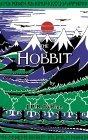
The Hobbit


The Hobbit - J.R.R. Tolkien

"Confusticate and bebother those dwarves!." - Bilbo Baggins

I first read The Hobbit at the grand old age of eleven and, at the time, thought it was one of the very best books I had ever encountered. Interestingly enough, more than 25 years later, it still remains a marvelous piece of work in my eyes. As a matter of fact, I just finished re-reading it with my six-year old son and the re-read brought with it the added joy of watching something you grew up with light up your child's eyes.
Chronicling the intrepid journey of Bilbo Baggins, a hobbit of the Shire (with just a little bit too much Took in him for his own good) who is shanghaied from his own tea party by a group of thirteen treasure-seeking dwarves and one irascible wizard, The Hobbit is a delightful read. Bilbo is recruited by the wizard Gandalf to become the official "burglar" for Thorin Oakenshield and his twelve dwarven companions, as they journey across the Edge of the Wild to the far distant Lonely Mountain to face the implacable malevolence of the dragon Smaug.
From troll-hollows to the dreary spider-infested forest of Mirkwood, Tolkien has woven a wonderful adventure, leavened with character, humor, spark and a thread of a greater darkness tracing through the story, evident in the hissing fury of the riddling Gollum and in the deep and abiding malice that lurks behind the conversational tone of Smaug.  
It is particularly different to revisit The Hobbit after having read Tolkiens' larger, more mythic trilogy, The Lord of the Rings, which expanded the world of Middle-Earth exponentially and, to a certain extent, removed it from Bilbo's more comforting adventure and warmer tale.

All in all The Hobbit is about as close to a perfect bedtime read for the kids as you are likely to find on any shelf. 
While The Lord of the Rings has been brought to vivid life in the theatres, The Hobbit is apparently tied up in legal wrangling over the movie rights. Here's hoping that Peter Jackson gets the chance to bring The Hobbit to the silver screen in the near future. In the meantime, I recommend the 1978 animated feature which was a solid (if short) adaptation featuring Otto Preminger and John Huston among others.
Visit the Tolkien Society, or to learn something more about the creator of Middle-earth, read J.R.R. Tolkien: Artist and Illustrator.
Here's a real-world hobbit that has scientest puzzled and intrigued...

And here's a dragon to boot..

There are absolutely tons of websites dedicated to the Lord of the Rings films but for the best info, check out theonering.net. Tour Middle-Earth at this site...

You can also find a movie trailer for The Hobbit at iFilm patched together from various sources. No, as far as I know it isn't real ...yet.

Thanks for reading .  Comments, links and feedback are always welcome!

Thursday, February 24, 2005

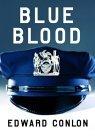
Blue Blood


Blue Blood - Edward Conlon

According to the NYPD website, the New York Police Department currently employs 39,110 cops, a force larger then the standing armies of some countries. At least one of them is a solid writer.

Edward Conlon's Blue Blood takes readers deep into a gritty, street-wise portrait of life in the NYPD, its politics, language, foibles, quirks and characters as well as the relentless nature of the urban police beat.

Blue Blood is part memoir, part history and part journey through the looking glass, tracing Conlon's history and roots in the NYPD, his experiences as a rookie cop in decaying Bronx housing projects, to narcotics stakeouts and the daily paperwork of a detective, the events of 9-11, as well as the day-to-day and life and death issues that cops face on the street. Conlon as a writer is canny and often blunt, offering a welcome perspective on such issues as police corruption and abuse, but also thoughtful and keenly observant, casting an often wry eye on NYPD practices, politics and the criminals they pursue.

Well-written, authentic and nuanced, Blue Blood is a unique, if lengthy, look at life behind the badge.

For more on one of the world's most famous police departnments, drop by the NYPD website. You can also visit the NYPD Police Museum and the NYPD Shop online - for those of you that desperately want a set of NYPD shooter glasses or your own police station. Unfortunately no handcuffs available.

Trace the history of New York's Finest here, or check out The Insider for a look at what is happening in the Big Apple. Check out the view from Times Square, or, if you prefer your New York from a couch - just watch these guys.

Thanks for reading BookLinker. Please show your support for the site by clicking on our Google text ads or by buying your Amazon purchases through our links!

Thanks!

Saturday, February 19, 2005

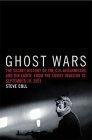
Ghost Wars


Ghost Wars: The Secret History of the CIA, Afghanistan, and Bin Laden, from the Soviet Invasion to September 10, 2001 - Steve Coll

"When everyone is dead the Great Game is finished. Not before."
- Kim, Rudyard Kipling


The Great Game is alive and well and living in the cold, stony peaks of the Hindu Kush.

Ghost Wars is Steve Coll's superlative account of the tangled morass of the last twenty-five years of byzantine manuvering, chaos and war on the Afghan frontier. The war against the Russians was conducted mainly through proxies - the Muhjaddeen and the warlords, the Pakistani government, and the quioxtic brillance of Massoud. Coll outlines the early rise of US policy towards the region, tracing carefully the gradual emergence and steady growth of US involvement as the Muhjaddeen war against the Russians gradually became a key element for US policy.

Coll judiciously examines the post-war American neglect of the region (literally dropping off of the policy radar screen overnight) and the sudden and abrupt roll-up of the CIA's covert support operations (exacerbating the political vacuum), its impact on both the rise of the Taliban and the development of Al Quada and Osama Bin Laden.

Reading Ghost Wars amply demonstrates that none of the subsequent events of 9-11 was surprising in retrospect and that, bluntly, no one involved is a new or unknown player. Bin Laden in particular was amply demonstrating his direction, policy and goals but was initially overlooked and ignored, and later indifferently dealt with, despite mounting evidence of danger. Neither the Clinton nor the Bush (Jr. & Sr.) administrations escapes censure for their failure to recognize the approaching storm and the glimpse Coll offers into the inner workings of covert policy in the region both fascinates and frustrates.

Coll's book is a must-read for anyone genuinely interested in understanding the complex interplay of history, politics, culture and religion in Afghanistan and is, on top of being exhaustive and comprehensive, an excellent, gripping, high-quality and well-written read. Highly Recommended!

Also of note, and previously reviewed on BookLinker is George Crile's Charlie Wlison's War.

You can find an free online copy of Rudyard Kipling's classic Kim at the Gutenberg Project. I also heartily recommend Kipling's The Man Who Would be King and the excellent film version with Sean Connery and Michael Caine.

Interested in the real Man Who Would be King? He did exist - check out Ben McIntyre's biography of Josiah Harlen, ex-doctor, soldier-of-fortune, Prince of Ghur and pretender to the Afghan Throne (he also runs afoul of Flashman here...)

Check out another solid Frontline report on Afghanistan here. Also good is Hunting Bin Laden, a report that was put together prior to the attacks of 2001.

Thanks for reading! Please show your support for the site by clicking through on our Google ad links, and initiating your Amazon purchases here. Comments and feedback are very welcome and links from other bloggers are always good to see!

Monday, January 31, 2005

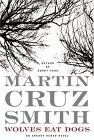
Wolves Eat Dogs


Wolves Eat Dogs - Martin Cruz Smith

Cynical, melancholy Moscow special investigator Arkardy Renko has a serious problem. One of Moscow's newly minted billionaires has taken a fatal plunge off of a twenty-story condominium - suicide or murder? As Renko dryly observes "We prefer suicides. Suicides don't demand work, or drive up the crime rate."
In his fifth book featuring his laconic, down-trodden detective, Martin Cruz Smith is at the top of his game. Wolves Eat Dogs takes Renko, filling his role as Moscow's most dogged and quixotic gumshoe, from the heady environs of the new Russian elite down a twisted, wayward path into a deadly quietly radioactive heart of darkness, the 30-mile Exclusion Zone surrounding Chernobyl.
Tautly written, intriguing and quite frankly offering a more humane glimpse of the Russian pysche then western fiction typically offers, Wolves Eat Dogs is a terrific and unique mystery, with Renko, as ever, leading the reader deeper and deeper into uncharted territory - in this case, the Chernobyl Exclusion Zone, with its eerie abandoned towns, burgeoning wildlife, icon-thieves, corrupt car parts dealers and obsessive scientests. Smith weaves an involving and immersive mystery with first-rate characters and plotting, in a very unique setting. I highly recommend it!
I would also recommend a look at Renko's earlier adventures - Gorky Park, Polar Star, Red Square, and Havana Bay.
Find out more about the Chernobyl nuclear disaster at Chernobyl Info, Chernobyl: A Nuclear Disaster and the Chernobyl Children's Project International. For a more detailed look at the overall health impact of the disaster ten years after, visit the Nuclear Energy Agency's Chernobyl Assessment page.
Why not take a visit to the Exclusion Zone? Follow along with Elena's motorcycle run through the Zone at Kiddofspeed - Ghost Town. Here are some more photos to check out.
Interestingly enough, due to a dearth of human presence, the Exclusion Zone is rapidly becoming a natural haven for Ukrainian wildlife.
Thinking of playing tourist? Better read this first.
Thanks for visiting! Comments and links are always welcome! Please click on our Google Ads to show your support for this site!


Wednesday, January 26, 2005

Shadow Divers


Shadow Divers: The True Adventure of Two Americans Who Risked Everything to Solve One of the Last Mysteries of World War II - Robert Kurson

There is something deeply fascinating yet profoundly unsettling about this book.

It is, among other things, a story of high adventure, obsession and the cold face of imminent death. Shadow Divers is the true story of a group of deep-sea wreck divers who challenge themselves on the thin edge of the survivable, diving more than 200 feet into the cold Atlantic, venturing into twisted wrecks like the Andrea Doria and others, hunting souvenirs, bragging rights and a shivering adrenaline high.

Shadow Divers focuses on John Chatterton and Rich Kohler, who, investigating a mysterious wreck off the New Jersey coast, discover lurking 230 feet below the surface, a ghost from World War II, a sunken German U-Boat lying where none should be. Driven by the challenge of uncovering and identifying the boat, Chatterton and Kohler undertake a seven-year odyssey, diving repeatedly into the chill depths of the sea and into the musty records of World War II to discover the secrets of the wreck.

Deep-sea wreck diving is among the world's most deadly endeavors and the dives on the shadowy U-Boat are no exception. Kurson's vivid prose pulls the reader into the situation and at points is so profoundly tense it is almost impossible to put down. It is, as the expression goes, like watching a train wreck about to happen...terrified fascination and sick amazement are at war in your stomach when you read this book.

Kurson's narrative weaves the lore, dangers, technology and practices of deep-sea wreck diving, with the characters and practioners of the sport, pulling you into the excitement and the discovery...so when disaster strikes, although not unexpected, it is deeply unsettling, horrifying and vivid.

Similar to Jon Krakauer's book Into Thin Air which recounted the terrifying 1996 disaster on Mount Everest that cost five lives, Shadow Divers left me with a certain empty, morbid and questioning sense of "why?" and a mixed bag of both admiration and head-shaking irritation at the often pointless thrill-seeking.

Overall a definite first-rate book and one of the very best of the year.

Interested in learning more about U-boats? U-Boat.net is the place to go. Also check out the terrific Nova documentary and supporting website "Hitlers Lost Sub", for a look at the Shadow Divers' submarine, a virtual tour, maps of other sunken U-boat wrecks and an interactive feature on the chilling dangers of wreck diving.

Here's the website for the Wreck of the Andrea Doria, described by Kurson as "Mount Everest" for wreck divers. If you are wise, you will just stick to reading about the wreck...

Here's the Atocha, for the red-blooded, gold-hunting treasure-enthusiast in your family...

And some last thoughts...

They might have split up or they might have capsized
They may have broke deep and took water
And all that remains is the faces and the names
Of the wives and the sons and the daughters.


Thanks for visting. Comments, links, email and feedback are welcome! 

Thursday, January 6, 2005

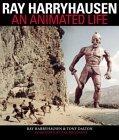
Ray Harryhausen: An Animated Life


Ray Harryhausen: An Animated Life - Ray Harryhausen, Tony Dalton

In the prehistoric days before the advent of a thousand digital channels, DVD's and VCRs, my local television channel would run a Sunday Afternoon Matinee. My brothers and I would sit, enthralled, watching Godzilla stomp Tokyo into smoky rubble, or some slithery beast ooze out of a bog and chase down some hapless passerby, or watch, as some wooden-voiced actor bounded about the screen improbably fighting a dozen skeletal swordsman or a towering bronze statue.

More often then not, we were watching the uniquely detailed work of Ray Harryhausen.

Ray Harryhausen: An Animated Life is a glorious, fascinating and fun meander through the life, films and career of one of Hollywood's pioneering special effects masters. Harryhausen's magical beasts and evocative stop-action special effects were a source of inspiration for dozens of today's directors and directly led to the current state-of-the art work of such luminaries as George Lucas and Steven Spielberg (although Harryhausen himself notes that despite the exquisite detail of today's computer-generated special efffects, he still prefers models and stop-animation for their "soul").

Harryhausen's highly illustrated book traces his roots in the special effects industry, his mentors Willis O'Brien and George Pal, and the various film influences (King Kong naturally enough)that shaped and impacted his work on such films as Mighty Joe Young, The Beast from 20,000 Fathoms, Valley of the Gwangi, Jason and the Argonauts, The 7th Voyage of Sinbad, Clash of the Titans, and, my personal favorite, Sinbad and the Eye of the Tiger.

An Animated Life is fundamentally a book for a film buff, so temper any expectations of a detailed or seamy insider look at Hollywood in the 50's and 60's. You will however love having the curtain pulled aside on how Harryhausen and his cohorts pulled off much of their cinematic sleight-of-hand. For someone infected with the romance of the pulp films of the era, An Animated Life is a fabulous book but...

If however you really don't care for silver screen derring-do, the deep background on the Rhedosaurus, foul monsterous creatures from the depths or magical mythological beasts.. well, ...what the heck is wrong with you? Get a life.

For a complete round-up of Harryhausen's work, check out the ever dependable Internet Movie DataBase or read the profile at Sci-Fi Masters.

Check out this tribute to Harryhausen (with special guest appearance by He-Man's Skeletor), its just plain...surreal.

Check out this online explanation of Dynamation that gives you a good overview of how Harryhausen brought his intricate creatures to life or visit the Stop-Motion Animation site for some lessons on how you can develop your own stop-motion film.

Now I have to go, my six-year old son and I have to snuggle up, eat popcorn and watch The 7th Voyage of Sinbad... love that cyclops.

Thank you for reading BookLinker! Comments and feedback are always welcome (as are links)!