Elizabethan London

Elizabethan London
Tyburn was an infamous execution spot west of London, used since medieval times. The Tyburn "tree" - a unique, multi-person gallows - erected in 1571 became a popular public spectacle, drawing crowds of thousands.Tyburn Tree blog is less blood-thirsty but hopefully topical, interesting and informative, if slightly bent to my personal topics of interest - books, writing, history, technology, with a smattering of politics and dash of pop culture, science and the downright strange. So "take a ride to Tyburn" and see what happens...
Showing posts with label historical ficton. Show all posts

Sunday, November 11, 2018

YEESSSSSSS!!!!!!!!!


Hey everyone! 

Thrilled to announce that the crowd-funding campaign for publishing my new book is now UP AND RUNNING!
Please have a look, let me know what you think, tell your friends (ALL your friends!!) and consider making a contribution to help me bring this to publication! I guarantee you will get a great read out of it!
All the best,

Friday, October 19, 2018

Some Pre-Launch News...


Ok. Little announcement for you.

I'm launching Thieves' Castle via an @Indiegogo campaign in several weeks!

Did a lot of thinking, took a few deep breaths (& a shot of tequila). I'm heading down the self-publishing route once more...

Here is the "pre-launch" page with a little more info about the book and how you can support the crowd-funding campaign.

https://bit.ly/2CR8Tru

Wish me luck!

Wednesday, June 29, 2016

Free Summer Read!

Looking for a dastardly summer read?

My novella BLACK DOG is free on #Kindle Jun 29-Jul 3rd!

http://amzn.to/292zTUX


Friday, June 17, 2016

Wednesday, November 4, 2015

Shiny!

Alongside the HNS Editor`s Choice logo, I get to add another shiny logo to THE JESUIT LETTER, courtesy the Historical Novel Society reviewing & liking my book!

Here they both are!


Monday, November 2, 2015

Editor's Choice

Great news to make even a dreary Monday shine!

The Historic Novel Society has reviewed The Jesuit Letter
and selected it as an Editor's Choice!

Read the review!

In addition to the snazzy logo, this makes The Jesuit Letter eligible on the long-list for the 2016 HNS Indie Award!

I know, way too many exclamation points for a Monday morning...but how often does this happen with a debut novel!

Thank you HNS!

Thursday, October 8, 2015

Second!

Second Place!

As mentioned in earlier posts, my novella BLACK DOG was entered into Inkitt's "Reclaim Time" story competition.

I found out this morning via email that it has placed SECOND in Inkitt's historical fiction competition, a fact that fills me with excitement as I always have a difficult time judging and assessing my own work.

Thank you editors of Inkitt and a special thank you to everyone who took the time to read, vote and review my novella.

If you enjoy Elizabethan-era back-alley skulduggery, then go have a read!!

http://www.inkitt.com/stories/15411

"No one wants to run afoul of London’s most notorious prison rooker, the Black Dog. Now Kit Tyburn must pursue his secrets to free his friend, but you don’t stalk the Black Dog without consequences…."

Friday, September 4, 2015

A Player's Walk through Elizabethan Theatre


I'm guest-blogging today with an article on the English Historical Fiction Authors website!

So take "A Player's Walk through Elizabethan Theatre" and go have a read!

http://bit.ly/1hH2G2n


Friday, April 24, 2015

Launch Day!

It's Launch Day!
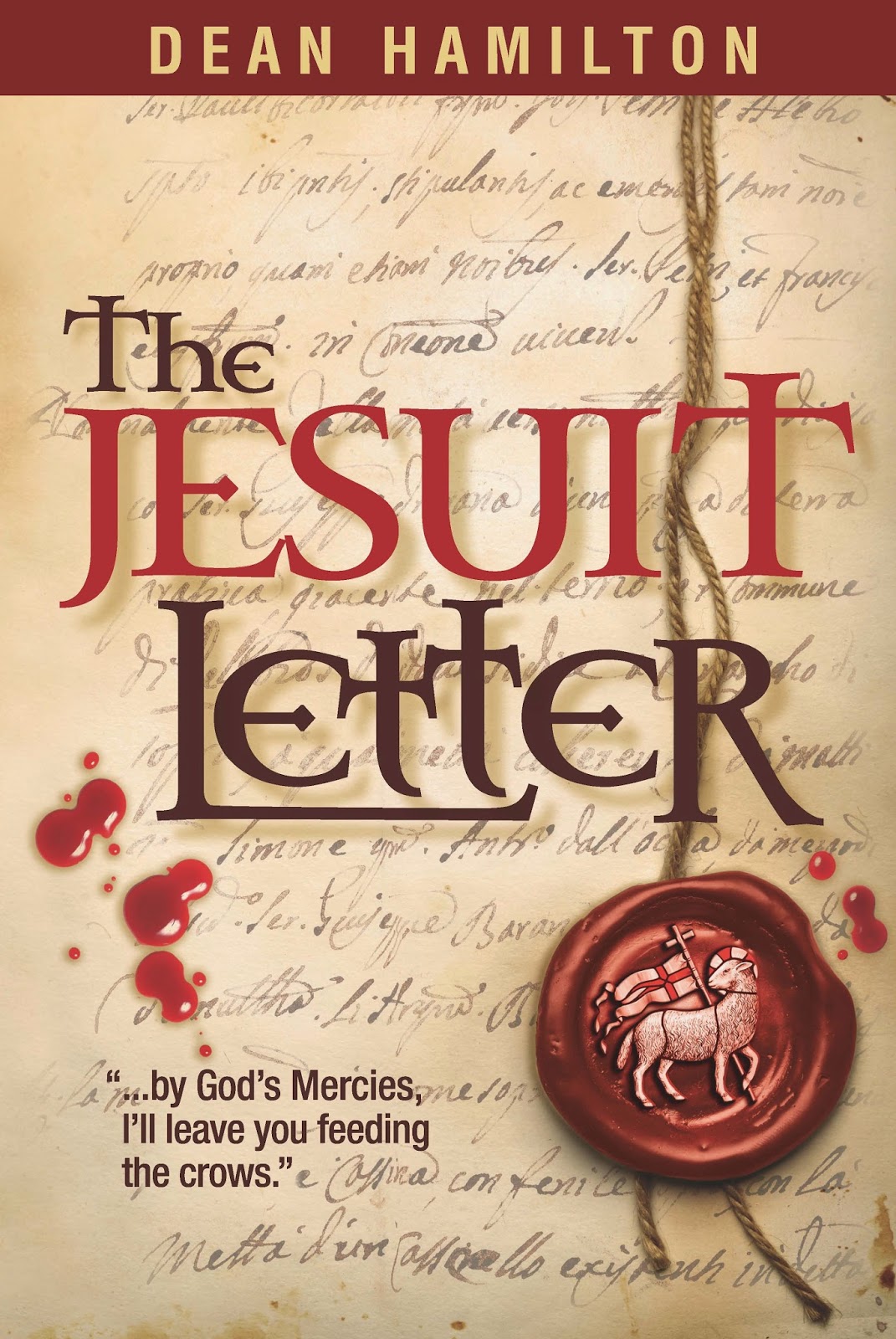
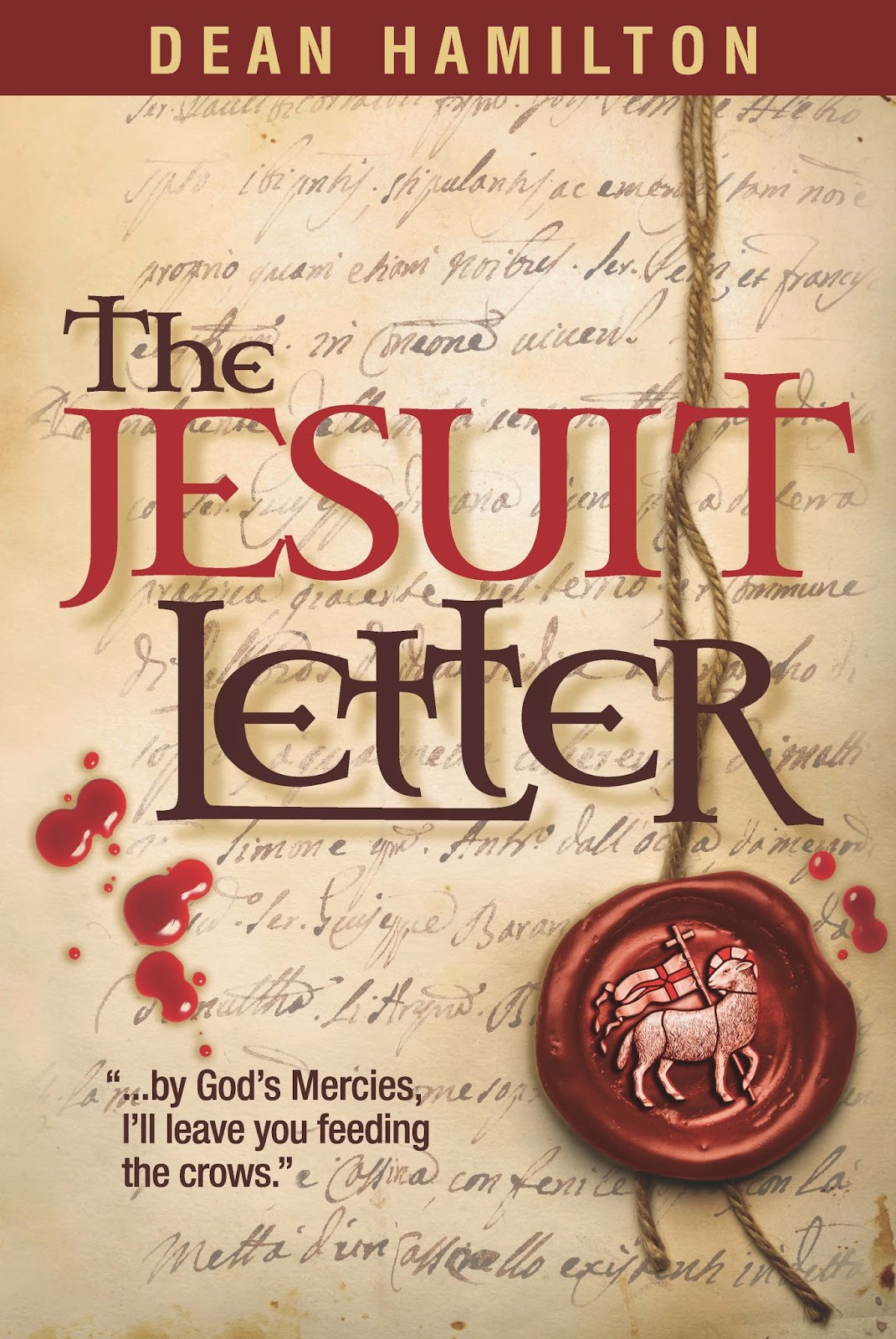
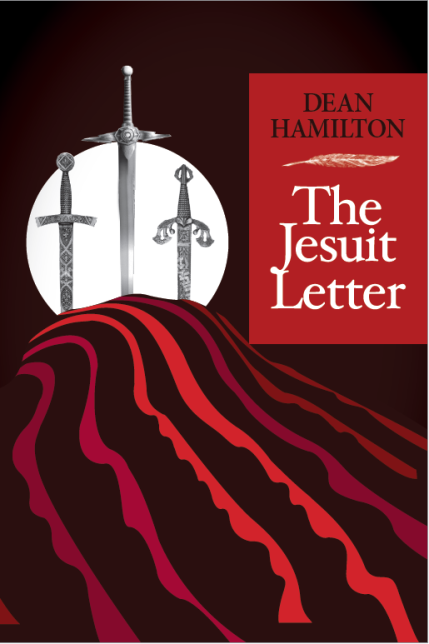
THE JESUIT LETTER, my new novel, is now available for order via Amazon, Kobo & CreateSpace.

What's it about? Ex-soldier turned play-actor Kit Tyburn is entangled in a deadly conspiracy when he intercepts a coded letter from a hidden Jesuit priest. 

So if you enjoy Elizabethan era skulduggery, sword-play& history with a touch of romance, check out THE JESUIT LETTER 


Go & read like the wind!

...oh, and tell all your friends!

Tuesday, March 24, 2015

It's Here! Launch Date April 23, 2015! Pre-Order via Amazon!

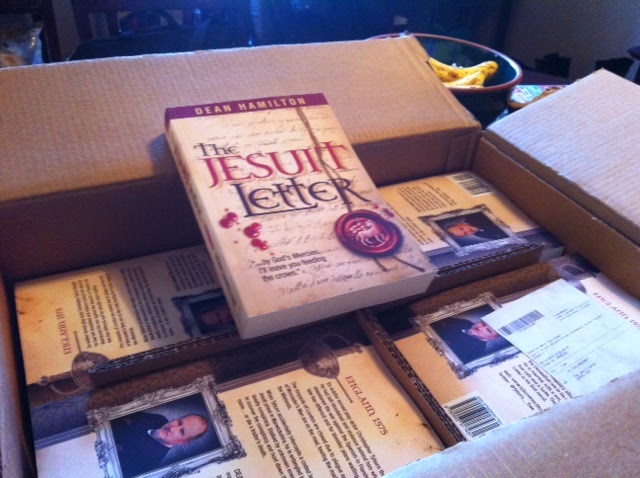
My book has arrived!

Ladies & Gentlemen, meet my first published novel, The Jesuit Letter (hint: it's in the box guarded by the intemperate cat). 

The Jesuit Letter is  available now for pre-orders on Amazon! Please place your orders now and on April 23rd, they will go through and your e-book will be sent out.

This particular batch of books shown is intended for all the supporters of my Kickstarter fundraiser however the official publication date is April 23, 2015; in honour of William Shakespeare's 451st Birthday (who is a key character in The Jesuit Letter as an eleven-year old Stratfordian troublemaker).


The Jesuit Letter (along with the 10,000 word novella prequel Black Dog) will also be available on Kobo and other  major e-book sites.

 Physical copies of the book (as seen in the pictures) can be ordered via Amazon as of April 23rd, 2015 but will not be available for pre-order.
If I sound overly excited it is because...I am.  This is the culmination of an almost ten-year long project and I am thrilled beyond measure that people can finally see and enjoy the fruit of that work, and hopefully, enjoy some sword-swinging Elizabethan intrigue and excitement.

So TELL ALL YOUR FRIENDS! Your support for this creative endeavor is THE critical part of making this work and helping me bring Tyburn back for another trek through the London back-alleys.

Thank you in advance for your kind support, your assistance and your help in making this a reality.

Now bing a waste! (and if you don't know what that means - it's in the book.)


Thursday, October 2, 2014

Jesuit Letter Cover Drafts

Everything happens at once.

No sooner do I receive the edited version of The Jesuit Letter back (laced and scarified with editor's cuts, slashes & corrections), then my designer drops the new cover concept drafts into my hands.

I was expecting maybe 3 to 5 concepts, and she came back with 15!  Admittedly a number of these are all variations on a specific concept but still, it was a cornucopia of concepts.

In the interest of aiding my decision, I thought I would throw these up on the Interweb and social media for direct feedback and commentary.  Let me know favorites, what you think, what works, what pops and what doesn't.  Any preferences, thoughts or helpful comments would be greatly appreciated!

By way of background, The Jesuit Letter is historical fiction, with a bit of mystery/thriller mix, set in Elizabethan England in 1575.

Here are the concepts:


Let me know what you think!  Thanks!

Monday, May 12, 2014

Publication Blues or Entrepreneurial Opportunity? The Road to Self-Publishing

When I started writing my novel, my concept for getting the book published was, at best, unfinished.  I had the usual vague thoughts of submitting to a bevy of agents and then finding a publisher.  As the book progressed, so did my nascent understanding of the world of publishing.  And right now, it is very apparent that publishing is undergoing a sea change.

Publishing is a 19th century endeavor seemingly being dragged kicking and screaming into the 21st century.

The fundamentals of the process haven't changed: writers still write; agents represent & sell; publishers edit, fix, design, market & publish; and readers purchase or borrow & read, however the model is in the violent throes of being torn apart bodily and re-built.

The value chain for publishing is evolving.  Technology and the electronic revolution have shattered existing traditional models like Humpty Dumpty toppling off the wall.  Humpty is not getting put back together again, rather, he is going bionic.

The advent of digital publishing is a key element, facilitating a new form of portable, low-cost readers and smart-phone apps that allow almost zero-cost for reproduction of a digitized work.  All the sunk costs, physical constraints and weight inherent in a printed book have been hacked away in a shower of pixels.

But the real revolutionary change isn't found in just the format. Traditional distribution channels and controls have also been torn asunder, with Internet-based digital distribution of content allowing for a profound shift in the revenue streams, reach and power structure of the publishing industry.

What that will end up looking like I haven't a clue, but as a neophyte writer, the opportunities that these technology changes offer have a clarion siren call.

E-publishing, also called variously self-publishing and artisan publishing, offers a fresh paradigm for writers, along with a new set of obstacles and challenges.  Self-publishing provides writers with digital tools that essentially move self-publishing out of the expensive "vanity press" model of the past and into an affordable "turnkey" operation of the future, albeit with its own complexities and learning curve.

The barriers between writer and reader have never been lower.

One critical issue for writers is that diving into the new model of self-publishing pushes a significant portion of the assumed risk and the workload back onto the writer.  In traditional publishing models, writers still carry the weight and investment of time and effort of putting pen to paper (or fingers to keyboards) in creating their work. The risk assumption inherent in creation of the physical book & distribution of that book - costs, editing, design, printing, promotion, distribution to stores etc. - were previously assumed by the publisher.  If a book flopped, a publisher could be out a significant investment, so the majority of publishers put some investment in the product to insure it met acceptable minimal levels of quality.  With self-publishing, that risk - and inherent production/distribution costs - are now assumed by the writer.

Self-published writers are now an entrepreneurial model of publishing.  They control all aspects of their product, the end quality of the work and how it arrives with readers.  They are responsible for decisions around writing, editing, layout, design, covers, pre-publication promotion, distribution, formats, pricing, revisions etc.  They own their product and they own their business, for good or ill.  At the end of the day, the writer becomes responsible for the reader's experience.

It can be a daunting task.  No one can be an expert at everything and so the spin-off opportunities for services are already underway.  "Booktrepreneurs" can source editing, design, marketing assistance, PR, or distribution through a broad range of freelancers and turnkey operations with multiple packages for all levels.

The issue for writers is that this requires additional resources - time and money, the twin demons of every business.  If you choose to self-publish, you need to determine how much time & money you are willing to invest in your success.  Quality product requires an investment.  And this increases the risk that you may not succeed.  Costs are now unloaded onto the writer and self-publishing generally doesn't provide a fat advance to cushion the risk (although more and more, neither do traditional publishers).

The fruit of this choice is evident in any browse through Amazon's Kindle store.  There are more than a million e-publications available, thousands of them available as free downloads or for a mere $.99.  Self-publishing thus is a double-edged sword.  Yes, technology has opened up the world for anyone with a computer to write, publish and distribute with minimal resource & time outlays, but at the same time the barriers to entry that traditional publishing imposed, served to sift and winnow the vast array of printed chaff for quality writing, for commercial viability, for originality, product quality and the list goes on.

The Kindle store can be a vast universe of poorly edited, badly written works that have been thrown up for download.  In this maelstrom, how do you as a writer make your work stand out?  How do you manage your risk?  How do you effectively price your work when your competition is basically free?

How to make your work stand out? The same way publishers have always made specific works stand out - building market awareness & visibility through marketing, advertising, publicity & promotion.  As a self-publishing "Booktrepreneur" you will need to assess your time, your resources, and most importantly your return on the marketing you will do.  Social media, linking into reader communities for your specific genre, developing and requesting reviews are probably the better low cost approaches. 

How do you manage your risk? The same way any entrepreneur does - on the basis of risk, reward and what is an acceptable balance for you in your endeavors.  It will vary for everyone, dependent on their circumstances.

How do you effectively compete or price your work when your competition is basically free? The same way any business in a commoditized competitive market does - you change the game and compete on something other than price.

Competing on price is a poor choice.  No matter what you do, if you are trying to price match in this highly commodotized marketplace you will find that you are forced to drive your price down to the lowest common denominator.  It is very hard to make much of a margin on "free", unless your books are just a corollary of what you are selling (i.e. you have a free ebook that helps sell your consulting services).

So how can you compete on other factors?  Right now there are dozens of models being experimented with and tried across the marketplace including: genre-specific approaches, serialization, subscription, bundling with other authors, and customization.  Short stories & novellas are becoming more viable and are probably more supportable at a $.99 price point for the shorter time to write and the lower resource costs to roll them out.  Leveraging a series strategy or multiple-book strategy of low cost entry with higher cost follow-ups is one potential model.

Giving readers a quality reading experience and providing superlative writing and story is probably the single best point of differentiation for any writer. 

The Long Tail

One of the other advantages of "booktrepreneurship" is that you have the advantage of maintaining and building your presence and your work over time.  With publishers, a physical book that doesn't sell a specific number of copies in a set time frame, is bound for the remaindered bin or will drift out of print.  Self-published e-books have the ability to build an audience over time, unbound by the standard demands of market-driven investment.  It can take the time to find an audience and can develop over much longer, more patient time frames then the traditional market permits.

Self-publishing is not a magic bullet.  Currently print books still outstrip e-books in market share, reach, distribution, marketing and visibility.  However it does provide a tool that opens up enormous opportunities for writers to directly access their readership and the market, and is forcing a massive change into an industry that has been slow to grasp the implications of the digital revolution.

As for myself, I've decided to jump into the deep end of the pool.  I will be publishing my own novel online in 2014, using a Kickstarter in the next few weeks to raise funds for editing & cover design (My Kickstarter preview: https://www.kickstarter.com/projects/1678683250/397284808?token=7adc8cda).

Now I get to join the ranks of booktrepreneurs...

Monday, September 16, 2013

First Look: Thieves Castle


Thieves Castle:   Chapter the First

The man’s feet slid in the muck as crossed the open space of the laneway, the darkness yawning moist and thick around him.  He leaned against the corner post panting, his breath harsh in the silence of the street.  An unsheathed dagger glinted in one hand.  The man glanced around, eyes straining at the darkness. 

Ivy Lane stank.  The smell was a mix of urine, dung and the foul rancid stench of offal drifting down from the butcher’s yards north of Newgate Street.

Then man pushed himself away from the corner and turned hastily down the lane.  The night was heavy and the darkness near complete, lit only by a handful of window candles and the dim yellow light of a small lamp hung outside one dark doorway.  Although the lane was cobbled, the stones were greasy with the accrual of filth and the endless tread of daytime commerce.  The man paused, hearing the faint echo of feet behind him, the sound uncertain.

He cursed to himself and began to move down Ivy Lane with as much speed as the darkness and the uncertain footing allowed.  He held the dagger at length in front of him, as though to hold the night at a distance.   The sounds seemed closer.

He glanced around.  The laneway was narrow, a typical London thoroughfare, overhung with jetties that exiled the sky into a narrow strip and made the already oppressive darkness of the night into a stygian gloom.  A flare of torchlight sent a set of shadows racing away as someone passed the corner he had vacated.  The light sent the man scurrying away, no longer mindful of the slippery footing.  He caught a faint gleam of a bare blade in the glowing light of the torch.

“Find ‘em lads, winnow him out.” The faint voice sounded amused.

The man cursed again and ran down the street, one hand outstretched, bumping along the irregular walls of the laneway.  Another flicker of light in the distance ahead of him, coming from Paternoster Row and the distant bulk of St. Pauls.

“Coads.” The man muttered and pressed himself into the wall, shaking.  The men were getting closer.

“Stay still.”  The voice was soft but firm.  A dim yellow light emerged from the doorway to his right, carried by a young woman.  Her hair was short and dark.  She stepped out and hung the lantern on a sign bracket above the narrow doorway.  She pointed at the darkened alcove to the left of the door, almost hidden by the thick cornerbeam of the house.  “Go there.”

The man wiped his face and nodded, sliding into the welcome darkness of the alcove like a lover’s embrace.  He listened as the sound of footsteps grew more distinct.  He could see the red flicker of the torch against the wall as they drew near, the shadows dancing back and forth with drunken abandon.  He shrank back, feeling the rough timber frame digging into his spine.    He listened.

“Bit late for punk[1] trade, isn’t it.”

“Codso, you lot out looking for sheep?” the girl said in a tired voice. “what’s this rag and tag?”

“You seen a man? A blood?”

She laughed.  “Likes of them in Ivy at this time of night?  Not tonight.  Any of your ruffler’s in coin?”

“Piss off cunt, we’re busy.”

“Fuck you, you buggering cockless bastards, go find yourselves some rent-boy’s arse.”  The torchlight flickered and began to move away.  The man hidden in the alcove let out a long sustained breath of relief as the footsteps faded away.  The girl continued to berate the party’s retreating backs until they disappeared.

“You can come out.”

The man emerged cautiously, his eyes flinching as he scanned the length of the street.

“That lot’s gone.”  The girl said.  She canted her head at the man and surveyed him up and down with a practiced eye.  “What’d they want you for?”

“No idea love.  They came at us when we left the tavern.”  The man shuddered at the recollection.  He had stood mute and stunned as he watched his two friends beaten into the mud and only when the steel had gleamed red did his drink-befuddled reflexes send him careening away as fast as his legs could carry him.  He felt his throat choking with bile.

“Here” The dark-haired girl handed him a wineskin.  He tilted it back and gulped a mouthful of thin, acrid wine.  As he wiped his mouth, he looked at the girl again in the lantern light.  Her hair was short and dark, barely past her ears.  She wore a long dress with the bodice bare and loose, the swell of her breasts clearly evident.  The stays on the dress were untied, allowing the top to flare open, giving the man a tantalizing glimpse of a lean length of untrammeled flesh.  The girl tilted her torso back and the tip of one nipple slid out from underneath the thin fabric.

“Why don’t you stay with me for a time, until your hunters wear themselves out?”  The man felt one hand brush along the front of his breeches, pressing against the hardening length of his member.  His breath caught.  His eyes closed as her grip tightened.

“That may be the wisest choice…” the man breathed.  Her hand slid around his waist and she slowly turned him, her dark eyes locked on his, her mouth open like a wet promise.  He slid his hand down between her thighs and the thin material left little to the imagination.  Maybe it was due to the terror of being hunted through the nighttime paths of London but the girl‘s touch made his pulse hammer and his desire quicken.  She smiled, a brazen smile of anticipation and lust.

It felt like a thump and a sharp tightness against his right side.  He stopped in puzzlement.  The girl continued to look at him and gave a slight half-smile as hot pain coursed through him.

“I.., what..?”  The girl continued to smile.  He felt her brace herself for an instant and then push her right hand against the handle of the long poniard that protruded from his side.  He staggered, one hand grasping at the girl.  He felt his numbing fingers trail over the hardening nipple of her breast but his lust was overtaken by overwhelming weakness that made the dark alley swim.  A sick feeling of horror flooded through him and he reached for her.  She laughed and easily deflected his hand, tugging on the handle of the dagger, steering him lurchingly away from her.  “You…”  his words were incomplete, lost in a red wave of searing pain that seemed to swallow his thoughts.

“Over here, come with me.” She crooned in an encouraging voice, one guiding hand on his back and one on the dagger handle, as though driving some farm animal to market.  He took a staggered step and then the girl grasped the dagger handle tightly and twisted it with harsh strength.  The man felt a tugging sensation and his insides turned to liquid, as though he drunk a skinful of hot spiced wine in one swallow.  He could feel the cold length of the steel perforating his flesh, ripping into his bowels and belly.  His breath roared in his ears and his eyes filled with tears.  The lantern wavered and blurred.

He was on the ground, mouth tasting of blood, fingers grasping at the thin layer of muck that coated the cobbles.  The torchlight flared again and he stared upwards at the girl’s intent face.  She wore a pleased expression like she had made some fresh discovery.

“Want me to finish him?”  One of his hunters stood beside the girl, holding the torch and looking down at him with a bemused expression.

“No, I want to watch him go.  You would spoil my fun Bent.”  She smiled.  Bent’s eyes flickered at the girl with a measured look and then back at the dying man stretched across the muddy stones of Ivy Lane.

Bent nodded in careful acquiescence.   “Can’t have that.”  Bent reached down and ripped the blade free and the man felt a calescent, diffuse sensation spreading through his body, as though he had pissed himself.  His blood was dark as night in the glow of the torch.  He watched it puddle across the greasy cobbles.  “Leave this on him when he’s done.”  He handed her a small object.  She nodded absently and lowered herself over the supine man’s groin, settling herself upon him, eyes fixed on his face, knees on the wet cobbles, unmindful of either dung or bloody rivulets, her expression almost rapt in the flickering torchlight, watching his eyes as the man cried in pain and fear and bled to death in the dank confines of Ivy Lane.


---

I hope you've enjoyed the first chapter of Thieves Castle, which continues the saga of Christopher 'Kit" Tyburn.  Excerpts from Book 1, The Jesuit Letter, can be found here.  
 
The Tyburn Chronicles are a planned series of books set during the Elizabethan Era between 1575 and 1589.  
 
Currently I am still engaged in agent hunting, but if nothing new has turned up in my quest by early 2014, you should be able to grab The Jesuit Letter & Thieves Castle as independently published e-books in 2014. 
 
Stay tuned for future news and I hope you found the excerpt intriguing and enjoyable!

[1] prostitution


Monday, March 18, 2013

Historical Fiction: Delving into the Age


"Kit Tyburn leaned on the bench, his back pressing against the canted timbered wall, surveying the four pasteboard cards in his hands critically.  A worn cyclopean knave of hearts gazed back, accompanied by two clubs, four hearts and a wistful diamond queen."  - Excerpt, The Jesuit Letter


Historical fiction is a genre that often carries the illusion of ease in its genetic code.  To the uninitiated, it is simpler to pull from the pages of history - you don't need to invent, you don't need to create, you just need to pillage the past.   It's all there for the taking.

The reality is that historical fiction requires hard research, a critical eye and the ability to parse from history the day-to-day norms and conditions that govern your characters and your settings.  History buffs are often well-versed, very particular and on occasion, will obsessively guard their "eras", noting any permutation or deviation with judicious care.  Obvious errors pull the reader out of the period and the setting, detracting from the story-line and the overall credibility of the tale.  Research, context and, more importantly, being able to reflect and mirror the feel for the era in the story, are critical elements in making historical fiction work.

That is not to say that you cannot bend history to suit story.  Indeed, it often becomes a necessity.  Good historical fiction winds its way through reality with deft prose and respect for the era and its fundamentals but in fiction, the need to cut, edit and interpret history to serve your plot comes up more often than you think.  Both geography and time need to bend to the will of the author if the story demands it but in a way that ideally respects the reader, the era and the circumstances.  You can move a hill, shift a date, add a character to a critical time and place, but you need to avoid anachronisms and blatant or egregious retro-fitting of history if you want to keep the interest of your readers, and your own credibility...

Writers of historical fiction often need to embed their story in as much reality as it can bear, but not too much.  Most readers don't really want a story that reflects a well-loved character dying of dysentery or an infection from a tooth abscess.  You don't need to know about the toiletry habits of the typical Roman, or how infrequently people in the Middle Ages bathed - unless it is specific and particular to advancing the plot.  When writing historical fiction, the copious research and meticulous attention needs to be levied with the need for story, advancing your plot, and a strong,  vivid and evocative tale to tell, not the reality of medieval sanitary conditions

Writers need to be careful that research doesn't overwhelm storyline.  It is very easy to suffer from excessive inclusion - the need to make certain that your depth of research is reflected on the page - driving the reader to distraction with miscellaneous detail and context that is unneeded and fails to drive the plot.  It is very easy to get distracted by the need to explain and the temptation, when a terrific piece of research needs to be incorporated into a scene, to make the scene about the research rather than the character or the story.  When an everyday event takes you days or weeks to research and plan, the urge to have that fictional moment encompass more to justify all the hard work that went into it, can be an easy and common trap for the writer.  The excerpt above opened a brief scene of card-play that took up a total of two and half pages, mostly dialogue, intended to advance the characters and their situation.  It also involved a significant amount of detailed research into playing cards, their use in Elizabethan England, the types of playing cards available and detailed rules for several different card games, research that included about thirty hands of primero at the kitchen table to get the gambling and betting elements correct.  The original version was almost double in length and covered several hands worth of play, until I re-read it and decided that the vast majority of non-primero playing readers would find it tedious.  Cut-down in its prime, the research lives but much reduced.  Similarly a scene with a dog-fight was cut entirely, even though the intriguing and fascinating world of badger-baiting did beckon seductively.

Historical fiction is best when the author is painting in the corners, dropping in the innocuous and oft un-noted details that help make the era and the landscape come alive in ways that the reader barely overtly notices, but builds and supports the overall world and setting.  It is found in the canted timber walls and the worn pasteboards, the sour warm ale and the mud-caked cobbles, the taste of spiced wine and the rancid stench of a urine-soaked alley.  The research must lead the writer, helping him enter into that world, where they can critically pick the elements and moments to entrap in prose, pulling the reader into their time-warp, into a world and an engrossing story.

It's all about painting in those corners.