Elizabethan London

Elizabethan London
Tyburn was an infamous execution spot west of London, used since medieval times. The Tyburn "tree" - a unique, multi-person gallows - erected in 1571 became a popular public spectacle, drawing crowds of thousands.Tyburn Tree blog is less blood-thirsty but hopefully topical, interesting and informative, if slightly bent to my personal topics of interest - books, writing, history, technology, with a smattering of politics and dash of pop culture, science and the downright strange. So "take a ride to Tyburn" and see what happens...
Showing posts with label tudor. Show all posts

Saturday, December 26, 2015

"Cogging & Foisting": Elizabethan Cardplay & Gaming

“I never prospered since I forswore myself at primero. Well, if my wind were but long enough to say my prayers, I would repent.” 
– Falstaff, The Merry Wives of Windsor by William Shakespeare

Gambling games in the Elizabethan era variously included tossing the bales (dice), shrove-groat, venter point, cross-and-pile (all coin-tossing games), and wide variety of card games such as gleek, cent, foot-savant, maw, bone-ace, monchance & primero in all its many variations. Queen Elizabeth herself was inordinately fond of card games and played regularly (she apparently took Lord North for £33 playing Maw in August, 1577).

Technically gambling and games (along with bowls, tennis & football among others) were forbidden by law. The government instead encouraged all young males to practice the more martially useful sport of archery, an activity that was rapidly waning in face of gunpowder. The statutes on gambling were so commonly broken that the Queen eventually licensed the Groom-Porter's office in 1578 to allow licenses for gaming establishments, a very lucrative prerequisite for the occupants of the position.
The Cardsharps, by Caravaggio, c 1594 - Note the player in the gold-striped doublet is cheating....

Cheating was wide-spread and common, enough that a very specialized vocabulary for the many different variations has emerged and was in common language usage, often by Shakespeare and other playwrights. Cogging & foisting, cozening, cony-catching, bar-dice, bristle-dice, card chopping, highman & lowman and contraries were all actively in play.  False dice in particular were a concern (with at least 14 distinct variations cited) of the Groom-Porter's office as it cut into their own role as a monopoly supplier for licensed dice and cards.

"If you play among strangers, beware of him that seems simple or drunken; for under their habit the most special cozeners are presented, and while you think by their simplicity and imperfections to beguile them...you yourself will be most of all overtaken." - Reginald Scott, Discovery of Witchcraft, 1584

Elizabethan-era card decks were commonly imported from France or Germany. The earliest, most well-known designs were from Rouen, France by Pierre Marechal.  Spanish and Italian cards typically used 4 suits - chalices, swords, coins, and batons, while Germanic cards displayed hearts, acorns, hawk-bells, and leaves.  The French (and subsequent English cards) used the familiar hearts, spades, diamonds and clubs of today, although the cards did not display any numerals.
Facsimile based on playing cards by Pierre Marechal of Rouen, c.1567  
Published by Rose & Pentagram Design, 2006. www.historicgames.com

These French card designs formed the basis for the subsequent development of English card decks after foreign cards were banned in 1628. Very few cards remain extant today, only about a dozen cards from the 1590's have survived.

Attitudes of the Puritan authorities towards any type of recreational activity, particularly gaming of any form, was generally negative. Even bowls, the famous pastime Sir Francis Drake was engaged in 1588 while waiting for the arrival of the Spanish Armada, was problematic. Bowling alleys are described in School of Abuse (1579) by Stephen Gosson as "privy moths that eat up the credit of many idle citizens, whose gains at home are not able to weight down their losses abroad, whose shops are so far from maintaining their play, that their wives and children cry out for bread, and go to bed supperless oft in the year."

Of all the card games, Primero was probably the most popular and widespread 16th century card game. The game originated in Italy or Spain.  Widespread across Europe, it is widely considered one of the precursors of modern Poker.  The game was very fashionable during the Tudor and Elizabethan eras.

Primero is commonly played with four to six players, and with a 40-card deck (the 1567 Rouen deck pictured above, of which you can get a gloriously colourful reproduction of from historicgames.com is perfect), with the 8, 9 and 10 cards removed.

Here is a quick (and fairly light) review of the basic rules, in case you wanted to "toss a hand" (be advised, there are a number of variant rules and approaches. This is just one variant, the one I used in illustrating a card-playing scene in my book The Jesuit Letter).

Each card has certain points value, regardless of suit:


  • Cards 2 to 5 = 10 points plus their value (i.e. 2 Clubs = 12 pts) 
  • Cards 6 and 7 = 3x their value  (i.e. 6 Hearts = 18 pts)
  • Face cards all count for 10 pts
  • Aces = 16 pts


PRIMERO HANDS FROM HIGH TO LOW

  • Chorus (Quartet) = Four  of a kind 
  • Fluxus (Flush)  = All cards of the same suit
  • Numerus (Point) = Two or three cards of the same suit. 
  • Supremus (Fifty-five) = The highest possible three-flush, the Ace, 6, 7 (plus an unrelated fourth card) and Ace card from any other suit.
  • Primero (Prime) = One card from each suit. It’s a four-card hand containing one card of each suit, hence the exact opposite of a “Flush” in Poker. 
HOW TO PLAY:

Two cards are dealt to each player (face down).  Players may elect to Vie/Bid, Stake or Pass. 

A Bid is an initial bet, but players must state their supposed point total of their hand, the hand type, and the bid amount (i.e. “Numerus 34, Bid $5).  Players  may understate their hands but you are not allowed to overstate its actual value.  

The next player may elect to Stake (cover) the bid or Pass.  If Staking, the player must cover the $ value bet (toss your coins into the pot), and state a hand of greater value than the previous player’s Bid.  If the player also elects to Bid, the player that follows them only needs to cover the previous player’s Bid, not the original one.

If the player elects to Pass, they put no money in, but must discard two cards and draw another two.

Once all players have Bid, or Passed, the second two cards are dealt.  Each player now has four cards.  Players may elect to Bid, Stake or Pass.

The rounds of Bid, Stake or Pass continues around until the last Bid is staked (similar to a covering the raise in Poker) at which point the winner (highest point value) would take the pot.


EXAMPLE:

The first set of two cards are dealt: 

  1. Player 1 is dealt 2 cards, a King of spades (10 pts) and five hearts (15 pts).  If bidding, P1 would state “Primero 20 (understating his actual hand value of Primero 25), $2.”
  2. Player 2 is dealt two sevens (hearts & clubs) for a total of 42 pts. He could Pass, putting in no $  (and discard his two cards for another two) , Stake for the previous P1 bid of $2, and then Bid himself with “Primero 34, Bid $15).
  3. Player 3 is dealt a three clubs (13 pts) and a four diamonds (14 pts), for a total of  27 pts.  P3 passes puts in no $ and discards his two cards for two new cards. Note, if he had decided to stake, he would be staking for the P2’s bid of $15. By passing, P3 has dumped that option onto P4.
  4. Player 4 receives a Queen hearts (10 pts)and an Ace hearts (16 pts) for a total of 26 pts. P4 Stakes the $15 and bids “Numerus 24, Bid $10)

The second set of two cards is dealt:

  1. P1 receives two clubs (12 pts) and five spades (15 pts).  P1 already has a King spades & five hearts, giving him a hand type of Numerus, with a total point value of 52 pts.
  2. P2 receives Jack hearts (10 pts) and an Ace spades (16 pts) . With P2’s two sevens, he now has a hand type of Numerus with a point value of 68.
  3. P3 passed during the last round, drawing a ten hearts (10 pts) and a six clubs (16 pts). P2 now receives a ten diamonds (10 pts) and a Queen spades (10 pts). This leaves him with a hand type of Primero, with a point value of 46.
  4. P4 is dealt another two hearts, the four (14 pts)  and the two (12 pts). This gives him a Fluxus (four of suit) with 52 points.
  5. The rounds of Bid, Stake or Pass continues around until the last Bid is staked (similar to a covering the raise in Poker) at which point the winner takes the pot. If the round ends with the current set of cards, then P4 wins with a Fluxus 52.

Now go forth, and win yourself some coin!


"I was as virtuously given as a gentleman 
need to be; virtuous enough; swore little; diced not 
above seven times a week; went to a bawdy-house once 
in a quarter—of an hour; paid money that I 
borrowed, three of four times; lived well and in 
good compass: and now I live out of all order, out 
of all compass." 
- Falstaff, Henry IV Part I


SOURCES:

  1. The Time Traveller's Guide to Elizabethan England by Ian Mortimer
  2. The Elizabethan Underworld by Gamini Salgado
  3. Wikipedia, 2014. http://en.wikipedia.org/wiki/Primero
  4. Primero: A Renaissance Card Game, by Jeff A. Suzuki, 1994.  http://math.bu.edu/people/jeffs/primero.html
  5. Game Report: Primero http://jducoeur.com/game-hist/game-recon-primero.html


Wednesday, December 16, 2015

Attention Shoppers.....

Something to add to your holiday shopping list...‪‎

THE JESUIT LETTER will be available on Amazon Kindle for $0.99 from Dec 23-25th!

http://amzn.to/1IUH3bC


Wednesday, November 4, 2015

Shiny!

Alongside the HNS Editor`s Choice logo, I get to add another shiny logo to THE JESUIT LETTER, courtesy the Historical Novel Society reviewing & liking my book!

Here they both are!


Monday, November 2, 2015

Editor's Choice

Great news to make even a dreary Monday shine!

The Historic Novel Society has reviewed The Jesuit Letter
and selected it as an Editor's Choice!

Read the review!

In addition to the snazzy logo, this makes The Jesuit Letter eligible on the long-list for the 2016 HNS Indie Award!

I know, way too many exclamation points for a Monday morning...but how often does this happen with a debut novel!

Thank you HNS!

Monday, October 26, 2015

“By plain tooth and nail”: Bear-baiting in Elizabethan London

This a copy of an article I wrote for English Historical Fiction Authors, a blog with an absolute fabulous collection of articles on just about any era you can contemplate. I am appending a copy here, but I urge you to drop by EHFA Blog and check out their tremendous collection of articles!  


If you glance at the famous Visscher's Panorama of London from 1616, you will see, tucked into the foreground of the picture, on the south bank of the Thames to the left of London Bridge, a pair of octagonal buildings. These are the now famous Globe Theatre and its less-famous but almost equally popular neighbour, the Bear Garden, also known as the Paris Garden.

The Bear Garden was a bear-baiting ring.

Blood sports were popular with the Elizabethans. Bear-baiting stood alongside theatre as a choice entertainment spectacle, alongside other animal blood “sports” such as bull-baiting, badger-baiting, rat-pits and cock-fighting.  All of these activities, to modern eyes, were inhumane, cruel and vicious bloodsports that inflicted pain and suffering on multitudes of animals, for the amusement of paid spectators.  And yet, they were immensely popular.

Bear-baiting “performances” were held seven days a week, including Sundays, a fact that often raised the ire of the church and the London Aldermen. The bear-baiting ring consisted of a design not very different than that of the London theatres – an octagonal ring with tiered galleries, surrounding a fenced in “yard” or enclosure. Costs for entry was a penny for the bottom tier, two pennies for higher tiers. At the centre of the ring a bear, chained to a post, would be placed. Dogs, usually large English mastiffs, would be released into the yard to fight and attack the bear.  The “performance” would continue until the bear was exhausted with fresh dogs replacing the spent, injured or dead ones. Bears were valuable investments for the impresarios operating the bear-baiting rings, so care was generally taken that the bears not be killed, although in no case was the treatment even remotely humane by modern standards. Teeth were filed short, to reduce injuries to the dogs. Blind bears were whipped to amuse the crowds.

Queen Elizabeth was quite taken with bear-baiting, staging it regularly at the enclosed tiltyard at the palace of Whitehall, most notably for the French Ambassador in May, 1559. The ambassador was so taken by the spectacle, he and his retinue promptly headed over to Southwark and the public bear-baiting the very next day.


The Earl of Leicester, hosting Elizabeth’s Summer Progress at Kenilworth Castle in July, 1575, brought in 13 bears and innumerable dogs to provide a bloody afternoon of “entertainment” for Elizabeth and her Court. By all accounts it was a rousing success with “fending & proving, with plucking and tugging, scratching and biting, by plain tooth and nail on one side and the other, such expense of blood and leather [skin] was there between them, as a months licking (I think) will not recover” (from Robert Laneham's Letter).

Londoners flocked to the rings and certain bears soon achieved a modest level of “fame”, accompanied by nicknames such as Harry Hunks, George Stone, Ned Whiting and Harry of Thame. The bear most familiar to modern audiences is Sackerson, who was highlighted in William Shakespeare’s The Merry Wives of Windsor

Slender:   ….Why do your dogs bark so? be there bears i’ the town?
         
            Anne:  I think there are, sir; I heard them talked of.   
     
Slender:  I love the sport well; but I shall as soon quarrel at it as any man in England. You are afraid, if you see the bear loose, are you not? 
    
             Anne:  Ay, indeed, sir.   

Slender:  That’s meat and drink to me, now: I have seen Sackerson loose twenty times, and have taken him by the chain; but, I warrant you, the women have so cried and shrieked at it, that it passed: but women, indeed, cannot abide ’em; they are very ill-favoured rough things.

It would be nice to think Shakespeare had the bears of Southward in mind when he penned one of his most famous stage directions “Exit, pursued by a bear” in A Winter’s Tale.

Aside from mentions in plays and the general shape of the performance venue, bear-baiting and the Elizabethan theatre crossed over in several areas.  Philip Henslowe, who built and owned The Rose theatre (the third of the permanent playhouses erected in London, and the first in Bankside) also dabbled in bearbaiting from 1594 onwards. In 1604 Henslowe purchased the position of “Master of Her Majesty’s Game at Paris Garden” and in 1613-14, he and his partner tore down the Bear Garden and replaced it with the Hope Theatre, a dual purpose playhouse / animal-baiting venue, although it soon became used primarily for bear-baiting and never really lost it’s Bear Garden identity in the eyes of Londoners.

Bear-baiting and other animal blood sports continued as a spectacle both in London and across England (and a number of other European nations). Bear-baiting as entertainment was not without its detractors. The Puritans in particular were hostile to the entertainment, although they were equally hostile to almost all other types of recreation. Only a handful of commentators expressed revulsion at the activity.  It was finally brought to a halt in London in 1655 under the munificent Lord Protector Oliver Cromwell.  Cromwell’s appointed “Major-Generals” were instructed to “encourage and promote godliness and virtue” in their roles.  As a result, Colonel Thomas Pride raided the Bear Garden at Bankside, personally killing all the bears and ordering his troops to wring the necks of the gamecocks across London. This was in addition to shuttering the theatres, closing ale houses and generally working to surpass “mirths and jollities” across the nation.

One prominent critic mused that the bear-baiting was ended by Cromwell, but not because of the vicious cruelties inflicted on the bears and the dogs, but rather because it gave to much pleasure to the spectators.


The ban on animal baiting of all types was a short-lived one, as it resumed with the Restoration. Samuel Pepys famously recorded a visit to the Bear Garden / Hope Theatre in 1666 deeming it "a rude and nasty pleasure."  The last animal baiting recorded at the Bear Garden was in 1682. Bear-baiting, bull-baiting and other activities, though they waned in popularity in the 17th century, were finally ended and utterly banned in 1835 with the timely passage of the Cruelty to Animals Act.
The Bear Garden is commemorated now with a long narrow lane named for it, running towards Bankside and the Thames River, a block from the reconstructed Globe Theatre.

No bears are now in evidence.

Thursday, October 8, 2015

Second!

Second Place!

As mentioned in earlier posts, my novella BLACK DOG was entered into Inkitt's "Reclaim Time" story competition.

I found out this morning via email that it has placed SECOND in Inkitt's historical fiction competition, a fact that fills me with excitement as I always have a difficult time judging and assessing my own work.

Thank you editors of Inkitt and a special thank you to everyone who took the time to read, vote and review my novella.

If you enjoy Elizabethan-era back-alley skulduggery, then go have a read!!

http://www.inkitt.com/stories/15411

"No one wants to run afoul of London’s most notorious prison rooker, the Black Dog. Now Kit Tyburn must pursue his secrets to free his friend, but you don’t stalk the Black Dog without consequences…."

Thursday, September 10, 2015

A Player's Walk through Elizabethan Theatre

This a copy of an article I wrote for English Historical Fiction Authors, a blog with an absolute fabulous collection of articles on just about any era you can contemplate. I am appending a copy here, but I urge you to drop by EHFA Blog and check it out!  


What were Elizabethan theatres really like?

It seems strange, but the boisterous, bustling, familiar precincts of London that Shakespeare trod have mostly vanished from sight. The Great Fire that devastated London in 1666 swept the core of the City into ash and ruin. Almost every building or church of note that lay west of the Tower, with the exceptions of the areas around Bishopsgate and Aldgate, were laid to waste. From the Tower to the Fleet, Tudor London was mostly devastation. The London we see today was built on its bones.

 To understand the London of the playing troupes, you must first seek the roots of the city, the ebb and flow of its tides, particularly the torrent of change that was engulfing it throughout the reign of the Tudors....and what London meant for players, playwrights and theatre.

Rooted in commerce & trade, fed by the river Thames, inculcated with a sense of purpose and centrality and commercial drive, London was the dominant metropolis of Britain. 400 years later Disraeli coined it well when he described the City as "that great cesspool into which all the loungers of the Empire are irresistibly drained”.

Prior to the 15th century London had not been a large or overly populous city in a thousand years. London in the Tudor era had a dense, noisome population estimated between 160,000 and 200,000 people, all crammed into a few square miles of buildings. This density of population achieved during the Tudor era opened up the opportunity for a more robust and permanent situated forms of entertainment rather than the opportunistic and transactional formats previously used. In short, an audience was now waiting.

Dominated by the Tower to the east and the impressive bulk of St. Paul's Cathedral to the west, London proper was surrounded by the London Wall, a protective fortification originally built by the Romans, pierced by seven gates: Ludgate, Newgate, Aldersgate, Cripplegate, Bishopsgate, Aldgate and Moorgate. Suburbs spilled out along major roadways and gates – Holburn, Smithfield, Shoreditch, Aldgate and, most infamously, Southwark which sprawled along the Thames at the southern end of London Bridge.

The suburbs were crucial to the development of London theatre because they were outside the jurisdiction of the London Court of Aldermen that governed the city. Plays were widely considered to be immoral, degenerate and depraved. This is partially due to their roots in the traditional Catholic “mystery cycles”, a series of religious moral motifs and pageants held in many market towns on religious holidays and feast days. These performances were decried by many ardent Protestant supporters and were banned in 1534, although they continued in many rural locations for many years after. London’s Court of Aldermen in the Elizabethan era was of a notoriously Puritan bent. The immorality and sinfulness of theatrical entertainment would continue to be a Puritan rallying cry until all the London theatres were finally closed and banned in 1642.

Plays were widely seen as being potential flashpoints for plague, crime, riots and political or religious dissent. Closures of inn yards and playing houses were frequent. It was the banning of inn yard performances in London in 1572 and the subsequent “banning” of actors in 1575 that spurred the eventual development of the first permanent theatres.

Sir John Spencer, Lord Mayor of London in 1594 described the theatres as "places of meeting for all vagrant persons and maisterles men that hang about the Citie, theeves, horsestealers, whoremoongers, coozeners, connycatching persones, practizers of treason and other such lyke."

Philip Stubbs, author of Anatomie of Abuses published in 1583, was one of the more ardent critics of playgoing:“if you will learn to condemn God and all his laws, to care neither for heaven nor hell, and to commit all kind of sin and mischief, you need to go to no other school, for all these good examples may you see painted before your eyes in interludes and plays.”

Even Anthony Munday, an actor, playwright and sometime provocateur who informed on the Catholic exile community, had little good to say about London’s theatres, describing them as having "no want of young ruffians, nor lack of harlots utterly past all shame, who press to the fore-front of the scaffolds to the end to show their impudency and to be as an object to all men's eyes".

The first permanent theatre in London was The Theatre, which opened in Shoreditch in 1576 on property from the dissolved Holywell priory. Several previous attempts at creating a permanent theatre (notably The Red Lion, which was a converted farm, located in Whitechapel) had foundered. The Theatre, built by James Burbage and John Brayne, was a polygonal timber and plaster building, with three high inward-facing galleries surrounding a yard with a stage, a design that borrowed heavily from both the general architectural design of inn yards and more established bearbaiting rings. By 1577, a second theatre had opened nearby, The Curtain, similar in design.

By 1587, the Rose Theatre, the first of a number of newer playhouses, had sprouted up in Southwark. It was followed by the Swan and, most famously, by the Globe, which was constructed partially out of the disassembly of The Theatre when a property dispute arose and forced the shareholders to move.

Southwark was a particularly opportune locale for the playhouses. The area lay outside of London proper, yet was easily accessible to playgoers via London Bridge or a quick boat-ride across the Thames. Southwark was a notorious collection of inns, gaming houses, brothels, bear-baiting and, of course, theatre. The majority of the land fell under the ownership and ecclesiastical authority of the Bishop of Winchester, making one of London’s most powerful figures the nominal landlord for the dense, vice-ridden, pox-infested stews and brothels that lay at the southern end of London Bridge. “Wincester geese” was a nickname for the whores that plied their trade in Southwark.

At its height, London had almost a dozen playhouses and inn yards actively performing. Playgoing was a broad and common entertainment with each theatre showing an estimated twenty to thirty plays per year. For example, The Lord Admiral’s Men performed 38 plays in 1594-95. The Globe was estimated to hold almost 2,000 people per performance, so the economic scale of the theatre industry in Elizabethan London was considerable. Additional private performances for the Queen, the Court, leading nobility and wealthy merchants were also common. Elizabethan theatre was a great leveler within society, in the sense that it was popular and frequently enjoyed by a wide range of social classes and peoples.

Performances were daytime activities, running six days a week except on religious holidays or when forced to shut down due to plague. Playgoers had the option of gallery seating or to stand in the open yard with the “groundlings”. Wealthier attendees could reserve a gallery box or even a choice seat onstage. Crowds were dense, noisy and often impatient, with catcalls and shouts at the play-actors being a common motif. The theatres had a reputation for pickpockets, lewd behavior (with prostitutes sometimes working the audience) and thievery. As with today’s multiplexes, snacks were available, in the form of hawkers selling apples, nuts, beer, ale, and oranges to attendees.

Plays themselves had evolved from the moralizing, scripture-based mystery cycles into a much more robust secular content focused on historical and moral themes. Tragedies and comedies were also popular. Popular staples could be repeated and resurrected, however the majority of the plays being performed were often new. 21 out of the 38 plays The Lord Admiral’s Men performed in 1594-95 were new plays. They rarely performed the same plays in a row.

Playing companies varied in size and capabilities, depending on their patronage and connections. Patronage of the nobility was a necessity. Play-actors were generally regarded as slightly lower than vagabonds, and performers without the protections and permissions that came from patronage soon found themselves in difficulty. The death of patrons, shifting allegiances and politics often threw things askew. The Admiral’s Men eventually became Prince Henry’s Men, while the Lord Chamberlain’s Men evolved into the King’s Men with the advent of King James I.

Most troupes consisted of sharers - players with an ownership stake in either the theatre or the troupe - and hired actors, who may have had longer term roles as permanent members or on a for-hire basis. Given the frequent turnover of plays, the workload around mastering lines for actors must have been tremendous. Women were not permitted to perform in plays until 1660, so female roles were performed by male actors, often younger boys.

It has been noted that the while the Renaissance in Italy was expressed in art, the Renaissance in England found its true expression and greatness in the literary explosion of the theatre. This article has provided only the briefest of overviews of the extent of Elizabethan theatre, I recommend you read on!

As in a theatre, the eyes of men, After a well-graced actor leaves the stage, Are idly bent on him that enters next…” – William Shakespeare, Richard II

For more information I recommend the following:


  • Elizabeth’s London: Everyday Life in Elizabethan London, Liza Picard. Weidenfeld & Nicolson, 2003
  • Shakespeare: The Biography, Peter Ackroyd. Chatto & Windus, 2005
  • Shakespeare’s England: Life in Elizabethan & Jacobean Times, R.E. Pritchard, Editor. Sutton Publishing, 1999
  • Soul of the Age: A Biography of the Mind of William Shakespeare, Jonathan Bate. Random House, 2009
  • The Time Traveler's Guide to Medieval England: A Handbook for Visitors to the Fourteenth Century, Ian Mortimer, Touchstone Press, 2011
  • Will in the World: How Shakespeare Became Shakespeare, Stephen Greenblatt. W.M Norton & Co. 2004


~~~~~~~~~~~~~

Friday, September 4, 2015

A Player's Walk through Elizabethan Theatre


I'm guest-blogging today with an article on the English Historical Fiction Authors website!

So take "A Player's Walk through Elizabethan Theatre" and go have a read!

http://bit.ly/1hH2G2n


Saturday, July 18, 2015

Inkitt Editor's Pick: Black Dog

This is exciting! Alexandra MacDonald, Editor at Inkitt.com has selected "Black Dog" as an Inkitt Editor's Pick!

Here's her feedback (via email, and I hope she doesn't mind me publicly quoting her):

"Black Dog is a gripping, gritty period piece. Historical literature often falls flat but you have managed to write an engaging story with a wonderfully executed plot. The world your narrative creates feels natural, the character interactions feel genuine, and your approach toward drama within that period translates very well to modern readers."

Great news, great feedback and great way to start my day!

If you haven't read "Black Dog" yet, harken on over to http://www.inkitt.com/stories/15411  and enjoy.

Friday, April 24, 2015

Launch Day!

It's Launch Day!
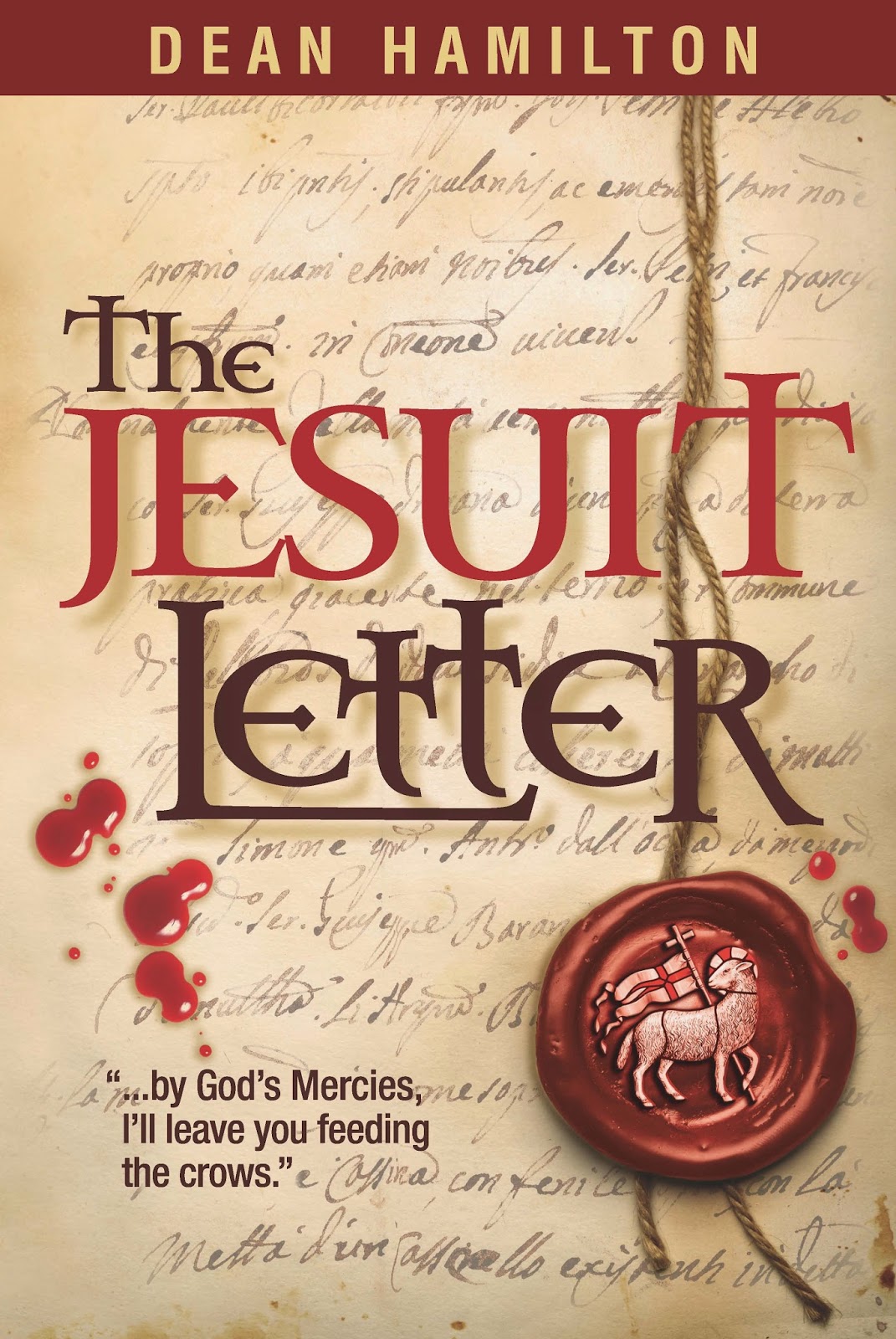
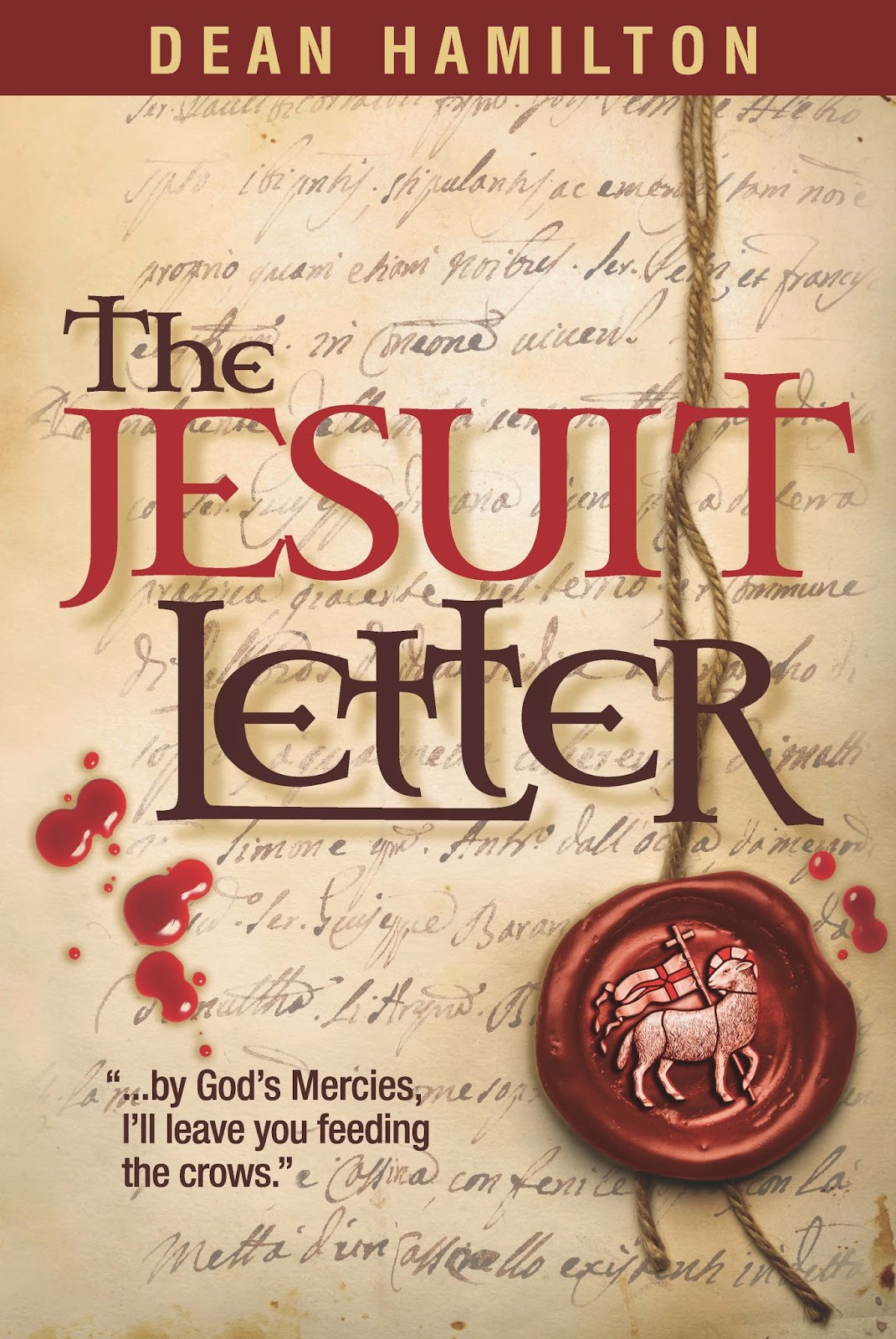
THE JESUIT LETTER, my new novel, is now available for order via Amazon, Kobo & CreateSpace.

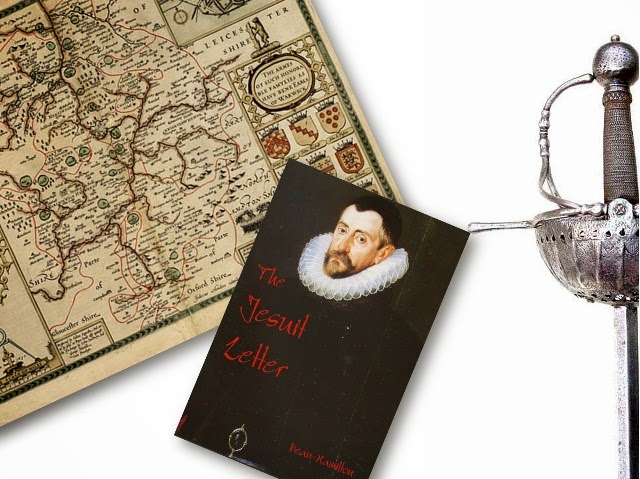
What's it about? Ex-soldier turned play-actor Kit Tyburn is entangled in a deadly conspiracy when he intercepts a coded letter from a hidden Jesuit priest. 

So if you enjoy Elizabethan era skulduggery, sword-play& history with a touch of romance, check out THE JESUIT LETTER 


Go & read like the wind!

...oh, and tell all your friends!

Monday, April 13, 2015

“...the Fates will find me soon enough.”


My new novella BLACK DOG is up on Amazon, so dive into the cesspool of Elizabethan London’s back-alleys, stalking the Black Dog’s secrets.

http://amzn.to/1JDK784

For Kobo users, it will go up on April 16th.

https://store.kobobooks.com/en-CA/ebook/black-dog-20

and as a reminder, THE JESUIT LETTER launches on April 23rd!

http://amzn.to/1CPKfLX

Tuesday, March 24, 2015

It's Here! Launch Date April 23, 2015! Pre-Order via Amazon!

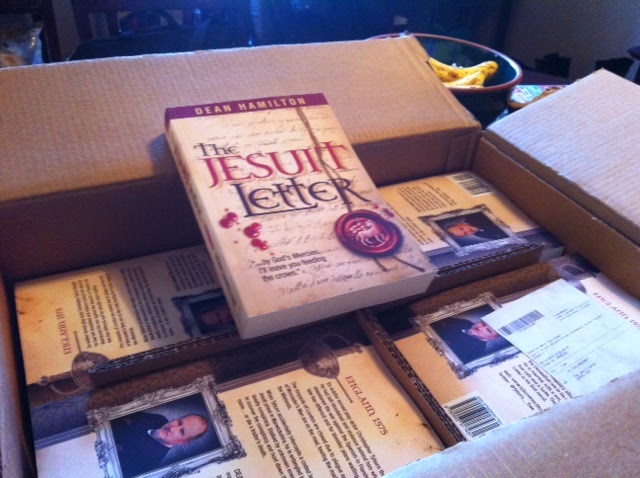
My book has arrived!

Ladies & Gentlemen, meet my first published novel, The Jesuit Letter (hint: it's in the box guarded by the intemperate cat). 

The Jesuit Letter is  available now for pre-orders on Amazon! Please place your orders now and on April 23rd, they will go through and your e-book will be sent out.

This particular batch of books shown is intended for all the supporters of my Kickstarter fundraiser however the official publication date is April 23, 2015; in honour of William Shakespeare's 451st Birthday (who is a key character in The Jesuit Letter as an eleven-year old Stratfordian troublemaker).


The Jesuit Letter (along with the 10,000 word novella prequel Black Dog) will also be available on Kobo and other  major e-book sites.

 Physical copies of the book (as seen in the pictures) can be ordered via Amazon as of April 23rd, 2015 but will not be available for pre-order.
If I sound overly excited it is because...I am.  This is the culmination of an almost ten-year long project and I am thrilled beyond measure that people can finally see and enjoy the fruit of that work, and hopefully, enjoy some sword-swinging Elizabethan intrigue and excitement.

So TELL ALL YOUR FRIENDS! Your support for this creative endeavor is THE critical part of making this work and helping me bring Tyburn back for another trek through the London back-alleys.

Thank you in advance for your kind support, your assistance and your help in making this a reality.

Now bing a waste! (and if you don't know what that means - it's in the book.)


Thursday, May 29, 2014

The Jesuit Letter Kickstarter

Want to help bring a new novel into the world?

I've launched my publishing Kickstarter campaign to help me take my new book The Jesuit Letter into publication, and I’m looking for help.  The Jesuit Letter is a completed 112,000 word novel.  It is historical fiction, set in the Elizabethan era.

I started working on this project about six years ago and after three years of research, two years of writing and a year of editing and procrastination, I've decided to self-publish.  To do so, I need to invest in a professional copy edit, cover & layout design for the book.

Kickstarter is the first step on the road. The project page can be found here.  

Kickstarter, in case you aren't familiar with it, is a crowd-funding platform, a new way to fund creative projects. It helps bring new, innovative, inspiring projects, big and small, to life through direct support. Funding on Kickstarter is an all-or-nothing proposition — the project needs to reach the funding goal in order to receive any money, so every bit of support helps, whether it is backing the project or just telling friends!

In return for backing the publication of The Jesuit Letter, supporters get a selection of great rewards for their contribution, including a copy of the finished e-book. They also get the excitement of helping bring a new creative project into the world.

For details on The Jesuit Letter Kickstarter and how you can support bringing this project to life, check out The Jesuit Letter Kickstarter project page, get inspired and help bring this project to life!  Just click on the Big Green Button that says “Back This Project”.

Let me know if you have any questions or concerns about the project or if you just want to find out about the Kickstarter experience.

Thanks for your support and please be sure to tell your friends!


Dean

Wednesday, May 14, 2014

The Tudors by Peter Ackroyd

The Tudors by acclaimed British author Peter Ackroyd is the second volume in his new History of England series, although reading the first book (Foundation) is by no means necessary  Ackroyd's highly readable, engaging review of the reigns of the corpulent and much-wedded Henry VIII, Bloody Mary and Elizabeth I (interrupted albeit briefly by Henry VII's son Edward VI's six year reign).

Ackroyd brings the same sharp acumen and evocative social insight evident in his previous works Foundation and in London: A Biography.  Ackroyd hangs the overarching story-line on the key events and players but lavishes particular attention on the belief systems and intricacies of the burgeoning English Reformation which drove Tudor rule.  He has a particular talent for interweaving the tiniest of details and tying them back to the epic sweep of history.
Dry it is not, however it is by necessity somewhat cursory on some of the more infamous events of the period.  Ackroyd is a brilliant writer and, given his background and focus on cultural roots and sociology, he brings a different and often highly discerning eye to the historical events of the period.  He keeps a fairly razor eye on the roots of the English Reformation and the events therein, rather than, as many histories of the period do, highlighting the soap opera of Henry VIII's long procession of wives.  He provides a strong thematic thread for the ebb and flow of England's slide away from Catholicism, tying the many elements traditionally linked back to Tudor power, into a broader context.

Ackroyd provides a solid, eminently readable book that any student of the era would be wise to crack open.


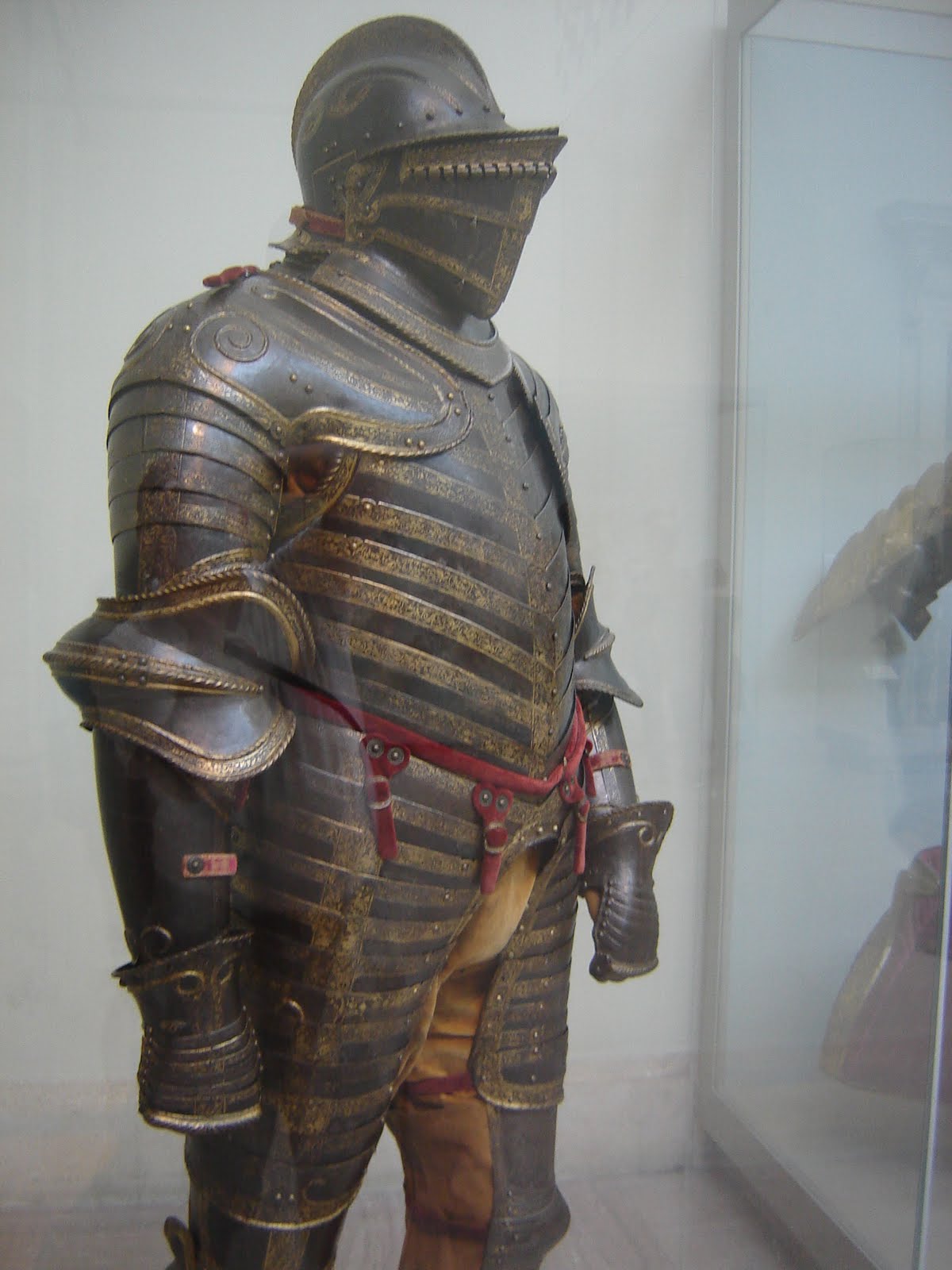
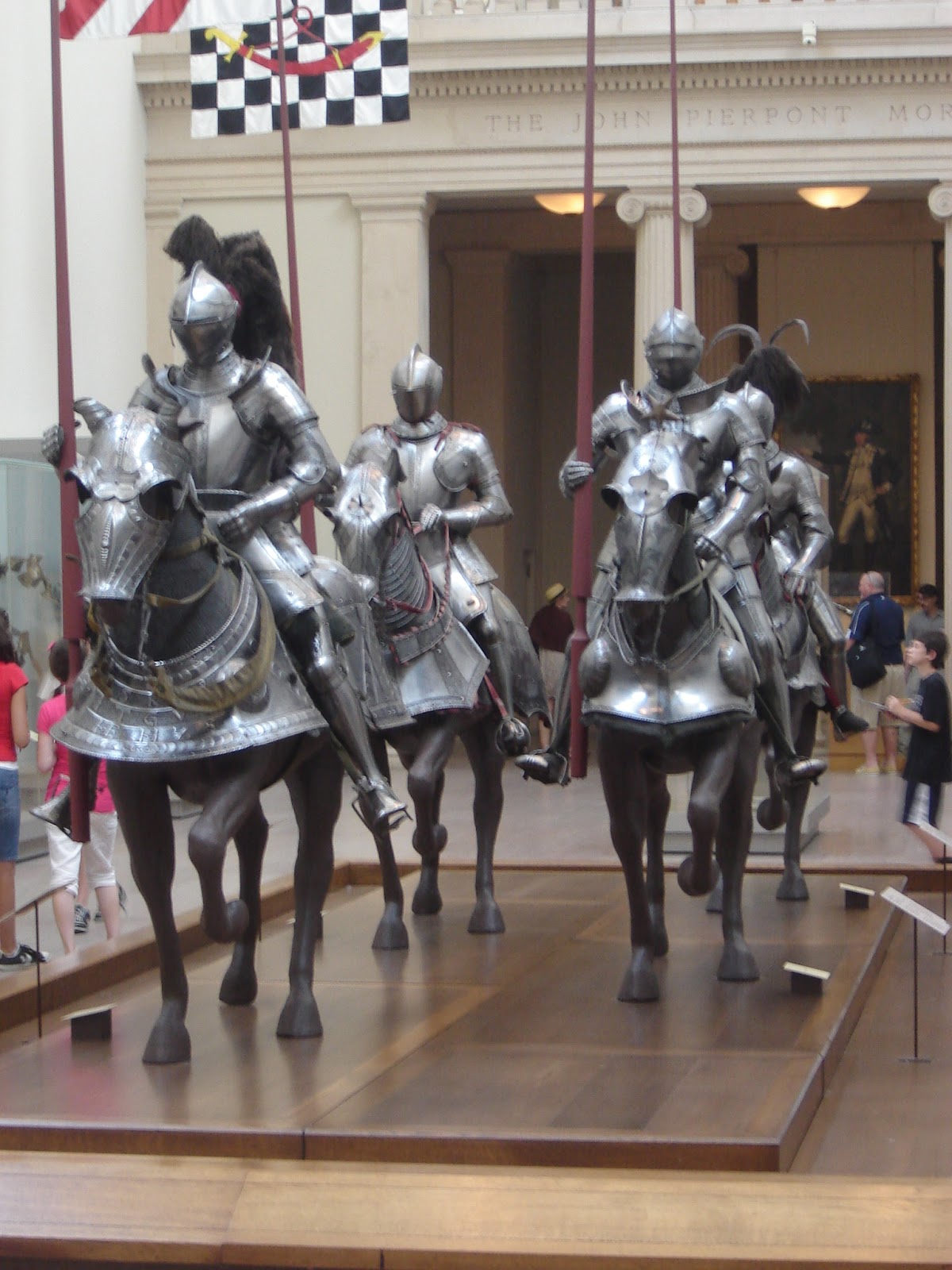
The Armory gallery at the Met, in all it's splendor, with Henry VIII's armor on display.

Saturday, February 15, 2014

The Jesuit Letter - Book Trailer

I've pulled together a draft book trailer for The Jesuit Letter.  I'm currently testing it out on YouTube and Google+, to garner some feedback on what works and what doesn't.

Any comments, suggestions, issues, ideas etc. are very welcome!  Let me know what you think!