Elizabethan London

Elizabethan London
Tyburn was an infamous execution spot west of London, used since medieval times. The Tyburn "tree" - a unique, multi-person gallows - erected in 1571 became a popular public spectacle, drawing crowds of thousands.Tyburn Tree blog is less blood-thirsty but hopefully topical, interesting and informative, if slightly bent to my personal topics of interest - books, writing, history, technology, with a smattering of politics and dash of pop culture, science and the downright strange. So "take a ride to Tyburn" and see what happens...

Monday, December 14, 2015

Elizabethans at the Movies, Part 2


Here’s Part II of my Elizabethan's at the Movies series taking a quick look at the most recent crop of modern Elizabethan-era films. Today, only one entry:

Anonymous (2011)

Director: Roland Emmerich

Stars: Rhys Ifans, Vanessa Redgrave, David Thewlis, Rafe Spall

I’ll start with the blunt and brutal assessment that the plotline and claims of the film are a steaming crock of shit. It’s hard to look at anything else contained in this film without the nonsensical plotline obscuring the elements that work and the performances of the actors. Be advised, this review will contain spoilers….

The film advances the oft-cited theory that the plays of William Shakespeare were, in reality, penned by Edward deVere, the Earl of Oxford. That’s not really the reason for the plotline being a crock of shit, although it certainly contributes (and I know that there are any number of “Oxfordians” out there who will steadfastly argue the veracity of their theory, to which I will respond “prove it”, which usually meets with sputtering indignation and much spurious assumptions but no actual evidence).

The story postulates that Edward deVere was a literary prodigy, penning A Mid-Summer Nights Dream as a child, and later is forced to abjure himself from literature by his forced marriage to William Cecil’s daughter after murdering a servant that was spying on him (I know, a bit convoluted). Later, driven by his literary urges, he attempts to suborn playwright Ben Jonson into taking credit for his work, but eventually settles on a drunken, egotistic and bombastic actor named William Shakespeare.  Shakespeare eventually finds out who is supplying him the plays and in turn blackmails deVere for more funds (Will also murders Christopher Marlowe, who uncovers the secret).

Brace yourself, now it gets a bit more convoluted…De Vere, becomes romantically involved with Queen Elizabeth, purportedly fathering an illegitimate son in secret, who is adopted out by Cecil and eventually becomes Henry Wriothesley, 3rd Earl of Southampton. However, it turns out that this isn’t the first secret lovechild of Elizabeth. The first is (drum-roll) De Vere himself!

All of this incest/secret child nonsense leads to the climax involving the attempt to stir a popular rebellion against the nefarious Cecils who are controlling and manipulating the Queen to insure the succession of James I. The popular rebellion is led by the Earl of Essex and Southampton, ably supported by deVere penning Richard III as a attempt to drive the mob into a frenzy and overthrow the evil hunchbacked younger Cecil’s control over the throne.

So. Yeah. In a nutshell: craptastic.
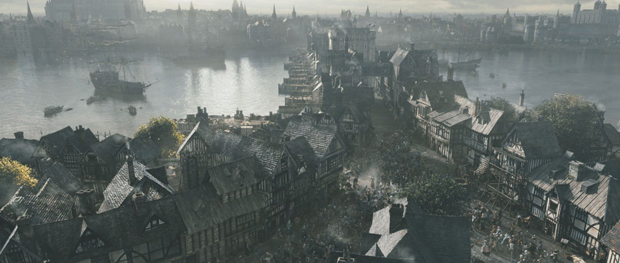
What works – Elizabethan London has rarely looked as fine and dazzling as it does in Anonymous. The gorgeous CGI brings the city to life in a way not seen on the screen before. The sets and locations are terrific, the costumes wonderful, the energy and vibrancy of the stage at the Globe is fantastic.  The acting is solid, with Rhys Ifans pulling a soulful performance out of deVere, and Vanessa Redgrave as the elderly version of Elizabeth (this movie time-jumps wildly all over the place, did I fail to mention that?) is quite good. The other standout for me was Rafe Spall as the duplicitous William Shakespeare – actor, murderer, drunkard, blackmailer – but damned fun to watch.

History-wise this movie is, as stated, pretty much a crock. I won’t get into the documented evidence against practically everything the plot claims but, hey, it’s SUBSTANTIAL. You can review that online at your leisure. Some of it is fun to read but if you want a good, well-written documented and authoritative look at the whole Oxford vs Shakespeare fight, grab a copy of CONTESTED WILL by James Shapiro.

Overall terrible piece of film, beautifully made and acted.


Ranking: F

Tomorrow: Shakespeare in Love

Sunday, December 13, 2015

Elizabethans at the Movies

The Tudor and Elizabethan era has always been fodder for film-making, although it has dropped off considerably in recent years. The 1930’s saw Errol Flynn swashbuckling his way through the era in The Sea Hawk while Erich Wolfgang Korngold’s blaring trumpets set the tone. Flynn reappeared in The Private Lives of Elizabeth and Essex, while Charles Laughton gave the world an indelible portrait of Henry VIII eating a chicken.

Here’s a quick look at the most recent crop of modern Elizabethan-era films (note: I am not including adaptations of Shakepeare’s many works, we’ll save that for another day):

Elizabeth (1998)

Director: Shekhar Kapur

Stars: Cate Blanchett, Geoffrey Rush, Christopher Eccleston, Joseph Fiennes

Cate Blanchett stars as the young Elizabeth, ascending the throne in the wake of her half-sister Queen Mary’s death. The film looks at the early years of Elizabeth’s reign, following her as she adjusts to rule in the face of ambitious men seeking to marry her off or control her, Catholic opposition, intrigue and rebellion, attempted assassination and her purported romance with Lord Robert Dudley.

The film is, bluntly, gorgeous and sumptuous, with the sets, costuming and location shooting at numerous historic locales (Bamburgh Castle, Durham Cathedral, Bolton Castle, Haddon Hall and more) which gives the film a powerful verisimilitude. The performances are solidly terrific, particularly Cate Blanchett as Elizabeth growing into her power and position.

So how historically accurate is the film? The story conflates particular events, compresses and disorders others and in a number of cases, just seems to make stuff up wholesale in order to make a more gripping and tense storyline. Certain characters are jettisoned – one assumes for simplicity's sake. One egregious example is William Cecil (eventually to become Lord Burghley) whom history records as one of Elizabeth’s most stalwart and long-serving advisers. In the film, he is rapidly dismissed and shipped out to retirement in favour of the lean and hungry Geoffery Rush playing a superb version of Francis Walsingham, who actually served as Elizabeth’s foreign secretary and spymaster.  Joseph Fiennes as Robert Dudley (Earl of Leicester) suffers a similar fate of having his character diverge considerably from historical reality which I won't outline here but is wholly inaccurate.

Overall Elizabeth is a superb film, albeit with a number of limitations on its historical accuracy.

Ranking:  A-

Elizabeth: The Golden Age (2007)

Director: Shekhar Kapur

Stars: Cate Blanchett, Geoffrey Rush, Clive Owen, Jordi Molla

This second film picks up in the mid-point (roughly) of Elizabeth’s reign. Played again by the returning Cate Blanchett, the film follows Elizabeth dealing with the machinations of court, the ongoing plots of the imprisoned Mary, Queen of Scots and the imperial designs of Phillip II of Spain. Geoffrey Rush returns as the long-suffering advisor/spymaster Francis Walsingham, while Clive Owen makes an appearance as the dashing Sir Walter Raleigh, alternately trying to convince Elizabeth to fund his plans for a colony in Virginia, charming her (and her handmaidens) and generally playing the roguish buccaneer to the hilt. The film covers the eventual trial and execution of Mary, Queen of Scots, for treason in supporting an attempt on the Queen, and the subsequent attempt by Philip II to invade and conquer England with the Spanish Armada. 

Again Shekhar Kapur does a superb job in leveraging some terrific historic shooting locations which give the film an exceptional look and feel. The costumes are lavish, and the film generally wonderful to watch, in particular the soaring camera angles give the the viewer a birds-eye view from above, showing off the brilliant costumes and the vaulting locations.  The storyline and the acting seem somewhat less effective though Cate Blanchett is solidly in form playing a more austere and controlled Elizabeth, one that tends to watch with detachment and wry amusement, the endless dance of potential suitors. Viewers are left with a sense that she understands her role and her power better than any one else and she gives an excellent and believable performance.

History-wise, the accuracy of the film is questionable in both cause-and-effect. The film-makers re-paint the Babington plot (which is treated as a straight-up and deliberately failed assassination attempt) as a devious Spanish attempt to bait Walsingham and Elizabeth into executing Mary, thus giving them an excuse for launching the Armada. Similar to the first film, The Golden Age again conflates and combines key characters and events – in this case Sir Walter Raleigh and Francis Drake are stuffed into Clive Owen’s role and set out to destroy the Armada with fireships (which Elizabeth gets to conveniently watch cliffside after giving her historic speech at Tilbury). It made for more movie drama, but bad history…

Overall an enjoyable, if inaccurate bit of cinema!

Ranking: B+

Tomorrow....Anonymous!

Tuesday, December 8, 2015

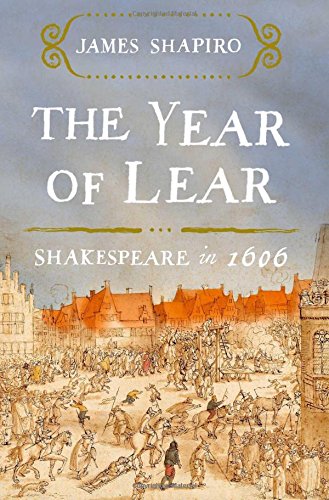
Review: The Year of Lear: Shakespeare in 1606 by James Shapiro

"The year 1606 would turn out to be a good one for Shakespeare and an awful one for England. That was no coincidence."

1606 was a particularly tumultuous year. Queen Elizabeth had died childless and unmarried in 1603, succeeded on the throne by the young King of Scotland James I, son of her executed rival Mary, Queen of Scots.  The shift in tone, approach and power after the long reign of Elizabeth was dramatic, and the subsequent failed attempt by a small group of Catholic conspirators in November of 1605 to destroy the Parliament and the King in one explosive discharge of gunpowder, shook the foundations of the nation to its core.

These twin seismic shocks - a new King and a new political reckoning, coupled with the inevitable fallout and bloody aftermath of the Gunpowder Plot, directly impacted on the direction, focus and content of English theatre, helping drive one of William Shakespeare's most prolific and brilliant years into history.

The Year of Lear looks in detail at 1606, a year that saw Shakespeare pen Lear, Macbeth and Antony & Cleopatra, three of his most timely, searing and political dramas.

James Shapiro follows a similar pattern and approach to his previous work A Year in the Life of William Shakespeare: 1599, weaving together political, social, economic, literary and philosophical threads into a deft and focused whole.

Shapiro alternates from delving into the events that dominated 1606, into how they impact and influence English theatre and literature in general, and more specifically how these were absorbed by William Shakespeare, player, shareholder and playwright of The King's Men.

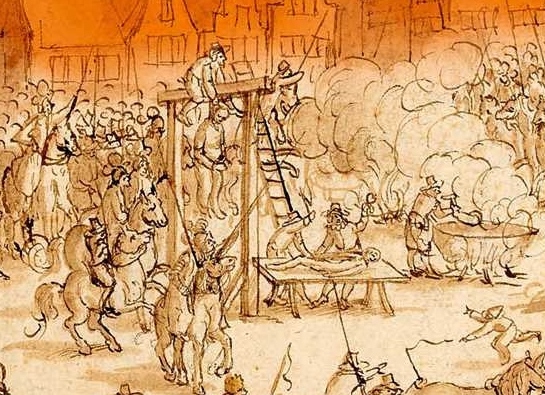
Cover illustration details - depicting the execution,
drawing & quartering of the Gunpowder Plotters. Note the
man tossing body parts into boiling pitch.
The author traces the bloody aftermath of the Gunpowder plotter's confessions, their trials and executions, the impact of the concept of equivocation, James I's obsession with witchcraft and demonic possession, the rise of court masques as entertainment, the devastating return of the plague to London, and the problems of a political Union between England and Scotland.  The author tugs each narrative thread into place and ties it back to its impact and influence on Shakespeare's works as they emerged throughout the year.

The trials and interrogations of the Gunpowder plotters and in particular the interrogation and trial of the Jesuit Robert Southwell and the subsequent dissection of the Jesuitical concept of equivocation (use of unclear language especially to deceive or mislead someone) is deeply intriguing, particularly in light of Shakespeare's subsequent use of the concept in both Lear and Macbeth. The opening scene of the witches greeting Macbeth is an equivocation that sets everything in tragic motion:

First Witch:     All hail, Macbeth! hail to thee, thane of Glamis!
Second Witch:     All hail, Macbeth, hail to thee, thane of Cawdor!
Third Witch:    All hail, Macbeth, thou shalt be king hereafter!

The nature of power, succession and how a kingdom can teeter into chaos dominates the themes of Lear, bringing the differences and potential dangers faced by the new regime into sharp focus.  The themes of murder, intrigue, tragedy and bloody raw political power highlight both Macbeth and Lear, with the added vagaries of witchcraft. The focus on the devastating impact that the Gunpowder plot and subsequent trial had on all aspects of Jacobite society permeates the year, and resonates throughout all the subsequent works. Antony & Cleopatra in turn - a play with it's shades of Elizabeth and Essex, was unlikely if not impossible to see the light of day during the Elizabethan era  - highlighting the fraught cultural shift with the new regime.

It was no accident that Shakespeare wrote these seminal, highly political tragic dramas in 1606.

Shapiro's writing is inspired, rich and evocative. The book is highly readable, written with flair, intelligence and a huge perceptible fascination for his subject matter.  It is one of the very best books of 2015 and is highly recommended for anyone wishing some insight into the Bard, his works or the era.

Monday, December 7, 2015

Black Dog FREE!


Looking for a good holiday read?  BLACK DOG, my novella, is FREE on Amazon Kindle from December 10 - 14th, 2015!

Grab a copy at amzn.to/1Tr9hM5 and #FearTheDog!


Friday, November 6, 2015

Gifing it up

By way of an experiment, I pulled together some gifs from the Gorongosa wildcam project I mentioned previously.

I think they came out rather good.


Wednesday, November 4, 2015

Shiny!

Alongside the HNS Editor`s Choice logo, I get to add another shiny logo to THE JESUIT LETTER, courtesy the Historical Novel Society reviewing & liking my book!

Here they both are!


Monday, November 2, 2015

Editor's Choice

Great news to make even a dreary Monday shine!

The Historic Novel Society has reviewed The Jesuit Letter
and selected it as an Editor's Choice!

Read the review!

In addition to the snazzy logo, this makes The Jesuit Letter eligible on the long-list for the 2016 HNS Indie Award!

I know, way too many exclamation points for a Monday morning...but how often does this happen with a debut novel!

Thank you HNS!